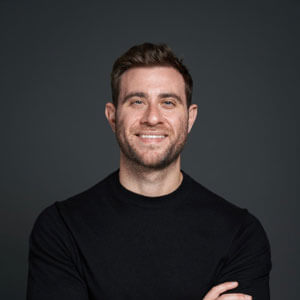
Nick Slavin is the CEO and Co-founder of Curacity, a hospitality technology company that transforms media visibility into measurable hotel bookings and revenue. Under Nick’s leadership, Curacity has generated $2 billion in verified bookings and revenue and established partnerships with Preferred Hotels & Resorts and The Leading Hotels of the World. The company recently launched VISTA, a platform that uses authoritative editorial mentions to improve visibility across AI search. Before co-founding Curacity in 2015, Nick served on the portfolio management team for Starwood Capital Group’s $4.2 billion Opportunity Fund IX, focusing on real estate and hotel investments.


AI search is binary, not ranked. When a traveler asks Claude or ChatGPT where to stay, the model returns a short list of hotels it recommends, and everything else effectively disappears. Slavin cites industry data showing 94% of hotels are invisible in these AI results, largely because their websites lack structured data and the authoritative third-party coverage that large language models trust. Kin Sio sits down with Nick Slavin, CEO and Co-founder of Curacity, on The Lights On Podcast to break down why most hotels are missing from AI search and how independent properties can earn their way back in.
Slavin has watched this problem take shape from the inside. Before founding Curacity in 2015, he managed hotel investments at Starwood Capital Group, including the Baccarat Hotel in Midtown Manhattan, where he saw how hard it was to prove that top-of-funnel marketing actually drove bookings. That gap became Curacity's mission: connect the media and content that inspire a trip to the revenue it produces. Research the company ran with Skift found a revealing disconnect. 39% of hotel executives call digital ads one of their most effective booking drivers, while only 18% of travelers say an ad ever led them to book. Ask those same travelers about established media, and 81% say a recommendation from a trusted outlet drove a real booking.
That authority now decides who shows up in AI answers. Slavin points to data showing 77% of hotel sites lack structured data and 71% of AI recommendations come from articles and reviews rather than hotel websites. Curacity's new VISTA platform measures how a property ranks across Claude, ChatGPT, and Perplexity, then uses the company's decade of media relationships to earn the editorial coverage that moves those rankings. For independent hotels, Slavin argues, this is the first real opening in 20 years to take share back from the OTAs, and the operators who move early build a lead that compounds.
This episode is sponsored by Lights On.
Lights On helps hotels grow revenue more consistently by managing pricing, distribution, and digital marketing together.
We help hotels identify new revenue opportunities, so they don’t leave money on the table. We also manage the full revenue and marketing operation, enabling the on-the-ground team to focus on the guest experience.
If your hotel needs stronger revenue growth, visit lightson.co to learn more.
Powered by Rise25 Podcast Production Company
Kin Sio: Welcome back to the Lights On Podcast. I'm Kin Sio, CEO of Lights On and your host today, joined by my co-host, Emmanuel Mora, Director of Growth at Lights On. On this podcast, we share stories across hospitality about building and growing hotel businesses.
This episode is brought to you by Lights On. Lights On is the revenue and marketing partner for independent hotels. We work with over 40 hotels across the US, helping them find money hiding in their guest journey. Rates that don't move with demand? OTAs outranking your own website? Past guests that you never hear from again? We find problems like that and fix them for you. Learn more at lightson.co.
Before introducing today's guest, I want to give a big shout out to Jacob Messina, CEO of Stayntouch and a past guest of our podcast. Thanks to him, making this show happen today with Nick Slavin, CEO and co-founder of Curacity, a hospitality technology company that turns media visibility into measurable hotel bookings and revenue.
Before Curacity, Nick was on the portfolio management team at Starwood Capital Group, where he managed hotel investments in a $4.2 billion opportunity fund. He co-founded Curacity in 2015, and the platform has since driven over $2 billion in attributed rooms sold for hotel partners, including Preferred Hotels & Resorts and The Leading Hotels of the World.
Super excited to have you joining us today, Nick.
Nick Slavin: Yeah, excited to be here.
Kin Sio: All right. Before we talk shop, I always like to go back to how everyone started their journey there. So you were back in 2015 or so, spent a few years in Starwood managing the fund, managing hotel investments and all that. What made you decide to build a technology company from the ground up?
[2:00]
Nick Slavin: A couple of things. So first, going back even further than Starwood Capital Group, I had always wanted to — ever since I was eight years old, I wanted to open hotels. That was my life's mission. I wanted to open really wonderful hotels in hard to reach places. I was really lucky growing up. I got to travel all over the world with my family. And I love staying in hotels that really had a sense of place.
And so I thought it'd be really fun to build one. Kind of a hard thing to do. So before jumping into building a hotel, I went into investment banking for a little while. And then I went into private equity. So as you mentioned, I was at Starwood Capital Group for about almost four years. And towards the end of my time there, I was a portfolio manager on a fund called Opp Fund Nine, which was an opportunity fund. It was a $4.2 billion fund dedicated to acquiring all different types of real estate assets. So distressed debt, resi, land, commercial, multifamily and hotels.
And one of the coolest hotels that I got to work on was the Baccarat Hotel in Midtown Manhattan. That was part of the portfolio that I managed. And this is a world class hotel. Baccarat Hotel, one of the first hotel assets from the family that owns Baccarat Crystal. They've been serving Baccarat Crystal on every French state dinner since the 1800s. A brand with incredible history and a really wonderful narrative that we knew we wanted to market in order to drive creative returns from the prospective guests we were targeting.
And it was kind of the first time that I had my first foray into the world of opening up a hotel and what it looked like from the asset management side to invest in various marketing and distribution strategies to drive new guests to stay at a brand new beautiful spot. And I immediately saw how challenging it was to invest at scale in marketing.
As asset managers, we knew that investing in really wonderful narrative building, brand building, marketing strategies — we knew that would reach the right person. But there were really no technologies at the time that gave us conviction that there would actually be measurable ROI from any sort of top-of-funnel marketing activity. And so instead of investing as much as we had maybe wanted to in top-of-funnel marketing, we were forced to kind of down funnel to work with distribution players like the Booking.coms and the Expedias of the world, which for an incredible five star asset like the Baccarat, which I don't know, I think 12, 13 years ago was probably pricing at $1,000 a night — the Expedias of the world are not super brand creative for an asset like that. It's tough to swallow.
And they also do everything in their power to keep the consumer on their platform, which means they obfuscate customer data at every turn. And for a hotel like the Baccarat, where they've got incredible food and beverage offerings, they have an amazing spa, half of the revenue they drive from a guest is going to come from on-premise spend. And if you don't have the relevant customer information at the time of booking, it's really hard to upsell those on-premise categories. And so it just really doesn't make sense for a brand like Baccarat.
And so that was kind of the first time I said, huh, it'd be really wonderful if we could give hoteliers the conviction they needed to invest in really wonderful top-of-funnel marketing at scale. So that was kind of one of the sparks that drove the inception of Curacity.
Emmanuel Mora: Has that been your favorite hotel so far? Over your time in the game, you find a different favorite hotel?
Nick Slavin: Oh, man, that's a loaded question. We work with almost a thousand hotels globally, and they're all really wonderful.
Kin Sio: I have this image now of eight-year-old Nick just dreaming of building his hotel and now reaching that point that he's working with the Baccarat. So that's awesome. I love that story.
How did you transition? So honestly, I'm really curious about that moment, almost like the leap of faith that led to you kind of discovering and accepting this idea that fit for Curacity and what eventually it would become. And how did you eventually make that decision to be like, you know what, we're just going to go for it and we're going to take a chance and make this company?
Nick Slavin: Yeah, you know, it's a great question. And when you ask a lot of founders this question, they'll point towards kind of a structural shift in the underlying ecosystem or a systemic change that's occurring that made it such that the moment they jumped into their company was the right moment because something seismic was occurring.
That wasn't really the case for me. I mean, I had long thought — my Baccarat experience kind of started to make me think that the worlds of marketing and revenue management and distribution and PR, they're all kind of driving towards the same thing: how do you drive the best guest, right? The guest who's going to be excited by the really wonderful brand you've built, the guest who is going to take that excitement and translate that into spending up in room category, spending up by increasing their length of stay and spending up by eating at the restaurant on property, drinking a beer at the bar on property and getting a massage at the spa on property rather than leaving because they've been brought in by a really wonderful story.
That's kind of a long-winded way of saying I kind of saw that the customer journey from pre-intent to booking, to stay, to on-premise spend, to rebooking — it should collapse into one. So instead of seeing this seismic kind of macro shift, I kind of internalized the need for a shift in the way that hotels opened and operated.
And so I said, kind of seems really interesting to work on. So one day I just said, look, fortune favors the bold. I don't think there's any seismic shift that's going to force my hand, so I'm just going to force it for myself.
Kin Sio: I see. So the early days of Curacity, you know, as you are kind of building the prototype, finding that product-market fit, right? I think the product of Curacity back then, obviously very different from what you guys have today. So back then you were leaning very heavily into the newsletter side of things. So how did you make that decision? And at what point did you get enough data to really solve — I think the whole, you mentioned scalability, I think it all comes down to how you can systematically measure the return. So how long did that take you to get to a point that you know you're onto something that you can prove to other investors and your customers?
[10:00]
Nick Slavin: It's pretty immediate. It only took about eight years. Not too shabby.
So no, all jokes aside, startups are tricky business and I wish I knew then what I know now, but kind of the thesis that underpinned the creation of Curacity back then is the same thesis that underpins what Curacity is today. We're distribution infrastructure for all of travel right now, helping to drive incremental demand in brand creative ways for the world's best travel brands. That's what we were back then. That's what we are today. But we look nothing like what we did back in 2015. And we've taken a number of pretty right-angled turns since.
So, you know, if you bear with me for a sec, taking it way back to 2015, the original model was actually — we always knew that we wanted to connect these pre-intent surfaces with the actual booking. That was going to be the way that you turned marketing into a revenue driving distribution channel with really clear ROI measurement. So you've got the pre-intent surfaces like digital media brands, and then you've got the travel customers. Those kind of form the two sides of our network.
While today we are kind of travel customer first — we think of monetizing on behalf of the travel customer, like the hotel — back then, we actually thought of it from the opposite perspective. So we thought about it from the perspective of the media brand first. So like, how can we help these media brands that have built unbelievably authoritative brand names and recognition, huge distribution, and access to millions and millions of audience members that really trust the content that they're pumping out? How do we give them the ability to actually monetize the influence that they have within travel specifically on their audiences?
So we said, let's build custom OTAs in conjunction with these digital media brands. So you think Wall Street Journal, they've got three million subscribers. They talk about really wonderful hotels. When one of their audience members goes to look at the Four Seasons that they should stay at after they've gotten their Wall Street bonus, why not keep them in a Wall Street Journal experience and essentially have them book the Four Seasons directly on wallstreetjournal.com/travel? And so Wall Street Journal is capturing the inspiration and the intent they created and monetizing it on their behalf.
And then it's wonderful from the hotel's perspective because the hotel gets to stay in this or to keep their consumer in this nice branded journey, right? Wall Street Journal to Wall Street Journal travel direct to the hotel.
So we did that. We partnered with Surface Magazine to start, which is a world-class design magazine, and we launched surfacehotels.com, which is the first iteration of this kind of custom boutique niche online travel agency in partnership with the media brand. And so Surface created content, really wonderful editorial content on about 600 of the world's best design-focused hotels. They distributed that content to their audiences, and we tried to get their audience members to book those hotels that were featured on surfacehotels.com. And then we're going to do the same with New York Times, the same with Wall Street Journal, the same with Food and Wine, the same with Rolling Stone Magazine, etc., etc., etc.
[14:30]
So what we really quickly found out is that that business model does not work. The reason that it didn't work is that travel is a high consideration purchase. If you're going to go spend a lot of money on a really wonderful hotel stay, there's a lot of consideration that goes into a purchase like that. It's not like a gray t-shirt where you see an advertisement for a gray t-shirt on Instagram. You say, I'm a size XL, I like the color gray, and $20 is reasonable. Low consideration. You can swipe up and push buy right there.
That's not the case with the travel ecosystem. It's high consideration. You have to figure out whether you can take time off work. You have to consider the purchase price of this rather large transaction. You have to see if your significant other can join you. You have to see if the flights line up. There are a lot of decisions that need to be made before you can purchase that three, four, five night hotel stay in some far-flung destination.
The time between pre-intent and inspiration and then booking can be really lengthy. It can take a week. It could take two weeks. It could take, in the case of a honeymoon, it could take six months. The key is in connecting the right data sets that enable you to track that customer from pre-intent to booking across multiple potential distribution platforms because that consumer could pick up the phone and call a travel agent. They could book it through Expedia. They could pick up the phone and call the hotel directly. They could go to the hotel's direct website and across a large chunk of time — two months, three months, four months, five months plus.
Very quickly, we pivoted the business model from these boutique OTAs in partnership with media brands to data infrastructure that supported attribution that allowed us to track pre-intent across multiple surfaces and across multiple months to actual booking.
Emmanuel Mora: I was just going to say, I love the focus that you folks have on attribution and data, just because especially as you've seen in the hotel industry and with traditional PR and communications, while it's important to put your name out there through these traditional channels, it's so difficult to really know the impact of those efforts. I love what you folks are doing with Curacity to really show, like, hey, not only are we still producing this content, getting your name out there, but we're showing the user journey across the entire funnel, really, and just kind of showing how they're going through and actually going into booking from consuming the content and being exposed there all the way through the journey. So it's pretty cool. You folks are building that out.
Nick Slavin: Yeah, I appreciate that. And you look at the way that... You look at the tools that hotels have to invest in marketing, and it's limited. Everyone knows that marketing — 50% of their marketing works. They just don't know which 50%. And so we're here to kind of illuminate which 50% is actually driving value.
Kin Sio: Yeah. And that part is very counter-intuitive for lots of the hotel operators. Most of the hotel operators are not coming from a tech background. They don't understand the importance of the data structure and attribution. I think it was a very novel model back then that you built. How did you pitch that to hotels? Because over time, you kind of shift your monetization opportunities from the media side of things now back to your travel customer base. And having to convince these hotel operators to understand that importance of attribution — did you find a hard time kind of marketing this message to help them understand the value?
[20:00]
Nick Slavin: Yeah. It's taken a really long time to convince a significant percentage of the industry to understand the importance of top-of-funnel media on their bottom line. I think that... You made this point earlier that... Or you just suggested that a lot of hoteliers, they're not technologists, and that's absolutely true. I think they all agree on the importance of attribution. I just don't think they... Historically, there just haven't been attribution methodologies that have been easily explainable to hotel owners.
You're also talking about shifting a fundamental understanding of what marketing and distribution actually is. From my view and the view of Curacity, marketing and distribution and revenue management are really one and the same thing. They're all driving at the same thing, and they shouldn't be so siloed in their approach to data.
So you're kind of dealing with this fundamental shift in the way hotels operate. You're also dealing with a bit of a fundamental shift in the understanding of what parts of the marketing funnel are really helpful.
[21:00]
So we did this research with Skift, I think it was like nine, ten months ago, and we found that 39% of hotel executives say digital ads are among their most effective booking drivers. Then you ask the same question of travelers, like how effective are digital ads in driving bookings? Only 18% of them said that an ad has ever led to a booking. So you got 39% of hotel owners saying most effective channel, and yet only 18% of consumers saying, yeah, this works. That's a 2X. That's more than a 2X delta right there. So something's kind of fundamentally broken.
And then on the other hand, you ask the same base of consumers whether they use established media outlets to drive recommendations and ultimately whether those media outlets and those recommendations drove a real booking. 81% said yes. So there's just been this systematic under reliance and under investment in top-of-funnel marketing forever in our space. And to tie this back to your question directly, that's been a hard education process for this industry. But we're 11 years in and continuing to work on that.
Kin Sio: Yeah. And I think you might have been touched a lot from our daily operations for our hotel partners. It has been a constant fight too when we can show a really good return on ad spend when we allocate most of the budgets on the bottom-of-funnel marketing. Great. Now, how can we actually now shift that budget to the top of funnel? At the risk of now immediately on paper, you can't really see that ROI because traditionally just not that many ways to help attribute those efforts to the ultimate bookings.
So yeah, and I think the future is here just not evenly distributed. So they are part of the world where they know about the Curacity model. They understand now there's a way to do so versus I think a majority part of the industry, they still don't know such things even exist. So I think that's still a big opportunity just for all of us helping our hotel partners to be successful on that side.
Emmanuel Mora: Yeah. Thinking through Curacity's 11-year journey so far, you've already had these game changing moments in the sense of upper funnel attribution and really being able to deliver that at scale. And at the time that was sort of unheard of. So thinking into the next 10 years, what do you kind of see Curacity evolving? Are you just going to be pushing further into that space? Is there anything you're exploring there? What does that look like?
[24:00]
Nick Slavin: Yeah. As you guys are more aware of than probably anyone else, you know, there is a seismic shift. Here's the seismic shift that I was talking about not existing. Here it is now. It's AI search and AI search based distribution.
Right. So the way I think about it is you've kind of got a bifurcation of inspirational surface areas. So you've got a lot of pre-intent surface area that's not going to go away, still can be very, very relevant, like email, like social media, like reviews, like connected TV. Those are all like organic web. Those are all still going to be very, very important surface areas to drive inspiration to the consumer.
But you are seeing AI search completely displace traditional search. That's where the future is heading. AI search will become the predominant method by which the majority of consumers discover, search for, and perhaps end up booking their hotel rooms. And so from Curacity's perspective, we are now full force in helping our hotels transition into this brave new world, which is really exciting. And I think it's the first time probably in 20 years where hotels have had a moment like this, where they can begin, if they're doing their jobs properly, they can begin to take back market share from the online travel agencies.
Kin Sio: And before we touch on the AI search, I think that's another angle about AI I'm super curious about. The whole idea of AI slop, just all this crazy kind of know there. I think at this point, most white collar workers, they are all using some level of AI to help all their daily jobs and so on and so forth. So you actually made an interesting acquisition last year, buying A Hotel Life, I think it's like a smaller boutique media company, right? To kind of like fight that kind of AI slop, right? So it's been a while, how did that acquisition go and did that premise of, you know, producing high quality human editorial content, like did that move the needle of how everything else that Curacity has been working on?
[26:30]
Nick Slavin: Yeah, so it's kind of a really wonderful story. A Hotel Life was one of our very first media brand partners. They were actually the second media brand partner that we'd ever worked with. So I think they came on to the Curacity platform in 2016, 2017.
And A Hotel Life was kind of the brainchild of Ben Pundole, who's a really wonderful world renowned hotelier. He actually just led the opening of the new Delano down in Miami. And A Hotel Life was, you know, this incredible kind of, I would say, you know, influencer led platform long before the term social media influencer was ever invented. It was just Ben and all of his very, very cool, interesting, globally eclectic friends that love to stay in really wonderful hotels.
They would write up their hotel stay experiences and publish them on A Hotel Life. And so A Hotel Life became this really kind of incredible creative platform for all of his friends. And then obviously, it took on a life of its own and expanded beyond just, you know, Ben's group of friends.
And at a certain point, you know, I think Ben and I began chatting and he was interested in kind of like pursuing the next thing. And I was incredibly — I had always been a huge fan of the platform and timing just worked. And we've been thrilled with the acquisition ever since.
It was — the thesis behind that acquisition originally, to your point, was a defense against AI slop. My thesis has always been that really wonderful, robust, thoughtful content is going to win the game because the consumer is not an idiot. The consumer is smart. They can read through, you know, the bullshit that underpins so much of AI slop these days. There is still a really human, wonderfully human component to travel and to hotels and to the writing that corresponds to those hotel stays and you can feel it with a brand like A Hotel Life.
And not only that, so can the LLMs. Like third party, authoritative, and I'll underline that word authoritative sources are critical to driving AI visibility in this new era. It's really hard to fool the LLMs. You can pump out a bunch of crappy content, just because you do doesn't necessarily mean that the LLM is going to pick that up in order to inform one of the synthesized answers it creates.
So I think media brands are coming back with a vengeance. I know that stock prices have taken a massive hit as media brands start seeing incredible reductions in organic clicks, but the importance that they hold within this ecosystem, our traveler ecosystem, and in the AI visibility ecosystem is accelerating.
Kin Sio: Yeah, and just a side example, just in my world of marketing agency, I was just recently talking to a content writing studio, right? It was right around that time last year when they lost half of their business on content writing, because when everybody thinks, oh, I can now use AI to write stuff, why would I need some professionals to do that? So they lost half of their business and just getting back to this year, now they just regaining all their business back and then more. Because now, to your point, consumer is not an idiot. Now I think people are craving for high quality content more than ever, which actually positioned Curacity really well with all the media, high quality media partnerships and network that you guys built that the authoritative part of it is associated with AI visibility.
I think this is a big thing that we would love to hear more about, especially the new product that you guys launched, the VISTA. Can you tell us more about how that is going to help hoteliers kind of fight and take the chance — once in a decade, opportunities to now being able to fight back from OTAs to gatekeep lots of the business?
[32:30]
Nick Slavin: Yeah, so let me take it one step back before jumping right into VISTA AI, which is my favorite topic these days. So you think about, you know, let's think about kind of traditional search, Google search, it's ranked search. So even if you've got really crappy SEO, you're gonna show up somewhere. Maybe you show up, maybe don't show up on the first page, right? Maybe you're not one of the top 10 blue links, but you'll show up in the second page or the third page or the sixth page, right? You'll show up.
AI search is fundamentally different. It's binary. It's not ranked. When you ask Claude for the top places to stay in Brooklyn, Claude's gonna pull the top five places that it wants to recommend for you. If you're not in that top five offering, you don't exist. It's binary. You either exist or you don't, unlike in traditional search like Google.
So AI visibility is a fundamentally different game. I was looking at some data from a company called RateBar Genius recently, and they said 94% of hotels are effectively invisible to AI search. And again, it's because it's binary. You either show up or you don't. You exist or you don't. It's not like you're just on Google's sixth page. Binary outcomes here. Stakes are a lot higher. You can't screw up.
[34:00]
Why are people, you know, why is this such a challenging environment? Or why is it that 94% of hotels don't show up? 77% of hotel sites lack structured data. That's crazy. Only 25% of the synthesized AI answers actually pull from hotel websites. That makes sense because 77% of sites lack structured data. Here's the exciting part, though. 71% of AI recommendations, again, this is not my data. This is RateBar Genius's data. I wish it were mine. This is great. 71% of AI recommendations are pulled from articles and reviews. Again, these third party authoritative sites, they are critical towards ensuring that you appear, you, the hotel, appear when a user says, give me the best places based on what you know of me to stay in x destination.
[35:00]
So that's kind of what Curacity VISTA AI is doing. So we launched VISTA AI. We've been working on it for the last year or so. We launched it just about two months ago. And VISTA AI gives, it's a measurement, analytics, and distribution platform for all of travel.
So essentially, when you're a hotel and you get onboarded, you get access to our dashboard. That dashboard provides you with measurement, tracking, insights, analytics, and recommendations, and then the distribution.
So measurement. If you're a hotel, you want to understand whether or not you're ranking across all of the various AI search platforms. When a user says, what are the top 10 places to stay in New York and you're the Baccarat, you want to ensure that you're in that top 10 recommendation. And the various LLMs pull from different sources. So just because you routinely appear in Claude doesn't necessarily mean that you're going to routinely appear in ChatGPT. And it might not necessarily mean that you appear in Perplexity either. So we give you some measurement analytics there.
Then if you're the hotel, you can go really deep on specific queries. So let's say, you know, let's keep with the Baccarat example. Let's say you want to be known for having a world-class bar. You can look at that specific query and see how relevant you are in the search results for, or in the ranked search results across various LLMs. Then let's say you're not ranking too high. You can go into a deep dive to understand all of the many, many hundreds of citations that have led to your current ranking. And you can go and do that for your competitors as well. So you can see why they're ranking higher than you are on an LLM by LLM basis for any query that you're interested in.
So that's kind of measurement. Then we'll allow you to track — we can help you see how your relevance tracks over time. Typically, we do it on a weekly basis. We can do that against your competitive set. Then we provide you some insights. You know, this hotel located a couple blocks down the street has a really great bar, and it's ranking really highly on ChatGPT because the sentiment analysis has spit out these 16 words as driving enhanced relevance. So we kind of make those insights available.
And then you're like, okay, this is really helpful. It's really helpful to be able to measure. It's really helpful to be able to track those measurements over time. These insights are really helpful, but what do I do? And that's the key differentiator for VISTA AI. We get to leverage the decade plus of digital media brand relationships we have to work with our publications to get web-based content that's structured properly. When I say structured properly, I mean that's readable by the LLMs. We work with all of our publications to get wonderful editorial content created and distributed on the web in places that the LLMs read. And now we can show how that type of distribution helps to increase your relevance for a specific query or more broadly speaking, over time.
So same thing we've done, you know, for 10 years with email, where, you know, we essentially turn media into a distribution channel. Now we're turning a different type of media, different media surface area, web, into AI visibility and distribution.
Kin Sio: Yeah. And arguably that is a more effective way to boost AI visibility. You know, like having a hotel, you know, they can do, you know, lots of what we do is in helping hotels to structure with them, their website for AI visibility. You know, we can do that all day long versus an article from Travel + Leisure, for example, doing the same thing, just that authoritative ranking will, I guess, you know, should use relevance. It's always going to be putting more weight than a hotel website could do by themselves.
But obviously the whole AI visibility is all about now it's not just a singular signal. It's just about no one silver bullet, but many lead bullets around, you know, you're going to make sure we have all the high quality editorial content mentioning the hotel, the hotel website itself has to be buttoned up, all the reviews, you know, even nowadays, you know, all the social media, you know, they're all becoming input for the LLM models and, you know, searching all that. So, you know, actually writing the right ways for all of your social media, Instagram posts, that is critical. You know, are people mentioning you on Reddit? That's another big signal. Are people asking questions on Quora? So you just, you know, getting to a point where now they've got to understand now everything that the internet has memory about your brand matters in this era. And, you know, to your point, the stakes much higher because now everything is so polarized, you either showed up or not.
Nick Slavin: Yeah, I think about it, you know, you said there's no silver bullet, spot on. I think about it as, you know, like, how many arrows do you have in your quiver? And you need 10 of them. And all of them need to be sharp.
Kin Sio: That's crazy. So this is well, so you just launched that two months ago. And I think it's kind of last question for you to wrap us up here. The evolution and the changes and improvement, AI just like exponential, right? You know, everything we talked about probably like two months ago, it may not be relevant in the next three months. So if you were to predict what's next big changes, right in the AI era, you know, from a hotel perspective, are you watching any trends or just anything that you're thinking beyond launching VISTA, thinking about a new product, thinking about things that are not yet captured by anyone?
[41:00]
Nick Slavin: Yeah. Couple things that we're thinking through and actively working on as an organization. So we really specialize in maximizing revenue from pre-intent surface areas. So we started in email, we've expanded to web, we're going to begin moving into every surface that houses pre-intent potential. So think reviews, think social media platforms, think connected TV, for example, anywhere where we can find a consumer and help them monetize their pre-intent and turn that into intent and then booking, we will be there.
And we've got this kind of Curacity intelligence layer that is beginning to map all of those signals, those data signals that we collect across all of the various surfaces. We're beginning to map that into what we've called a Curacity traveler ID. That enables us to build super interesting commercial data products that we can make available to our hotels so that when they get that booking, they know that guest and they can more effectively upsell to them and they can more effectively drive repeat bookings and guest satisfaction, so on and so forth. So that's what we're working on.
Something that I am particularly focused on and excited by is this kind of like war between — you look at how the LLMs are kind of expanding their commercial models, you've got ChatGPT moving into ads, you've got, seems like Claude's sticking with connectors and apps. I'll be really curious to see what kind of, what commercial model wins out, the app connector model or the ad model. But regardless, there is a ton of new potential for our hotels to maximize distribution via those kind of new found marketing channels that'll have super robust kind of measurement monetization analytics such that they will become the new distribution channel that the hotels will want to spend a lot of time optimizing and that will be all over.
Kin Sio: Yeah, again, it's a once in a decade, multi-decade opportunities for the smaller, the independent to now come out on top before. And I think the opportunity window is short, right? Because before long, the big boys, they always find their ways to monopolize the market. So I think you just, people have to know about the importance and really act on it now before that slips away.
[43:30]
Nick Slavin: Yeah. And the nice thing is for the hotels that do act, there are first mover advantages, like really strong first mover advantages. You get the kind of really wonderful authoritative third party citations created now. Those train models that train the next model that trains the next model. So it, you know, the stuff builds on itself and the sooner our hotels move, the more beneficial the position will be in.
Kin Sio: Awesome, Nick. Where can people find more about you and Curacity?
Nick Slavin: I don't think anyone wants to know about me. But Curacity, just go to www.curacity.com. We just launched some really cool research in partnership with professor Chris Anderson at Cornell's Center for Hospitality Research. That's right on our website. It's really interesting. And it kind of looks at how different consumers, different types of consumers stratify and utilize AI search differently. So there's really not a one size fits all approach towards finding those consumers via AI search. That sits right on our website. So curacity.com. Check it out.
Kin Sio: Awesome. Nick, thank you for joining us today.
Nick Slavin: Thank you, Kin and Emmanuel. It was really great to see both of you.
Emmanuel Mora: Yeah, it's great to be with you, Nick. Likewise.
Transform your group booking strategies with Lights On and watch your occupancy soar.


.svg)

