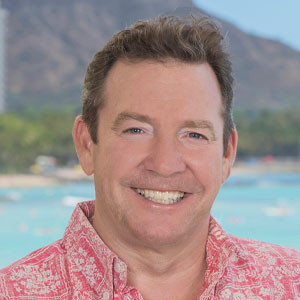
Sean Dee is the Executive Vice President and Chief Commercial Officer at OUTRIGGER Hospitality Group, a Hawai’i-based company specializing in iconic beach resorts across the globe. He leads the company’s global commercial strategy across marketing, sales, revenue management, brand, and distribution. Sean was named HSMAI’s 2022 Corporate Marketing Professional of the Year and serves as Chairperson of the Hawai‘i Visitors and Convention Bureau, having also served on the HSMAI Americas Board of Directors. His leadership roles at Levi Strauss & Co., Hard Rock International, and Anschutz Entertainment Group shaped his expertise in brand reinvention and hospitality innovation.


Enduring hospitality brands do not survive change by abandoning who they are. They evolve by returning to what made people care in the first place, then deciding where to grow from there. Sean Dee, Executive Vice President and Chief Commercial Officer at OUTRIGGER Hospitality Group, has run that play twice, first reviving Hard Rock International and now repositioning OUTRIGGER. Kin Sio sits down with Sean on The Lights On Podcast to break down how brands endure.
When Dee joined Hard Rock in 2003, the brand was ten straight years into decline and had drifted into a museum, an academy, and Hard Rock food served on Delta flights. His team tracked down the original founders, Peter Morton and Isaac Tigrett, to understand what the 1971 London cafe was actually built on, then rebuilt the brand around one ownable idea: delivering experiences that rock. They widened the music from a narrow hard-rock genre to hip hop and other genres, opening the brand to younger, higher-spending guests. Dee estimates the enterprise value grew to roughly six times what it was when the turnaround began.
At OUTRIGGER, Dee applied the same discipline. He narrowed the company from a mix of airport hotels, mid-market flags, and the three-star Ohana brand down to beachfront Outrigger Resorts, positioned where local culture meets world-class hospitality. Under KSL Capital Partners, which acquired the company in late 2016, OUTRIGGER now runs 31 properties, including 13 beachfront resorts across all four major Hawaiian islands plus Thailand, the Maldives, and Mauritius. As Chairperson of the Hawaii Visitors and Convention Bureau, Dee also makes a pointed case on tourism: the problem was never the 10.4 million visitor peak, but the tens of thousands of illegal vacation units operating in residential neighborhoods, while visitors already contribute a billion dollars a year in tax revenue.
This episode is sponsored by Lights On.
Lights On helps hotels grow revenue more consistently by managing pricing, distribution, and digital marketing together.
We help hotels identify new revenue opportunities, so they don’t leave money on the table. We also manage the full revenue and marketing operation, enabling the on-the-ground team to focus on the guest experience.
If your hotel needs stronger revenue growth, visit lightson.co to learn more.
Powered by Rise25 Podcast Production Company
Kin Sio: Welcome back to the Lights On Podcast. I'm Kin Sio, CEO of Lights On and your host today. On this podcast, we share stories across hospitality about building and growing hotel businesses.
This episode is brought to you by Lights On. Lights On is the revenue and marketing team for independent hotels. We work with over 40 hotels across the US, helping them find where money is hiding in their guest journey, then fixing it. Rates that don't move with demand, OTAs outranking your own website, past guests that you never hear from again. We find them and fix them. Learn more at lightson.co.
Before introducing today's guest, I want to give a big shout out to Brent Shiratori, who connected us today to make this show happen.
Sean Dee, Executive VP and Chief Commercial Officer at Outrigger Hospitality Group, the Hawaii-based company behind a global portfolio of 30-plus beach resorts. Before Outrigger, Sean led brand transformations at Hard Rock International and Anschutz Entertainment Group, and spent 15 years pioneering e-commerce at Levi Strauss. He now oversees marketing, revenue management, and sales strategy for Outrigger. And he also is the chairperson of the Hawaii Visitors and Convention Bureau. Sean, welcome to the show.
Sean Dee: Aloha, thanks, Kin. Happy to be here.
Kin Sio: We always like to go back to the beginning, how everybody started in the hospitality industry. So for you, you started this kind of unconventional path in your uncle's restaurants, cooking your way through college, and eventually coming back to hospitality. What is that journey like then after two decades later? Did you find certain things when you started versus what you're doing right now? Anything that resonate?
[2:00]
Sean Dee: You know, I am getting really old, is one of my insights from that question. And it's a long way back to think back to those early days in my, I guess, professional career, but it's true. I know you did a little bit of research and used some AI tools to track down some prior interviews.
But I had a great family, but I had two, I'd say, influential uncles early in my career. One, and they're both still with us, Ernie Chambers, who was actually Merv Griffin's partner. So he ran Merv's entertainment business. So I worked on some TV shows with him, kind of going through high school into college. And then my other uncle was very active and still is in the restaurant industry. So I would work for him on occasion, which translated when I went to Stanford to help pay a quite expensive, but worthwhile education investment.
I worked at a place called Pearl's Oyster Bar, which was a popular restaurant in Palo Alto. And I was what they call a line cook, basically as a small open kitchen environment. And basically worked with the head chef, he and I, for many years, actually. I did that, I had that role through college and actually my first few years working in advertising, which had, ironically, my uncle had suggested, since there's not a robust broadcast or entertainment business per se in San Francisco, that the next best thing was working in advertising where he had started his career. That's actually led me to advertising coming out of school.
But it's interesting the way you framed the question because that one sort of early entry into the entertainment space kind of got me hooked on that side of that business. And then the restaurant business kind of got me hooked on hospitality and here I am all these years later, literally many, many, many years later.
And kind of the core hospitality bug, if you will, that I caught early has stayed with me, as well as the entertainment side. If you think about Outrigger and Dukes and Cirque du Soleil and Blue Note and all the live music that we try to deliver as part of the overall Outrigger model, kind of the experience that you have at an Outrigger, it's certainly, it's been framed in me from the very beginning.
Kin Sio: That must be like, I feel like they're a model that because of your career and how you navigate that, I think there's a lot of that insights from a different perspective than somebody growing up traditionally through the hospitality journey. And we're gonna deep dive into that more in some of the questions for sure.
So kind of from that, because for you, the career is definitely not a linear. So you spent quite a bit of time at Levi and Hard Rock. I think Hard Rock is a very interesting case study because back then, Hard Rock wasn't dabbling into cafe, restaurants, casinos, what have you. It was literally a music brand selling T-shirts out of that. And kind of you got in at the time when it's a big transformation happened doing something completely different, right?
[5:00]
So how, can you share more on what that repositioning story and especially having a brand with very strong identity on one segment moving to another?
Sean Dee: Yeah, it's an interesting story. Not many people actually really know the Hard Rock story. And like you say, I started in advertising, worked for Levi Strauss for many years. Obviously had a hospitality and a restaurant background to go with apparel and retail and marketing. And so when I was recruited to Hard Rock back in 2003, I think it was, the brand had fallen on hard times. It had, I think 10 consecutive years of negative growth.
And that was across the primarily the cafe business was its core and within the cafe business, food and beverage was obviously a significant component but retail had been a significant component but it really started to decline. So a gentleman by the name of Hamish Dodds who had been with Pepsi in a leadership role in Latin America, he came on board as the CEO and he recruited a new team, effectively a new leadership team to come on board.
And a lot of industry veterans from different industries but primarily from the restaurant side but also from the hotel side, he brought together. And, but his core mission was to reinvent Hard Rock. And so to do that, and I've been a big believer in this in my career, I really wanted to understand the actual core of Hard Rock. How did it start? Who founded it? What was it built on? And then obviously, it's easy to look and see, well, it's trending the wrong direction. Why is that happening? What's driving that, et cetera.
And it's usually for brands that have been around a while. So Hard Rock started in 1971. So in 2003, it's going on 30 years. So you can argue, well, it may not have been as popular as it was at its peak, right? A brand that's lasted 30 years must be doing some things right, right? So part of our mission was to figure that out. What was it doing right? What could it do better? How could it innovate? What could it own, right? I'm a big believer in brands owning something, right?
And it can be simple, it can be grand but something that they can say legitimately, this is a space. In marketing speak, we call it brand positioning work, right? What do you own? What's the place that you can own? What's believable for the consumer? And then how can you grow off that into the next logical places to expand from an industry perspective?
And so we went back and we actually tracked down the founders. Two gentlemen, both Americans, Peter Morton, who came from a restaurant family, the Morton family, the restaurants, the steakhouse restaurants, now living in Malibu and Isaac Tigrett. And Isaac was a true entrepreneur, very wealthy from Nashville area. And they both ended up in London together in the late sixties, early seventies.
And so, and I interviewed both of them with the help of an agency, Duncan Channon and Bob Duncan, who I was blessed to work with on this exercise. And Bob was a big believer. And I've used this tool my whole career on interviewing people via video. So he would basically create a set of questions and then film, like we're doing today, I guess, in some respects, film all different people throughout his career as the way to kind of tap into their story.
[10:00]
And so we filmed Isaac, we filmed Peter and it was super interesting. Their stories were very similar, but told from two different perspectives. Both had sold their interest in Hard Rock years earlier. But in 1971, they actually opened Hard Rock. They actually didn't open Hard Rock as their first effort together. They opened a different restaurant concept in London called the Great American Disaster. That's the actual name of the concept.
Kin Sio: What's that still around?
Sean Dee: That failed miserably, right? It failed miserably. They took the lessons from that though. And then they opened Hard Rock in 1971. And so their insight was interesting, right? Their insight was in London in 1971 in Hyde Park, which is where they opened the original Hard Rock in a former Rolls Royce dealership, right? So everything incongruous. It made no sense to do what they were doing.
But they wanted to bring American food, which you had a hard time getting. At the time, London was not known for good food, and especially for young people late at night, which they were, right? These are young Americans. They're looking for American comfort food, diner food, basically. You couldn't find that in London in 1971.
So part of their concept was rooted in bringing American food and the American diner experience to London. The other big insight, which is interesting, is back then you had a very big class system in London. So wealthy people would not eat with blue collar and blue collar people wouldn't eat with the wealthy, et cetera. So their idea, because they're located in a very high-end area, but their clientele were gonna be young people going out late at night after they've been drinking and partying, et cetera, is that we wanna create a place, they said literally where a baker and a banker could have a drink together at midnight and eat American food, right?
That's the simple premise of Hard Rock. They had no connections to music. They hadn't the thought of memorabilia or guitars or actually the live music experience had nothing to do with the original Hard Rock. It was an American diner concept, but at the time revolutionary for London, right? The portion size, an American cheeseburger to get that in London at night.
So fast forward about a year, they happened to be operating near where the Beatles, where the Who, all these great British bands that were just forming, where they were actually recording music. And so those band members would come in to this super popular American diner concept called the Hard Rock Cafe in London in 1971.
So they get a guitar that's signed by Eric Clapton, super popular at the time, member of Cream. And he signs the guitar from Eric Clapton. The reason he did that is the bar was so popular, he wanted to reserve a space. And so his deal was, hey, Isaac, I'm gonna give you this guitar, but I wanna make sure you always have a bar stool available for me when I come off my recording session so I can always get a drink and I don't have to wait in line. And Hard Rock was always famous for his lines.
And Isaac's like, what am I gonna do with the guitar? They're like, put it on the wall. So they put it on the wall. And then a few weeks later, as the legend goes, which has been validated, they get another guitar and it says, mine's as good as his, and it's signed by Pete Townshend from the Who.
[15:00]
So the first two guitars that Hard Rock ever got were actually gifts from Eric Clapton and Pete Townshend. Pretty big rock icons, right? Back then pretty popular young hipsters, but those became the first two guitars and they still have those two guitars in the Hard Rock collection. And kind of the rest of Hard Rock's is history.
And so the premise that we had was, we need to get back to our roots. Hard Rock has lost its way in 2003 and 2004. It's become basically a bad theme chain restaurant that's operating in places it probably shouldn't be operating. And we had a Hard Rock museum, we had a Hard Rock Academy, they were serving Hard Rock food on Delta airlines. I mean, it was just all over the place.
And so we said, let's get back to the original London cafe, which was still open and see if we can remake that place, find some iconic locations to open cafes again, close cafes in places that don't make sense, right? Second tier markets, right? Only be in the places where you got a mix of locals and visitors, start appealing to locals again and reinvent everything.
And we call them the answers, the menu, the merchandise, but all rooted in a positioning statement, which was very, it came to us very quickly, right? Which is if you go to a rock concert, there's that moment, right? That it's the end of the concert, there's usually some sort of a climax, right? In the Who's case, it's when Pete Townshend jumps in the air and smashes his guitar into a million pieces.
That picture became our brand positioning, right? And so a visual kind of captured the energy of a concert. And I always ask people, I said, what was the first concert you ever went to? Inevitably, everybody will tell you what the concert is. They remember the first time they ever saw live music, or the first time they saw a live DJ performance, the first time they saw Bruno Mars, right? You remember that first act and there's something powerful about music.
And so our insight was, that's what we're trying to do at Hard Rock. And every Hard Rock, every night, everywhere around the world, we're trying to capture that same moment that you would have had at your first concert, right? And right before we call it, right? Hanahou, right before the encore happens.
And it just happened that we had the best rock stars in the world that we could build that imaging on. And so we called it, what Hard Rock needs to be great at again, is delivering experiences that rock, right? So we clearly can do that in the music space. You definitely can do it in the merchandise space, right? If you got a great attractive merchandise line, and then you can start to think about other categories that you could be doing this in, right?
And we just had a deal done with the Seminole tribe of Florida, major Indian tribe, they had casinos. So branding casinos, right? Think about a casino experience in Vegas, right? That's a rock and roll experience from the venue itself that's usually embedded to the bar, to the scene that you have there. And the same with hotels, right?
And I remember the hotel guy saying, Sean, we've got to change the name though. We can't call the hotels Hard Rock Hotels. I said, what do you mean? He said, that's known for burgers and t-shirts. We're never gonna be able to sell hotel rooms, right? From the same company that's selling burgers and French fries, right? And t-shirts.
And I said, Trevor, give me, Trevor Horwell, very good friend of mine. He's still actually in the business. He's the founder and president CEO of Nobu Hotels now. So he's kind of taken the Hard Rock playbook to Nobu and has done very well. He and Nobu and Robert De Niro and the whole crew. But his background is actually Hard Rock.
So I said, just give me a couple of years to turn the Hard Rock Cafe and the brand around. And I guarantee you the Hard Rock Hotels will resonate. Because if you think about it, that rock and roll experience works perfectly well in a hospitality environment, in a hotel environment. Certainly even more than it does in a 60 minute restaurant experience. You're spending multiple nights with someone. So the experience from check-in, right? To the lobby bar, right? To the pool experience that you have. To the actual room, to the guest service expectations, right?
[20:00]
So this is that rock. Can you execute that across the system? And that's basically what we did. So with the core positioning statement we developed wasn't for the cafe. It was for the brand and reinventing the brand. Because we knew we had incredibly high brand awareness. We did studies, even in places like China where you have a hard time pronouncing the word Hard Rock, literally, right? Everybody knew that icon. They knew the logo. We knew what the logo stood for. So we didn't want to throw that away. We have hundreds of millions of people that know the Hard Rock brand. It just doesn't resonate with them. It doesn't connect with them because it's become a tourist destination, a themed restaurant restaurant.
Let's make it known as a rock and roll destination. And the music that people are connected with, if we can deliver that experience, again, that moment that you have at the end of a show or before the after show, that's what we're trying to connect with. The connection between the artist, right? The band, if you will, the DJ and the concert goer. That's what we're trying to do every day. And that has worked for Hard Rock for the last 20 years.
I just had a dinner with a former CEO, Hamish, who has recently retired and super proud of the work that he did to reinvent that brand. And now the Seminole Tribe is running it. And it's the model for Indian gaming and casinos around the world. So I believe the enterprise value of Hard Rock International is probably six times what it was when we started.
So we turned something that was, again, headed the wrong way. We didn't change the name. We innovated, we reinvented ourselves, but we went back to our roots. We went back and found the founders. We created Founders Day. We celebrated the founders and everything that we did. We reinvented the retail merchandise line to make it truly reflective of what consumers who are looking for rock and roll goods, right? Concert T-shirts.
We created Rock Couture for Women. So we created a line of clothing dedicated for women. We knew women didn't want to wear the white T-shirt with the yellow logo, right? That's just, that's ridiculous, right? So we worked with a bunch of different fashion companies. We worked with Gwen Stefani who had Harajuku Lovers. If people remember that, English Laundry. We worked with partners that could help us tell the story differently, but basically pivot, right? To really owning the rock and roll space.
And that's where Hard Rock was executing and successful today. I've been to a cafe in a long time, but I can assure you many consumers around the world are going to the hotels and casinos at least as much as they go to the cafe.
Kin Sio: Interesting. So we positioned Excel, you know, it started out as a turnaround, a rescue mission, right? So I think lots of the massive changes that needs to happen. So during that process, what their assumption about brand, about the customer that turn out to be wrong and how did you course correct to getting to the final, that big turnaround that you achieved?
[22:00]
Sean Dee: I'm sorry, I'll try to follow the question. I think you're talking about kind of lessons learned during the turnaround process.
Kin Sio: Yeah, cause I, you know, it's never like anything from a journey perspective is never that linear, you know, everything is right and then you get to the finish line. So what assumption will run through that process? So how did you cause any surprising learning from just, you know, doing that turnaround, right? So especially-
Sean Dee: Well, it's a good, it's a good, no, no, apologies. Now I understand the question a little bit better. So when you think about Hard Rock, right? Everybody looks at it with a slightly different lens, right? Some people know it from their experiences at the cafes. Some people may have not been to a Hard Rock in many years. Other people are in love with the Hard Rock that was in Las Vegas, the Hard Rock casino, the one that was off the strip, right?
And so it's a brand that has a lot of different access points. Our belief was Hard Rock had gotten stale because it was identifying itself with a genre of music, i.e. heavy metal music, hard rock music that was very narrow, that only appealed to a very narrow set of people, right? And to some degree that had become intentional. There was a couple of people in the company that were in charge of music relations, if you will, and the acquisition.
So Hard Rock has the largest and still does collection of music memorabilia in the world, right? And it gets those, some are donated, some are purchased, but effectively it has an ongoing process of acquiring guitars, pianos, drums, you name it, photos, et cetera, et cetera. And it's been doing that for a long time and it has this enormous collection.
But for a period of time, probably in the late 90s to the early 2000s, it was really focused on artists like Def Leppard and Slayer and I mean, Staind, all these acts that your audience may not know, but these are kind of hardcore hard rock acts. And so our proposition from our CEO, myself, was you're missing out on the guests that love music that don't necessarily follow and appreciate the hard rock.
And so we intentionally started working with acts like Gwen Stefani, right? Acts like the Black Eyed Peas. And I remember having an actual argument with the head of memorabilia that the Black Eyed Peas don't belong in Hard Rock. I said, what are you talking about? They're one of the most popular hip hop bands out there. It's like, we're not hip hop. I'm like, we are now.
I said, there is a huge contingent of consumers globally that loves hip hop and they love DJ culture. Are you telling me we don't want them in our restaurants and hotels and casinos? Absolutely we do. They're younger consumers, right? They have a lot more discretionary spend. They don't have families yet. Most of them aren't married. That's exactly who we want. That's the target that we want.
So my lesson in that exercise was our biggest objection to progress, our biggest objection to opening up Hard Rock to female rockers, to hip hop, to all different genres of music was actually internal. It was our internal constituents weren't bought in to the reinvention that we're talking about. And I made the point to him. I said, go to the beginning.
They were not working with hardcore. They were working with the Beatles. Hard Rock basically accelerated by connecting to Ringo Starr and to Paul McCartney and George Harrison and John Lennon who were living in London back in the early seventies. They were not focused on heavy metal. That was not the game plan.
So when in doubt, go back to the beginning but think about what they're trying to do in London. What's the lesson in 2004 and five? The young innovative hip acts are in hip hop. That's who we should be courting. That's who we should be working with. And we did. Unfortunately that person ended up leaving Hard Rock. I won't talk about him specifically. He was a pretty good friend but he just couldn't get his head around that we were inclusive of all these different genres of music that were groundbreaking in 2005.
[25:00]
Kin Sio: I think that could be a very contrarian thinking in business teaching. I think lots of lessons always about when you're starting and launching and scaling a business you wanna be going as niche as possible so that you can really position your offering to the right audience. And what you just mentioned about Hard Rock is instead of going very niche, you have to actually come back and broaden that audience and have all these different access points. Do you think it's because of the scale of Hard Rock as a business when you get to a certain point it just needs to open up or are there something else that I'm missing?
Sean Dee: No, I think it's interesting as you reflect back on that and kind of challenge my proposition. I mean, I'd say generally I try in my years of doing this brand marketing, advertising, now chief commercial officer I try to think of our business as a challenger brand. Challenging the leaders. How can you do things different but ownable that actually are believable that they're coming from the brand but to your point own something specific.
So to me owning music, owning rock and roll or owning the music space for a hospitality company is very specific, right? That defines you. But the genres of music that you're appealing to allows you to open up to broader audiences. And when you're a brand of at the time and still to this day, Hard Rock operates in probably a hundred countries around the world, right? Countries where people don't speak English, countries where they have no idea who Def Leppard and Slayer is but they have their music, if you will, right?
So connecting the music with the consumer to me was really important. And actually it's something that I've taken throughout my career and we try to do it outward. We call it here sense of place, but sense of place and why is different than Fiji, different than Thailand. So we try to celebrate the place in each place we operate. Hard Rock interestingly taught me that lesson because that's what we were trying to do at Hard Rock.
So for instance, Hard Rock merchandise you can only get the brand merchandise at the place that you go to. So the Hard Rock Singapore shirt you can't get that shirt online. You can't get that shirt in Honolulu. You can only get that shirt if you've been to the Hard Rock Hotel or Casino in Singapore.
That's an interesting way to think about retailing, right? Is that you created a sense of place. Well, to me then I better know who are the musicians in Singapore? What's the music scene in Singapore? And that needs to be part of the story that we tell globally, right? But if you go now to the Hard Rock in Tokyo or the Hard Rock in Singapore, yeah, there's some famous iconic acts. You're gonna have rock and roll stars that are global but you're also gonna see, and this is intentional, a mix of local musicians that you may never have heard of.
And we view that as part of our job to educate global consumers about the music from all around the world. We did a program in China and it was not easy to find Chinese rock stars, right? Cause there are not a lot of them, I'll be honest. But we did find them, right? And we found there's a pretty famous artist and a lot of them are crossover acts but we felt it was important when we opened the Hard Rock Macau, the hotel, right?
Kin Sio: I was from Macau, so yup.
Sean Dee: That Hard Rock Macau, we spent a lot of time trying to figure out mainland PRC, right? Mainland Chinese rock stars who had time, for many years were banned. You go to jail for playing rock music in China. And so being able to acquire, they were skeptical when we tracked them down. They're like, why do you wanna talk to me? Why do you want my guitar?
But then once we explained to them what we were doing, frankly, most of them were happy to donate their stuff. They'd love to see that their memorabilia would be in the Hard Rock Macau where it still is today. There's a Hard Rock Cafe there, a Hard Rock Hotel and a Hard Rock Casino in the Crown Melco development on the Cotai Strip.
So anyhow, it's an interesting question about can you retain your identity as kind of a core boutique brand, if you will, on a global basis? And I humbly submit you can. And part of it's about being true to who you are, having a great sense of place and global brands need to have the ability to appeal not only to a broad audience, but to specific audiences in specific places. And again, a lesson that I've learned along the way. And I try to take advantage of those lessons here at Outrigger.
Kin Sio: Yeah, that multi-dimensional approach, honestly, blew my mind because I think I was thinking very finite in terms of dimension, but I think you just opened up, there are just a lot more dimensions that you can look at it. And thank you for the shout out from my hometown, Macau. I would never expect in my podcast career so far that anyone will mention Macau and I will just say that Hard Rock, that was just not long ago, actually. So thanks for the shout out.
So let's talk about Outrigger a little bit. I think just all the stories and learnings that you took from Hard Rock now bring, when you joined Outrigger years ago, it was right before the transition, it was a local family owned business. And at some point it was transitioned into, it got acquired by KSL Partners, a private equity firm.
[30:00]
So walk us through, when you arrived, the brand positioning back then, what have you done? Did you have done a similar repositioning exercise for Outrigger, especially through the transition from a locally family owned company to a private equity owned company? I think there are just many dimensions that I would love to hear how that was, everything you learned back then applied to Outrigger.
Sean Dee: Well, we don't have a whole lot of time. So I'll try to keep it brief.
Kin Sio: We have to do a part two.
Sean Dee: Yeah, it's interesting. And I know folks that work with your company, so congratulations on your success. I know you have some former Outrigger folks that you work with, so shout out to them. So good luck to them at Lights On as well.
So it's interesting. So there was a gap between Hard Rock and Outrigger. So I went from Hard Rock to a company called Anschutz Entertainment Group. And I knew Anschutz, many people probably don't know the company, but they'll know the sports teams. They own the LA Galaxy, they own a portion of the Lakers, the LA Kings and Hockey. So it's a sports entertainment company. They own the Coachella Music Festival. New Orleans Jazz Festival. They own music venues all over the world, O2 in London, as well as Staples Center in now crypto. So it's a sports entertainment facility company.
And they actually ran some of the Hard Rock live venues. So I knew that company as our live entertainment partner. And I had a desire to get back to the West Coast. Hard Rock's based in, of all the great things about Hard Rock, and I apologize, it's based in Orlando, Florida, which is not my favorite. It's, I think Disney markets it as one of the happiest places on the planet, but my wife would not agree with that statement.
So I looked to get back West and I was blessed to be able to sign an agreement with Anschutz Entertainment Group. And I was based down in LA Live. And this is the early days of LA Live. There are no hotels. They had basically an entertainment complex around Staples Center. The desire to add theaters, the desire to add hotels, et cetera. So I was brought on pretty early and it was a phenomenal opportunity for me.
I'll get to the Outrigger connection here in one second. But one of the aspects of that role is I effectively became the asset manager for the J.W. Marriott and the Ritz Carlton and the Ritz Carlton residences that were at the time being built, right? Those opened in 2011. I think I was there for about two years before they opened.
So I had a period of time really learning a lot more about hospitality, learning more about the hotel business, learning about Marriott, kind of how they operated because that was our operating partner for the hotels. Javier Cano, who's from actually, he was here at Kapalua for many years, was the GM and still is. He still runs the entire Marriott complex downtown. So great friend. We became good mutual colleagues and did a lot of work together. So learned a lot during that process about entertainment, learned a lot about, again, the hospitality business in a deeper level.
And so I was recruited here by David Carey, who is married to the granddaughter of the founder of the Kelley family. And I just had lunch today and told the story briefly, but got to know David. There was a ULI, Urban Land Institute, had done a site visit of LA Live that I hosted, met David. Turned out we had some mutual friends. We'd both been to Stanford together. I'm much younger than David, by the way, but David's listening, I doubt he is. But I joke, but David and Kathy are still great friends.
And we're just awesome to, have been awesome to my family for many years. So yes, the Kelley family and David recruited me. Kelley family actually knew Mr. Anschutz. And this years ago, the world is small, right? And so try not to burn too many bridges along the way, but Mr. Anschutz and Dr. Kelley were actually friends in Colorado together. And so when I thought about coming out here, I got a nice note from Mr. Anschutz saying, hey, I already know you're interested in Hawaii. You've done a great job for me here in LA. God bless you and your family. Feel free to move out.
So he had already orchestrated the deal for me before I had accepted. Not many people actually know that story, but David does.
[35:00]
So basically David's proposition to me was, we've got a great brand, it's well known, but what you've done at Hard Rock, what you did at AEG, we need that type of repositioning for us to take us to the future. We're fine, we're competitive now. I'm worried that we're not gonna be as competitive because all the big brands now are operating in Hawaii.
There's a period of time where Outrigger and the Kelley family kind of had home field advantage, if you use a sports analogy. They knew how to operate, they had a great host culture, you know, the work they did with Dr. Kanahele and the Outrigger way, they had an advantage. And a lot of companies were intimidated about operating in Hawaii.
I think for a long period of time, for instance, Marriott ran Hawaii out of Asia. They didn't run it out of, that's an interesting insight if you think about it, up until relatively recently, Marriott, one of the largest hospitality companies in the world thought about Hawaii as being more connected to Asia than it was to the United States. So it's an interesting thought about how they think about Hawaii being a tough place to operate or a unique place to operate, but that was changing.
And so I spent a lot of time with the leadership team. I worked for the Kelley family for almost five years before KSL, the private equity company in Denver acquired us, learned a lot, had some great operating partners, Barry Wallace, who unfortunately is no longer with us, was the head of operations. Now, obviously learned a ton from David, some great CFOs. Ed Case was our chief legal officer, who's now obviously our Congressman. So we had a great, great executive team and Outrigger was looking to expand into Asia pretty dramatically. So it was a really great experience. I learned a lot, had worked in Asia already.
So going to places like Phuket and the Maldives, for me, it wasn't a foreign concept, pardon the pun on that. So it was very accessible. And so we built a pretty good strategy to take Outrigger kind of upmarket.
So Outrigger here had a lot of different concepts, right? We had airport hotels, we have embassy suites, we had the Holiday Inn Resort, we had Best Western Hotel, we have the Outrigger Resorts, you've got the Ohana concept, right? The Ohana, there were at the time three operating Ohanas. So my pitch to David was, this is pretty complicated for a little company, right?
I said, from a growth standpoint, I think we need to reorganize, focus on the Outrigger brand and focus specifically on the resorts that we've got, the resorts on the beach and position the company behind those. And then over time kind of shed the other things that either don't make as much money, frankly, or are gonna be harder to grow or not kind of in that core positioning.
And back to the positioning work, the positioning work we came up with was, Outrigger is where local culture meets world-class hospitality. The local culture side Outrigger had, right? Again, the Kanahele work, the Outrigger way concept, which we still have as a foundation for what we do. It was the world-class hospitality that we probably weren't known for, right?
And so, and David and the board signed off on that strategy. There was some pushback from some of the board members about can Outrigger really be world-class? Can it get to that level of hospitality? And I said, I think we're already there on the service side, but we're not there on the product, right? And so let's think about as we have new deals, management contracts, capital to invest, that we really try to elevate from a three, three and a half star product to a four, four and a half star, because I know our service levels. I see the service scores that we get. We brought in Market Metrix. We brought in ReviewPro. Our service scores were great. Our hosts, we call them our host culture, is celebrated around the world. Our housekeepers, our front desk folks, it's the product, the physical product is lagging and lagging pretty specifically.
And so that was an interesting insight. And I think the Kelley family generally agreed with that. The problem is that's a very expensive thing to fix, right? To fix the hotel business from a product standpoint is a major investment you're gonna make, whether it's renovation, lease extensions, you know, all the above, right? And it's very capital intensive. And a family company as successful as the Kelleys were, a family company that's managing a lot of off-beach property, right? They're not very, very deep on the capital side.
That led to the sale capital, I should say it's sale to KSL Capital Partners, an affiliate technically out of Denver was a natural transition, frankly, for the Kelley family. And so KSL acquired us in late 2016, and that's who I've worked with ever since. And so KSL has been a great company to work for. They have access to a lot more capital. They saw the same proposition.
They then brought on a new CEO, Jeff Wagoner, who I work for now about 18 months later, about a year and a half later, and he really took it to the next level. He challenged everything that we're doing. I think KSL and Jeff liked the path that we were on, but they felt we were moving too slow, not investing enough, not investing fast enough, and really needed to completely elevate the entire company. And that's the mission that we've been on ever since.
And so since then, you know, Holiday Inn Resort has now become the very successful Outrigger Waikiki Beachcomber, number three on TripAdvisor. During COVID, we closed Outrigger Reef and renovated. That used to be the value on the beach. Now it's number one on TripAdvisor, you know, pushing hard against its comp set, exceeding probably in most metrics and tucking right under the luxury set of the Ritz and the Halekulani.
The Ohana brand we've sun-setted, there are no more Ohanas, so we said we don't want to be in the three star space anymore, we want to really own Outrigger Resorts on the beach. And then again, we continue with the renovations, the Outrigger Waikiki Beach Resort, and the original Outrigger Waikiki has just started a massive $100 million renovation.
And at the same time, we've acquired nine new Outrigger Resorts all throughout Asia, Thailand, as well as the Maldives, we're back in, and we operate in Mauritius as well. And then we've expanded and operate now Outrigger Resorts on all four major islands, which we didn't when the Kelley family owned us. We're Maui with Kaanapali Beach acquisition. We acquired Outrigger Kona right after COVID, the resort and spa there. And then the Outrigger Kauai Beach Resort.
So we've grown to now 31 properties, 13 true Outrigger Resorts, all beachfront, again, all tied to that concept of bringing world-class hospitality. And again, we believe our service is unparalleled and our experiences that we deliver unparalleled, unforgettable experiences, we like to call them. And again, all anchored in iconic beach locations.
[40:00]
Kin Sio: So, I know we are coming close to time. So last question for you, Sean. So with all of that, so I know there's still major renovations that you guys are going through. Hawaii, which is now the home to Outrigger for lots of the Outriggers properties, it's still struggling as a destination compared to pre-COVID level. So, and then, global market, I think there are lots of uncertainty that we're going through right now. So this is kind of like a triple threat situation, right?
So where do you see continuously the threat, the opportunities, and not just from Outrigger perspective, but Hawaii as a destination perspective, what are you seeing the silver linings that can get us through Outrigger as a company, and again, just our whole destination at Hawaii?
Sean Dee: Well, it's the big question for the destination. It's the big question for the community. It's a big question for our stakeholders, right? Down at the Capitol, for our governor. I'm optimistic by nature, right? I wouldn't be in this business if I wasn't, and I've been blessed to travel the world extensively. I've worked in many places, and I still believe, and always will, that Hawaii is just a special place. I was married here. I get to work here, get to raise a family here.
The concept of the aloha spirit, it's real. It just is. It's a tangible thing. It differentiates us. There's a lot of places with great beaches, great mountains, great hikes, great views, but we have all that, and the beautiful ocean, and we've got the spirit of the people, right? We call it the aloha spirit. So we have that, right? So we have something magical. We have something incredibly special.
It's a gift, as I talked about with Arnie Salah all the time, Dr. Salah, who's now the president and CEO. It's a gift we get to share with the rest of the world, and it comes with some responsibility. So the point I made earlier, and I'll be a little controversial probably for some of your listeners, although probably many of them are from the industry, and I think share kind of a similar point of view, is when we got to 10.4 million visitors right before COVID, a lot of people said, oh, that's too many, right? Especially on social media. Although if you actually track those social media accounts, the vet, which we did, the vast majority of those accounts are not in Hawaii. Those are people in the mainland, other places that like to just make noise, right? And so, contrarians, right? And I call them sort of a little bit of the lunatic fringe, but very, very loud.
I've lived in San Francisco, Orlando, Los Angeles, London, these are very, very crowded places. The world has just gotten a lot more crowded, right? So 10.4, I don't think is the issue. The issue which then became clear, right? During the DMAP process. So we established as a state, a process on each island, where we study destination management. What are the hotspots? What's the issue? And we got community members engaged. It's a great process. It probably doesn't get talked about enough.
[43:00]
This process started about four years ago after COVID. When we're thinking about recovery, how do we recover responsibly, right? Well, the first is, what we're saying, where are the hotspots, right? What's the issue? The number one issue in each of the DMAPs, on each island, right? Each island is different. We know that, right? The unique, the people, the places, right? The culture, if you will, right? We're obviously all united in the sense of being here in the state. And obviously the Aloha spirit, I think permeates all the islands, but each island is unique.
The common number one issue in all, was illegal vacation units. It wasn't 10.4 million. It wasn't the amount of visitors. It's that the visitors that are coming, and it's arguably 20% of the visitors, if you study the math, are staying in illegal vacation units, that have been stood up and built or converted in neighborhoods that never were intended to have visitors. That still remains the number one issue.
And you can argue the math, is it 30,000, 50 or 60,000? There are tens of thousands of illegal vacation units still operating in the state. That's what we as a state have to get our arms around. It's not the 42,000 hotel rooms that are in Waikiki and Kaanapali and Wailea. Those guests primarily stay in the resort zones. They're not creating issues in the neighborhoods. They're not congesting the freeways, right? They're not using our precious resources.
If you think about it, Myrtle Beach, Myrtle Beach has 13 million visitors a year to it. I mean, Biloxi, Mississippi has like 15 million visitors a year. 10 million we can handle. We have the space to do it if we do it right. And I'm a firm believer that we can. So I think we need destination management as a tool. We've got to be tough on illegal vacation units and crack down where they're operated. I believe the governor supports the industry in a big way. The head of DBEDT now, Jimmy Tokioka. We have some challenges, I think, with the structure of HTA and how it works. I believe it's underfunded dramatically, especially compared to the comp set.
So if we need money for destination management, I don't believe we should take it from destination marketing we should find other funds to do it. And we generate a billion dollars with a B, a billion dollars in tax revenue from our visitors. So people who say the visitors aren't paying their fair share, they're absolutely paying their fair share. They pay roughly 20% of the hotel tax, right? That's what it is. 20% of your hotel state is taxed. That money goes to the general fund of the state. The general fund. It doesn't go back to tourism marketing. It goes to the general fund, right?
That can be used however the legislator decides to use it. They have a lot of money that they've collected from the visitors. They've paid their fair share to come here, expensive vacation taxed at 20%. We have the money, right? Do we have, I think, the willpower to get our arms around Airbnb and VRBO when they're advertising illegal vacation units that I think threaten us overall.
I'm a member of the community, right? Yeah, I'm in the visitor industry, but I'm raising a family here. I live here. I care about the resources. I think the hotel industry, hospitality industry is a very responsible industry. We care for the environment. We care for the community. We care for the culture, right? So I'm a big believer in it. I just think at the end of the day right now, we underfund it. And I think we can attract more people that can grow the taxes that we need to live here, right?
And the other thing that I think people forget is a healthy visitor industry attracts more restaurants, activities, Cirque du Soleil, Blue Note, whatever it may be that the locals enjoy. I like to go to the restaurants here and many of them are filled with visitors. They wouldn't be here without the visitors, right? And the same with attractions. It's the same with the beautiful catamarans. Same with the surf instructors that face surf school or whatever. They make their living from the visitor industry, but we as locals and in the local community get to benefit from all the things that that visitor industry supports.
So again, very optimistic about the future. I think there's some headwinds coming for the next couple of years just because of the slow recovery from COVID for especially from the international markets or international markets, not just Japan, but Australia is down more than 50%, Canada's down a little political issue.
[45:00]
I say this all the time. Tourism is a very fragile industry, right? Fragile in the sense that headwinds, hurricanes, bad weather events, fires obviously can have a huge negative impact on it, but it's also very resilient. And we learned that from my time at Hard Rock. We actually suffered multiple bombings at Hard Rock Properties over the course of time, but inevitably we rebuilt, right? And we attracted people to come back. And so I'm very bullish on the long-term. The short-term I think is gonna continue to be choppy for us.
And so we really do need to work together as a community, an industry, working with our elected officials, right? To position Hawaii as the place to come. And as they say, you know, in the new campaign from HVCB, Hawaii Stays With You, it's a special place that changes your life. So hopefully we can bring that to many visitors over the next few years.
Kin Sio: Yep, that's great. Thank you very much, Sean, for you joining us and sharing some of your wisdom there. Where can people learn more about you?
Sean Dee: They shouldn't care about me. I try not to be the face of Outrigger, but I'm blessed to work with an incredible company. We call it our host culture, our great host culture that we have. At any time, feel free to check in at outrigger.com for local offers, kamaaina offers, we're proud to bring Cirque du Soleil to Hawaii, Blue Note Hawaii's operating every night. So come check us out or any of our great restaurants and partners.
We're happy to see Duke's going strong many years later. I still like to go see my friend Henry Kapono on a Duke's on Sunday after 27 years of going strong as well. So come down and see us at Waikiki.
Kin Sio: All right. Sean, thank you for joining us today.
Sean Dee: Mahalo.
Transform your group booking strategies with Lights On and watch your occupancy soar.


.svg)

