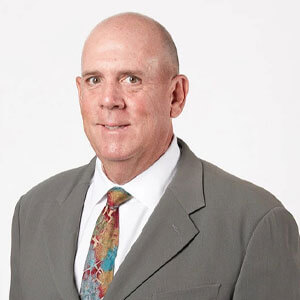
Geoff Graf is the Vice President of Business Development at Hogan Hospitality Group, a hotel management company that operates and develops hospitality assets for property owners. He leads efforts to identify opportunities and build strategic partnerships to support portfolio growth. With decades of experience, he has held leadership roles across operations, asset management, and business development. His career includes working with major hotel groups and driving expansion through acquisitions, development, and long-term owner relationships.


Geoff Graf is VP of Business Development at Hogan Hospitality Group, a family-owned hotel management company with roughly 3,400 rooms across Hawaii and the US mainland. His 43-year career spans Colony Hotels, Aston, Outrigger, and Aqua — where he doubled the portfolio from 14 to 29 hotels and helped engineer the Aqua-Aston merger, which created the largest hotel management company in Hawaii at the time. Kin Sio sits down with Geoff on The Lights On Podcast to dig into what separates companies that grow to be acquired from those built to stay.
Geoff’s path wasn’t linear. He started as a houseman in 1983 at a 60-room boutique at the foot of Diamond Head — recruited off the rugby pitch by his coach, who happened to manage the property. At 30, he left the industry for three years to compete internationally in outrigger canoe and surf ski racing, placing in the world rankings. When he came back, Colony Hotels sent him to Molokai to manage Kaluakoi Resort and Golf Club: a former Sheraton with a golf course, struggling occupancy, ownership under financial strain, limited air lift to the island, and buildings with TVs and phones stripped out. His answer was the “Pakeli” package — pakeli means “escape” in Hawaiian — which marketed those bare rooms as a deliberate unplugged experience, borrowing from Kona Village’s model. It filled rooms, drove restaurant revenue, and worked. He notes it predated the unplugged travel trend by about 30 years.
The conversation sharpens when Geoff draws the line between Aqua’s growth strategy — explicitly designed for acquisition, which is exactly what happened when Aston’s parent company absorbed them — and Hogan’s: long-term owner relationships, no management agreements structured around an exit date, a deliberate consolidation from five states down to California and Arizona when remote properties were pulling more resources than they returned. For small independent operators who aren’t ready for a full management agreement, Geoff’s advice is direct: outsource revenue management and digital marketing first, get hospitality-specific accounting in place now if you ever plan to sell, and stop relying exclusively on OTAs — most small operators take that route, Geoff says, and it cuts directly into their margins. The right management partner, he says, pays for itself 99.5% of the time — and means you stop getting the 1 AM call.
How Family-Owned Growth Looks Different
“Aqua was growing to be acquired. We are not growing to be acquired. We are growing to sustain ourselves for the long term and create long-term relationships.” — Geoff Graf
The Management Philosophy That Changes Everything
“We view ourselves as an owner-centric management company. We look at it from an owner’s perspective first, and we want to run the property like we were the owner.” — Geoff Graf
How Hogan Thinks About Management Contracts
“We’re not going to create an agreement that basically is just telling us when we’re going to get divorced. We want to create an agreement that keeps the marriage in place.” — Geoff Graf
The Test of a Real Hotel Operator
“It’s really easy to manage a hotel when it’s making money, it’s running high occupancies. That’s great. When it’s not making money and it’s not running high occupancies for whatever reason, you’ve got to get creative.” — Geoff Graf
On 43 Years in the Business
“Kin, being a legend sometimes is also just a nice way to say you’re old.” — Geoff Graf
This episode is sponsored by Lights On.
Lights On helps hotels grow revenue more consistently by managing pricing, distribution, and digital marketing together.
We help hotels identify new revenue opportunities, so they don’t leave money on the table. We also manage the full revenue and marketing operation, enabling the on-the-ground team to focus on the guest experience.
If your hotel needs stronger revenue growth, visit lightson.co to learn more.
Powered by Rise25 Podcast Production Company
[0:00]
Kin Sio: Welcome back to the Lights On Podcast. I'm Kin Sio, CEO of Lights On and your host today. On this podcast, we share stories from across hospitality about building and growing hotel businesses.
Kin Sio: This episode is sponsored by Lights On. Lights On helps hotels grow revenue more consistently by managing pricing, distribution, and digital marketing together. We help hotels identify new revenue opportunities so they don't leave money on the table. We also run the full revenue and marketing operation so the team on the ground can stay focused on the guest experience. If your hotel needs more revenue growth, visit lightson.co to learn more.
Kin Sio: My guest today is a legend on the islands of Hawaii, Geoff Graf, VP of Business Development at Hogan Hospitality. Geoff is VP of Business Development at Hogan Hospitality, a family-owned hotel management company with over 3,000 rooms across Hawaii and the mainland. Geoff has spent the past 40 years in the Hawaiian hospitality scene. He started in his early 20s on Oahu and really worked his way up to general manager across some of Hawaii’s most recognized hotel companies — Aston, Aqua, Outrigger, you’ve done it all.
Kin Sio: And then you moved into the business development role where you doubled Aqua Hospitality’s portfolio from 14 to 29 hotels and helped engineer what was at the time probably the merger that created Hawaii’s largest management company, Aqua-Aston. And from there, you now lead business development for one of the few family-owned operators, Hogan Hospitality, and it’s a big competition against all the other private equity-backed groups. So super excited to hear all those stories. Geoff, welcome to the show.
Geoff Graf: Well, thank you, Kin. I appreciate it. Your intro is very generous.
Kin Sio: I feel like you’re still underwhelmed to some sense. You are such a legend. 40 years. So why don’t we —
Geoff Graf: Kin, being a legend sometimes is also just a nice way to say you’re old.
Kin Sio: Hey, you take some experience to actually see through the stories and ups and downs of the industry. So I think it’ll be good digging into some of the stories. Why don’t we almost wind back to the ‘80s? Because you started hospitality back in the ‘80s when you first came to Oahu in your early 20s, and you really worked your way up to being a general manager across some of the biggest management companies in Hawaii. Can you tell us what was that climb like, and what did those early years teach you that you couldn’t learn any other way?
[3:20]
Geoff Graf: Well, I guess I should start by saying I’m somewhat of an accidental hotelier. I didn’t plan on being in the hotel business. In 1983, when I moved to Hawaii, I was actually playing rugby and my rugby coach was managing a small boutique hotel at the foot of Diamond Head.
Geoff Graf: He didn’t like me working in the bar where I was a doorman — in other words, a bouncer. So he told me I was going to come work for him. I started in the hotel business as a houseman at a small 60-room boutique hotel and worked my way up from there. A lot of it happened to be in the right place at the right time, meeting the right people.
Geoff Graf: I wasn’t as knowledgeable then as I think I am now. I realized later how fortunate I really was by being able to work with some of the individuals I worked with early on in my career. They’re the ones that I really owe a lot to as far as my progress and being able to work my way up, as you said, from a houseman to a guest service manager to eventually general manager.
Geoff Graf: Then moving on to other bigger hotels, moving to different islands. That’s also a big part of the industry when you’re trying to move up — you’re not necessarily going to do it in one spot. You need to be flexible and move. You had mentioned that I had worked for several management companies in Hawaii. The reason I did that and didn’t go the Hyatt or Hilton or Marriott route was because I wanted to stay in Hawaii. I had moved here from Southern California when I was 22. I didn’t want to go anywhere else.
Geoff Graf: That’s ultimately how I ended up with Aqua-Aston and Outrigger before that. I wanted to raise a family here and be a part of the community. Again, I was extremely fortunate, especially seeing as how I got into the business by accident.
[6:00]
Kin Sio: I noticed that through my research, during that time, you actually left the industry for a few years and focused on your athletic career. You came as a rugby player, but since coming here, you’ve been doing a lot more water sports. You were literally spending a few years in between your career to do that. Just curious about that experience. As you came back to hospitality, how did that experience shape how you look at things differently?
Geoff Graf: I look back at that time period and you’re right, I did leave. I turned 30 and I had some opportunities to travel through sport that were going to be hard to pass up, and I wouldn’t have them later on in life. I did what a lot of people thought was crazy. I happened to be the youngest GM in the company that I was working for at the time. I said, hey guys, I’m going to leave. They’re like, well, where are you going to go? I said, well, I’m not going to go anywhere except travel. They thought I was crazy. Financially, yeah, it was pretty crazy to do.
Geoff Graf: I took three years off, traveled to places like South Africa, Australia, New Zealand, a lot of West Coast stuff — being able to travel for sport, both outrigger canoe paddling and surf ski paddling, doing races. I actually got ranked in the world rankings for a little while there. It was a time period that I couldn’t have done otherwise.
Geoff Graf: The lessons learned really were, one, traveling and getting that experience from the guest perspective. Although a lot of it was not necessarily staying in the finest hotels, it was a different type of experience. Coming back with that experience, coming back a little bit more knowledgeable — both from the standpoint of understanding employees and their desires, their goals, what they want to do in their lives, the freedom that they might need in order for them to fully develop.
Geoff Graf: I count that time period as helping me to fully develop into somebody that came back, was hungry, needed to work. I had fallen in love. I definitely needed to work and start to be responsible. I had a family that wasn’t necessarily happening right then, but it was going to happen. That was the plan. When you come back and you’re thinking that way, you look at things a little bit differently than I did when I was in my 20s, where I looked at it as a job. When I came back, I looked at it as, this is the financial means for me to provide for my family. It’s also a very good job to have in Hawaii. If I’m going to stay in Hawaii, I’m going to need to get serious about this.
[10:00]
Geoff Graf: I did pay my dues when I came back. The company that I had been working for, and this takes people back quite a long ways, was a company called Colony Hotels and Resorts. They eventually ended up getting acquired by Outrigger, at least their management agreements did. They left the state, but they took me back and they sent me to Molokai.
Geoff Graf: Not a whole lot of people go to Molokai as a career choice, but it was another great experience being able to go over to what was formerly a Sheraton resort, having a golf course, having a full-service hotel. That also had issues in terms of occupancy and some ownership issues where they had some financial problems. It was a struggling property. It was a struggle on the island because the island didn’t have the lift to get your guests in. You had to get really creative being over there.
Geoff Graf: Being under those circumstances taught me a whole lot about managing a hotel. As everybody probably listening to this type of a podcast would realize, it’s really easy to manage a hotel when it’s making money, it’s running high occupancies. That’s great. When it’s not making money and it’s not running high occupancies for whatever reason, you’ve got to get creative. You’ve got to look at different ways of doing business, how to get your message out. Remember, at this point in time, it’s in the early to mid-‘90s. We didn’t have all the tools that we have now. We depended on getting our business in different ways. It was quite an experience, but it was a jumping point for me.
Geoff Graf: That’s how I ultimately ended up getting into Outrigger Hotels, which was a goal of mine because they were a family-owned business. They were based here in Hawaii. They were also expanding at the time. I happened to know some of the family members, the Kelley family. It was this goal that worked out well for me. Then my next spot was moving over to Maui for a little while and then to Kauai and then back to Honolulu. That wouldn’t have happened if I hadn’t first done the crazy thing and left the business for a few years and then come back.
Geoff Graf: I don’t know if I would have had the experience necessary as quickly as I feel that I got it if I had not gone to a property such as Kaluakoi Resort and Golf Club over on Molokai. Molokai kind of holds a special place in my heart anyways. As you may be aware, it’s the starting-off point for the World Championship of Outrigger Canoe Racing. There’s several other races that start there. I got married there while I was the GM of the hotel. It was the best place to do it.
Geoff Graf: It does hold a very special place in my heart. But from a business perspective, it definitely taught me a lot very quickly on certain aspects of the hotel business. So I ended up being better for it.
[14:23]
Kin Sio: I think it’s not just an industry or career lesson, but a life lesson. Sometimes anything career-wise is not necessarily linear. Sometimes you take a detour, but it might be serving you the best. From what I’m hearing, there’s no regret on that experience. And honestly, if you had turned down those opportunities to travel with sport, I’m sure you would probably feel more regret than actually doing it.
Kin Sio: One more follow-up question on that and then we can move on to other areas. Thinking about your effort to turn around the struggling property in Molokai — obviously back in the ’90s, to your point, you didn’t have the same set of tools that we would all have today thanks to technology advancement. If you think about something that you did back then that is still effective and could be used by hoteliers nowadays, when it comes to times of uncertainty like what we are having right now, what are the things that wouldn’t change that you think are still effective after decades of time?
Geoff Graf: Well, you have to remember that this is before OTAs. The biggest producers to Hawaii at the time were our wholesale travel partners. Pleasant Hawaiian Holidays being the largest. And it’s the family I work for now, although they sold that part of their business many years ago.
Geoff Graf: That’s what we did. And that unique experience on Molokai, and to some degree on some of the other neighbor islands — I mentioned we had lift issues. Fortunately, we had a startup airline that was starting to bring more and more people into the island. We had to work closely with them to get more lift coming into the island. We had to create some things that they could package and sell. We were doing a lot of that on our own.
Geoff Graf: For this particular property, we had a couple of buildings that were actually mothballed. I mentioned that the ownership was struggling, didn’t have a whole lot of financial resources or didn’t want to put a lot of financial resources into the property at the time. We had some buildings that we had cannibalized — this even started before I got there — TVs and phones. You’ve got to remember the TVs back then were box TVs and the phones were dial-up. As a matter of fact, that property actually had a switchboard that still required an operator to plug things in. So it was quite unique.
[18:00]
Geoff Graf: But what we did is we looked at this and we looked at where our highest demand periods were and whether we were selling out during those time periods. And we were — it was weekends and it was golf packages. But because we had a couple of buildings mothballed, we couldn’t maximize that. We were actually successful in getting enough lift in over the weekends that we could bring golfers in, but we didn’t have enough operable rooms to do it.
Geoff Graf: So we created another room category and we called it the Pakeli rooms, and it became the Pakeli package. Pakeli in Hawaiian is "escape." We kind of said, we’re going to be like Kona Village. We’re not going to have TVs or phones in the room. This is your opportunity to come to Molokai and escape. The reality is we didn’t have phones or TVs to put in the rooms. But it was our lead-in package and it worked. We were able to bring more guests in, fill more rooms over those weekends, and drive some revenue.
Geoff Graf: Being a full-service property, the only way for us to fill our restaurant was to bring guests in. There’s not a whole lot of eating opportunities on Molokai, although there are some really good ones in town. But our guests weren’t going there. They needed to be on the resort. It was somewhat remote. So again, it was the creativity part of it that you needed to look at in order to do things back then without the OTAs. Of course, we worked with our travel partners, but it was in a different manner. It wasn’t as quick. So doing some of the same things, just doing it a little bit differently than we’re able to do now. Now we’re able to move a lot faster.
Kin Sio: Geoff, I just got to say, there are so many golden nuggets from that experience that are so applicable today. I think the two key things that I extract were, one, sure, now we have OTAs, now we have the e-commerce, web-direct things. I think hotel owners and operators still overlook the distribution — all the other opportunities to get more business in. Thinking about wholesale, direct sales. In Hawaii, I think it’s still more relationship-based where many hotel managers still keep those relationships with lots of the Japanese wholesalers and things like that. But on the mainland, especially for newer operators, sometimes they forget about these opportunities. It’s not just either-or, it’s not just web direct and OTA. When you actually have opportunities to build a more diversified distribution, I think that’s still very applicable in the modern world.
Kin Sio: The other part is thinking about using sometimes a disadvantage to your advantage through creative storytelling. We just had a show the other day with Brad Shiratori, who is actually the previous global brand director at Oracle. We had good stories about how not every property is on the beachfront. Not everybody has the luxury of their location. At that point, you have to be very creative about telling the story to attract people. When you mentioned the escape package, it’s actually very on-trend right now. People are getting so mind-boggled with technology. They might be looking for a similar experience trying to do a wellness escape. It’s funny that you were already doing that back in the day. I think all of these are still very relevant to how hoteliers should be running their properties today.
Geoff Graf: Yeah, it was like a form of getting unplugged before we had the term being unplugged.
[23:00]
Kin Sio: Switching gears a little bit. Being a GM at the time was kind of your goal, right? I think it’s the goal of many hoteliers starting from the bottom — it feels like that’s almost the pinnacle, being a GM of a property. After that, you moved on from being a GM to getting into the business development side of things. Was there a moment where you realized that you wanted to grow a company through business development versus just running a property as a GM?
Geoff Graf: It’s a great question. I’m going to try to provide you with a good answer. There was a little in between being a GM and getting into business development. I became a consultant, I became an asset manager, went out on my own. And when I first did that, I actually consulted back to Outrigger Hotels just as an independent.
Geoff Graf: Through that process, I really gained more insight into the owner’s perspective. Prior to that, I was working always for the management company. So my view was from the management company’s side of things. Going into consulting and then asset management, I started to see it from the owner’s perspective. That provided me with what I felt was the tools to be able to meld both sides and make it work for everybody.
Geoff Graf: Today, working with Hogan Hospitality, my boss, Gary Hogan, views things the same way. He’s told me many times, look, if it doesn’t work for them, it doesn’t work for us. He’s told me, "I wouldn’t sign that as an owner." So we look at things from that perspective.
Geoff Graf: By leaving a pretty good position as a general manager for the Outrigger Reef Hotel in Waikiki, which was the biggest hotel for Outrigger Hotels, and going out on my own — again, it was an uncommon thing to do. But doing that furthered my own education in what works in the industry, what you need to look for, and how to best provide a management service that makes it work for the owner. And I like to say, look, we’re not going to create an agreement that basically is just telling us when we’re going to get divorced. We want to create an agreement that keeps the marriage in place. So that’s what we work towards. We try to be very flexible when we look at it that way.
Geoff Graf: Going back to being fortunate in who I worked for, that’s how it came about. As a matter of fact, I was asset managing for a hotel when I first met Ben Rafter, who had just joined Aqua Hotels. And Aqua Hotels was being led by Mike Paulin, who is truly a legend in Hawaii hospitality. Eventually, I went to work for Aqua — a bit on the operational side in the beginning, quickly turned into the business development side, working alongside another legend in the business, Bill Henderson, who had worked with Outrigger and helped grow Outrigger into the South Pacific and beyond back in the ’90s.
Geoff Graf: So you’ve got to look at your opportunities as they present themselves. Don’t be afraid to jump. You need to go. Take advantage of it. Really recognize the quality of the people that you’re working for and do that. That’s how I ended up in business development. Plus, I saw all the fun places that Bill Henderson was traveling to, and he didn’t have employees to manage or anything like that. And I thought, well, hey, that’s the job that I want to have. So I was fortunate to work with him for several years at Aqua.
[29:00]
Geoff Graf: You had said that we had grown the company from 14 to 29 — kind of lost count what we did during that time. But for me to take any kind of credit there, I was part of a team that did that. And that’s what it takes to grow a company — to have the right individuals in the right positions on your team to make that happen.
Kin Sio: With such a quick result — scaling, almost doubling the portfolio, and obviously later on with the merger between Aqua and Aston, the portfolio really grows by a lot. On the business development side, that’s great. Operationally, with that fast of a scale, what breaks first? There’s got to be some growing pains with that fast growth where the original systems or processes would break. What was that like and how were those situations handled?
Geoff Graf: Well, as an example, both at Outrigger, who grew rapidly during that time period, and then with Aqua — at Aqua, I know some of the strain points were your accounting department. How many properties can an accountant handle? I know we were adding junior accountants all the time and we were running out of space all the time. Just within Aqua, within the same building, I think I moved my office four or five times. And usually it wasn’t much of an office and I was usually sharing it with somebody. As a matter of fact, I think every time I was sharing it with somebody.
Geoff Graf: So you have physical constraints, you have personnel constraints. I recall one time, we were having an executive session and we were announcing that we were bringing on a new property. And our marketing department said, whoa, whoa, whoa, wait — we can’t handle another property right now. We can’t bring them on that fast. And we said, well, you’re going to have to figure out a way because it’s coming on and it’s coming on in like two weeks.
Geoff Graf: So you’re right, there are definitely strain points when you’re growing that fast. But it’s just like as an individual — when you see an opportunity, don’t be afraid to take it. As a management company, you need to do that as well.
Geoff Graf: Now, conversely, I’ve also been in the situation more recently where we’ve looked at our portfolio and said, hey, some of these properties don’t make a lot of sense and they pull a lot of our resources. We need to look at ways to consolidate into a better platform of properties that makes sense for us and makes sense for the owner. We do better when we’re able to have a concentration of properties in certain areas, have personnel in certain areas versus getting too far flung. We had some small properties that were hard to get to. Some of our regionals had to drive through literally snowstorms to get to them. And they just didn’t have the revenue to really make it worthwhile for us or the owner.
Geoff Graf: There are strain points and it goes both ways. You have to look at it. But in the case of growing, you’ve got to be ready to do that. In the cases where we were, when I was with companies that were growing rapidly, you needed to have the resources available even before you were actually doing the growing.
Geoff Graf: Now, we didn’t always have it. And I can tell you that awards need to go out to a lot of people for the time they put in. After the first of the month, the Aqua accounting department was working till 11, midnight sometimes. They were calling in, bringing in pizzas all the time to keep everybody fed, just to get all the financials done and out by the 10th of the month for our owners. It was a strain on everybody. Not me — I wasn’t working till midnight. Not in that case, but I was working till midnight doing some other things to bring some management agreements in. But it was probably a little bit more fun for me than it was for them.
[34:30]
Kin Sio: The cycles, right? Your time and effort is going to be more upfront at the beginning of the deal versus on the operational side. And I saw the pace of growing. That’s an interesting point, which is a good segue into the family-owned environment.
Kin Sio: This has been the theme of our conversation today — having a family-owned and operated company versus a company that is backed by private equity. The pace of growth can somewhat be controlled, right? Versus the case at Aqua and later on after the merger, Aqua-Aston, which was more architected through capitalism. Now moving back to the family approach working at Hogan — how do you see that difference? And what makes sense about being part of a family-driven, family-operated approach versus something that is more private equity-backed, where they’re all looking at the numbers of properties under management and trying to find an aggressive way to grow? What was that like, the difference, and which way do you prefer? I kind of know the answer, but I’d like to hear it from you.
Geoff Graf: Well, I can tell you there is a difference. I don’t know if this is going to stretch all the way across the board, but Outrigger Hotels was family-owned at the time when I worked for them. Their approach was a little different, but they were big. They were the 800-pound gorilla here in Hawaii and they were expanding. But they had what I like to say is the family values in terms of how they operated. That was very much appreciated and I learned a lot from it.
Geoff Graf: The same goes for working for the Hogan family. When I first started working for them, I came in under a little bit of a different umbrella to work over with some development things over at Royal Lahaina Resort. Eventually that morphed into, hey, we’ve got all these resources. We know how to bring guests into Hawaii because Ed and Lynn Hogan started Pleasant Hawaiian Holidays in 1959. Between the Hogan family and the Kelley family, they really are responsible for bringing affordable tourism to Hawaii. The Kelley family had the affordable hotels and the Hogan family was packaging affordable trips to Hawaii. Credit those two families for bringing this industry to where it is today.
Geoff Graf: Looking at that, the idea was, well, why don’t we become a management company? I transitioned again back into a biz dev role and we started looking around. But being family-owned and with some of the changes that had occurred — all the private equity, the big guys acquiring hotels — the atmosphere had changed a little bit. When we were approaching it, we were looking at it differently. We want to grow responsibly. We don’t want to go too fast. We don’t want to be the biggest. We don’t want to have a hotel on every corner in Waikiki to where we’re basically competing against each other.
Geoff Graf: I asked Gary Hogan, well, how patient are you? Because it takes time and we’re not known as a management company right now. We went through that process. Hogan Hospitality Group, the name, was born out of that process. We started working towards getting some management agreements.
[40:00]
Geoff Graf: Fortunately, I had a relationship with an owner on Kauai who approached us. We had actually gone over just to look at some rooms one time, but I always stayed in touch. I consider this owner a friend. At some point in time, he asked us, would you consider coming over and managing our property? That was our first property to bring into our management portfolio. We still have it today, as you know. You’re very familiar with it.
Kin Sio: A mutual house.
Geoff Graf: Yeah. That’s the one property where I definitely stay more involved from an operational standpoint. I appreciate that. It allows me to say I still do a little bit of ops.
Geoff Graf: But that wasn’t enough — we didn’t want to just get one property here and there. We’d love to have a property in Waikiki. We would love to have another property on Maui. We had one on Maui and we could go into that later. But then we wanted to expand to the mainland.
Geoff Graf: What’s the best way to expand to the mainland? Again, the Hogan family is being very patient in terms of how we approach this. I had been involved previously with acquiring a mainland management company during my Aqua days. We started looking around and eventually found a small management company based out of Northern California. By the time we did the acquisition, I think they were at 15 hotels, maybe 14. But we were able to acquire them.
Geoff Graf: One of the things we looked for was a management company that was very lean in its operation, because we didn’t want to be a big guy coming in and then laying everybody off because we already have those resources elsewhere. We were able to come in and acquire a management company and keep everybody. To this day, most of them still work for us.
Geoff Graf: As a matter of fact, we acquired that company from an individual who was looking for a way to retire, but to keep his employees still employed and working for the company. His senior VP is now our president of the mainland operation and she’s doing a great job. We couldn’t do it without her.
Geoff Graf: We’ve grown the mainland properties. At one point in time, I think we were up to 27. We’ve shrunk that a bit, but we’ve kept our room count about the same number — about 3,400 rooms. I say "about" because sometimes you have a hotel going out, sometimes you have a hotel coming in, but we’re right around 3,400 rooms now.
[44:00]
Geoff Graf: We’ve done that by looking at our portfolio and deciding what makes sense. We consolidated a little bit. We looked at the size of hotel we should be managing. Should we be managing a 20-room hotel in Sheridan, Wyoming? Probably not. It doesn’t make sense for us. It doesn’t make sense for the owner.
Geoff Graf: We settled on a room count that is our sweet spot, which is about 100 rooms or more. I think our average, if we average everything out these days, our average room count is right around 140 for the hotels. We have some 300-room properties, some 200. We have some legacy properties that we acquired when we acquired the company that are less than 100, but they’re legacy properties and we work well with the owners and they do well. They’re also what I like to refer to as "geographically friendly." We can support those hotels. We might have a larger hotel in the area with some more senior people. Our regionals can get around a little easier.
Geoff Graf: We went from being on the mainland side of the business in California, Arizona, Texas, Wyoming, Utah, to now we’re basically in California and Arizona. It’s easier for us to physically visit our properties. We do a lot remotely, but we have somebody there on a regular basis to check on the properties, make sure our people are doing well, that they have everything they need.
Geoff Graf: I’ve probably gone beyond your question, but that’s what we did in order to grow our company. And the difference between rapidly growing as we were doing with Aqua — I’m not divulging any secrets when I say Aqua was growing rapidly because Aqua was growing to be acquired. We are not growing to be acquired. We are growing to sustain ourselves for the long term and create long-term relationships. It’s probably the biggest difference between us as a family-owned company and another company, because acquisitions happen all the time. That’s what happened with Aqua — they got acquired by Aston’s parent company at the time and created another bigger management company.
Geoff Graf: With us, we’re not looking at it that way. We’re looking at it as long-term growth, long-term opportunities for the individuals that work for us, and long-term relationships with our owners.
Kin Sio: It’s such a luxury to be willing to say no and have an owner with that patience to be able to have all that sustainable growth that you mentioned. It’s such a peace of mind when your clients know that this is how you operate. I think it’s also peace of mind that the property owners aren’t just merely a number on your spreadsheet, because at some point, many PE-backed companies just want to aggregate, move up, get bigger, and sell at a higher multiple. In this case, it’s such a luxury for you working for Hogan as a company, as well as for your clients.
[48:00]
Kin Sio: Obviously, you have the luxury of crafting your ideal client profile — properties slightly bigger, in Arizona, California, 100 keys and above, that tends to work best for your company’s economics. So for properties that are smaller than that — because we have a lot of independent and boutique hotel operators and owners that are far less than those numbers, we constantly deal with properties that are 20 and 30 rooms — mostly the owners have to be the operators running that. But at some point, they want to get to a point where it can be dedicated and start having a management company help them with the operations.
Kin Sio: What would be your tips and tricks for how smaller hotel owners and operators should think about finding an outside management company to help them?
Geoff Graf: Well, you’re right that the smaller hotels generally need to be owner-operators. And don’t get me wrong, I actually love small boutique properties. If I have a choice to stay somewhere, I’m probably going to choose a small boutique property.
Geoff Graf: When we acquired the company on the mainland, I personally, before we acquired it, went to every single hotel that they had and every single hotel they managed. And my favorite was a 15-room property in Fort Bragg — which is really hard to get to — Fort Bragg, California. Unfortunately, we don’t have it anymore. It did go owner-operator. It just didn’t make sense for anybody. But it was just a wonderful property. It needed to be an owner-operated property.
Geoff Graf: Let me be clear — we still look at and still have some properties in our portfolio that are under 100 rooms. The difference really is what type of ADR, what kind of revenue can that property generate? If it can generate enough revenue, then it can make sense and we’ll look at it. But it’s got to generate enough revenue for them to be able to afford, if it’s a small property, the luxury of a management company. And for us to make enough money off of it, because that’s our business, to make it worthwhile and pay attention to it.
Geoff Graf: We also look at geography. Where is it located? If it’s located someplace where it’s easy to get to, we might have other resources in the area, then we’ll consider it, given whatever revenue it’s producing. So it’s not to say that a management company can’t work with a small property, but we need to make it work so it works for both sides. So generally you’re right — it needs to be an owner-operator if it’s a really small property.
Geoff Graf: Where I think most of those types of properties could use help is — maybe they have an asset manager. I don’t know if that really makes sense for a small property. The owner should be close enough to it that they can operate it and pay attention to it. But where they really need help usually is an area like what Lights On does — helping with the revenue management, and more so maybe in the digital marketing.
[52:00]
Geoff Graf: Things have changed a lot since I got into the business. My hair’s changed, everything’s changed. But I think that’s an area where usually the smaller operators are challenged. A lot of them just end up going the easy route and relying on OTAs exclusively, which cuts into their margins. They’re not going to be able to drive as high a revenue as maybe they could.
Geoff Graf: The other area is having an actual hospitality accounting firm do some books for them. Because if they should get to the point where they want to consider selling, what we find with a lot of smaller properties and owner-operators is their books aren’t set up to market the property. You’ve got to dig through things and recreate things.
Geoff Graf: We work closely with a lot of brokers. We’re constantly on the lookout for some of our ownership groups for new properties. They want to find new properties. We’ve been pretty successful helping them do that. So when we look at things or a broker looks at things, we’re going to have to work together and repackage financials to make the property marketable to a buyer.
Geoff Graf: But from an ongoing operational standpoint, I really think that the area where, as a small property, they can utilize help is going to be in the marketing area. How can they get out there? Can they better negotiate — if they’re not a branded property — with the OTAs to get better rates, better margins? The brands have a plethora of soft brands out there now. I can’t keep track of them. I tease the guys all the time. We go to conferences — ALIS, the Lodging Conference and so forth. I meet with the franchise guys, and they meet with us because we’re based in Hawaii. And they all want to have Hawaii properties. Well, our properties in Hawaii are independent and they run really well as independents. I think we’re experts at that.
Geoff Graf: On the mainland, almost all of our properties — we have independents, but the majority now are branded properties. We’ve got Marriott, Hilton, we’ve got some Choice product, Best Western, you name it. We’ve got the brands covered and they provide certain services and they actually help us in managing those properties on the mainland. But the mainland is run differently. I can say that as a guy that grew up in the business in Hawaii and then went to the mainland and had to learn how they operate. It is different on the mainland.
Geoff Graf: Thank goodness we have Pat Mitchell who runs our mainland operation and the team over there, because they do a tremendous job. It helps me in helping to grow the business by having such a capable team on the mainland that is so knowledgeable. They know a lot more than I do in terms of certain aspects of the mainland operation. So I’m very appreciative of that.
[56:00]
Geoff Graf: But again, back to your question — what do you do if you’re a small operator? I think the biggest area that they can get help in is somebody to help with their marketing, get the word out about their property, help them with their revenue, how to manage that, how to package things. A lot of these operators, they get into it because they think it’s a romantic business. When you’re a hotel operator, these people that say, oh, I’m going to retire and get a bed and breakfast — well, you get ready to work a lot.
Kin Sio: Hey, we shouldn’t kill the owner’s dream like that, because I think many people getting into this game want to craft that romantic guest experience. I think the gist of it is how can somebody smartly delegate out things that they don’t want to do? If they don’t have the right economics to afford a full management company, then Geoff, to your point, how can somebody piecemeal and delegate out things that don’t make sense for them, so they can focus on creating that guest experience? Whether it’s going to be having the right accounting partner, having the right company like Lights On who can do digital marketing and revenue optimization, so that they can really come in and focus on the part that attracted them to the business — building that guest experience.
Geoff Graf: Yeah. I think there could be an opportunity for something, maybe call it "management light," to go out and provide a framework for owner-operators to work under and then to provide some sort of a review process for them. Again, typically if they’re an owner-operator with a franchise, you should have that. The franchise should help you with some of those things, but they’s not going to help you with everything.
Geoff Graf: There could be some opportunities there to work with owner-operators, not on a full-blown management basis. The issue that could arise — because we’ve somewhat done that before a little bit — is that the owners could forget that, well, no, you signed up for the management light program, not the management everyday program. You have to make it clear. But I do think that type of service, if you could package it correctly, would assist a lot of people.
[59:30]
Kin Sio: Actually, Geoff, we should talk about it on the side because we are actually putting something together similar to that. But I will save that for another podcast.
Kin Sio: Just for the time being, one last question for you. And just by the way, because you have such a sheer amount of experience and knowledge, I think at some point we’re going to have to bring you back again because I have a whole list of questions we haven’t got to yet. So I think we’ll definitely file another one.
Geoff Graf: I talk a lot.
Kin Sio: And it’s all good. Honestly, you rarely find somebody with that many years of experience being comfortable and willing to share. Thank you for being here. Not many people are willing to do that. So I would definitely shamelessly ask you again for another show because I’ve got a lot more questions for you.
Kin Sio: But just to wrap this up today, last question. As you mentioned, Hogan Management right now has a portfolio of independents and branded properties, and they operate somewhat differently. Having that mix, how do you think about what you’ve learned? What does one teach you that the other doesn’t? And how would it make sense, especially for a property owner when they create a hotel, thinking about going independent versus having a full brand versus now a soft brand is becoming much more prominent? It feels like there are just so many options for an owner to think about — if they just acquired a property, thinking about repositioning it, or if they have an underperforming asset and are thinking about using a brand potentially to help them with performance improvement. How does an owner think about that?
[61:30]
Geoff Graf: Well, you look at it this way. Some of it depends on where your property is located, how you’re going to get the business in. Brands can offer a lot. We utilize revenue managers from the brands. We utilize, obviously, the marketing power. A lot of the power comes from their loyalty programs. So that’s what a lot of people look at.
Geoff Graf: Some brands are actually — it depends on what the owner’s goals are. I will generally ask an owner when we start a discussion, what is your goal? What is your goal for the property? What’s your long-term goal? Are you on a three-to-five-year hold and then you’re going to sell it? Or is this a long-term hold for you? We need to know what your goals are in order to help you achieve them.
Geoff Graf: Some owners look at some of the brands as bringing value from a real estate perspective as well. Those are the owners that may be a shorter-term hold. But again, even if they’re not, brands can bring a lot of value. I will tell you that they do make our job a little easier in some areas because the brand is going to come in and tell an owner, okay, here’s your PIP. You need to improve your property in these areas. We don’t necessarily have to do that. With an independent, we’re the ones that have to go in and say, hey, this is great. This renovation worked really well 20 years ago, but it’s not going to last anymore. You need to upgrade. We don’t have to do that with the brands. Some of them are more stringent than others on that.
Geoff Graf: We work with a broad range of brands and I think our team is pretty expert at working with them. For an owner, looking at it from that perspective and from our perspective, we like the brands on the mainland. It’s a different atmosphere over there.
Geoff Graf: You’ve got to look at your location. If you were in a hotel in Anaheim near Disneyland, you’re always going to have guests. So you have a little more flexibility. You’d be surprised the number of little independent properties that operate around there. And then you’ve got the big guys. They all do well.
Geoff Graf: Vice versa, if you’re a small 70-room hotel on Interstate 5 in California and you’re basically on an off-ramp, well, a guest is probably going to choose a branded hotel versus the Saddleback Inn that’s an independent. They have no idea what they’re going to get. So you’ve got to look at different factors to determine what’s going to work best for each property.
Geoff Graf: Some of our independents have been independents for a long time. They’ve got an established clientele. One in particular happens to be in Silicon Valley. It operates very well as an independent and we wouldn’t advise them, unless something changed, to go with a brand. They don’t need to have that.
Geoff Graf: It comes down to economics, what works well for you. The one thing I will say on either side is a lot of owners look at a management fee. They look at the cost of hiring somebody like Lights On or being a branded property and paying a franchise fee. And they say, well, we can’t afford that. What I generally tell them — and what always, I would say 99.5% of the time ends up being true — is we pay for ourselves. Because their revenue goes up, their operating costs generally don’t go up or go down because you get more buying power.
[66:00]
Geoff Graf: The same goes with a brand. If you’re in a location where the brand’s going to help you, then you don’t worry about the fee. Start looking at the revenue that’s going to be generated. And if you’re looking at a management company, a marketing company, a revenue management company, or getting involved with a brand, you’re looking at them for a reason — because you’re not getting the business that you feel you should have, or you’re not getting the business at the rate you feel you should have.
Geoff Graf: I think all of it pays for itself. And if you have a management company, well, you’re not the guy at one o’clock in the morning getting the call that says, hey, the night auditor just went out sick. We need somebody. The management company is going to get that. You don’t want to be that person.
Kin Sio: Everyone’s working so hard in the hotel business, and that’s true. Owning hotels and assets — they want to get that time back. I think it should be a life goal for any hotelier to be at some point just sitting relaxed, knowing that everything is being run well. Sure, growing up in this industry, we all had to go through the crucible of putting out fires left and right. I think everyone should go through that process to learn how hard it can be in any aspect of hospitality, to a point that they deserve and can afford having the right people playing on their side to enjoy the fruit of their labor. Everyone should be thinking about finding ways to get the time back and have professionals really operate the best of the assets.
Geoff Graf: Yeah. And there’s a fear in some owners that if they bring in a management company, they’re not going to have any involvement, or the management company is going to come in and tell them, stay away, we’re doing this, or you have to do that and it’s in the agreement.
Geoff Graf: That can be true in some aspects. I like to think that because we’re small, because we’re family-owned, and again, we have patient owners and understanding owners — I like to think that we created this term, but it seems like everybody’s using it these days — we view ourselves as an owner-centric management company. In other words, we look at it from an owner’s perspective first, and we want to run the property like we were the owner. So we’re flexible in how we approach things, way more flexible than I’ve ever seen working through very many companies.
Geoff Graf: It’s not something that owners should be afraid of. They just need to recognize that it’s another tool. It’s convenience for them. I’d like to say that it’s going to make them more money, and they’re not going to get that call at one o’clock in the morning.
[70:24]
Kin Sio: That’s the key. Well, Geoff, if anyone is wanting to have a conversation or just an assessment of their situation, where can people learn more about you and Hogan Hospitality?
Geoff Graf: Well, our website is HoganHospitalityGroup.com, and you can reach me at Geoff, spelled G-E-O-F-F, at HoganHospitalityGroup.com.
Kin Sio: Amazing. Thank you so much for being our guest, Geoff. This was a wealth of knowledge. So glad to have had this conversation today.
Geoff Graf: Thank you, Kin. We appreciate everything you do.
Transform your group booking strategies with Lights On and watch your occupancy soar.


.svg)

