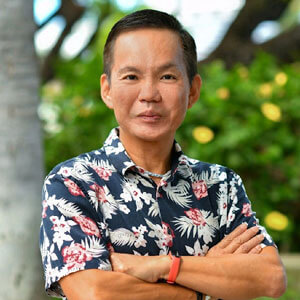
Bernard Tan is the Senior Vice President and Chief Commercial Officer at Castle Resorts & Hotels, a Honolulu-based hospitality management company operating a diverse portfolio of hotels, condominium resorts, and vacation rentals across Hawaii and New Zealand. With over 20 years of hospitality and consulting experience, he leads commercial strategy across revenue management, distribution, digital marketing, and technology. Originally from Singapore, Bernard began with an accounting background before pursuing his passion for hospitality. He is especially focused on helping hotels integrate technology, improve performance, and preserve the human touch in the guest experience.


As AI and automation collapse the travel booking journey, hotels face a real risk: turning every guest interaction into a commodity. Bernard Tan, Chief Commercial Officer at Castle Resorts & Hotels, argues the fix is empathy first, technology second. A guest can travel an entire day, checking in by phone, clearing security by facial recognition, boarding by a face scan, and never speak to a single person before reaching the front desk. That makes the hotel's first human welcome matter more, not less.
Kin Sio and co-host Keri Brown sit down with Bernard on The Lights On Podcast to unpack the human touch in the evolution of hotel tech. Bernard runs commercial strategy across one of Hawaii's most complex portfolios: 19-plus properties spanning hotels, condominiums, and vacation rentals across five Hawaiian islands and New Zealand. His core argument is that the industry's biggest bottleneck is not innovation, it's integration, and that revenue management has outgrown rate-setting into a three-part discipline of optimization, distribution, and digital enablement.
The conversation digs into the rate parity gap between sell rate and net rate, how AI is reshaping who decides what a guest sees, and why keeping a human in the loop still wins. Bernard also breaks down Castle's decision to affiliate two properties with Wyndham's Trademark Collection soft brand, how they protected each property's identity, and the early read on incremental revenue. He closes with practical advice for independent owner-operators staring at a messy tech stack: map every system first, hire for the full commercial spectrum, and remember that guests choose a destination before they choose a property.
This episode is sponsored by Lights On.
Lights On helps hotels grow revenue more consistently by managing pricing, distribution, and digital marketing together.
We help hotels identify new revenue opportunities, so they don't leave money on the table. We also manage the full revenue and marketing operation, enabling the on-the-ground team to focus on the guest experience.
If your hotel needs stronger revenue growth, visit lightson.co to learn more.
Powered by Rise25 Podcast Production Company
[0:00]
Kin Sio: Welcome back to the Lights On Podcast. I'm Kin Sio, CEO of Lights On and your host today. I also have my co-host Keri Brown today, VP of Commercial Strategy at Lights On, for our special guest.
On this podcast, we share stories across hospitality about building and growing hotel businesses. This episode is sponsored by Lights On. Lights On helps hotels grow revenue more consistently by managing pricing, distribution, and digital marketing together. We help hotels identify new revenue opportunities so they don't leave money on the table. We also run the full revenue and marketing operation so the team on the ground can stay focused on the guest experience. If your hotel needs more revenue growth, visit lightson.co to learn more.
Our guest today, Bernard Tan. I'm so excited finally having Bernard here. He is the Chief Commercial Officer at Castle Resorts & Hotels with properties across five Hawaiian islands and New Zealand. Bernard has spent 20-plus years in hospitality and consulting, and before Castle, held multiple leadership roles across revenue management and commercial strategy at companies like Aston Hotels & Resorts, Four Seasons Resorts Lanai, and spent years doing independent hospitality consulting. And a big shout out to Dan Waxman, also from Hawaii, for connecting me and Bernard and finally having the opportunity to have Bernard here today. Welcome to the show, Bernard.
Bernard Tan: Thank you so much for inviting me.
Kin Sio: So first question — before about you, let's talk about Castle. For listeners who don't know about Castle Resorts, can you walk us through what you are managing today at Castle and what makes this portfolio different from other hotel management companies?
Bernard Tan: Castle has been rooted in Hawaii for the last 35 years — locally operated, managed, and owned locally — with 19-plus properties across hotels, portfolio hotels, condominiums, and vacation rentals in five major Hawaiian islands, including the island of Molokai, and also New Zealand. So we operate a full set of hotels, condominiums, and also individual vacation rentals. Those are our portfolio, and we are currently expanding and picking up properties as we go, via condominiums or hotel properties.
Kin Sio: Yeah, and some of the questions today are definitely about the variety and the differences, because you guys manage very different properties and property types. So we'll have more questions about that.
[3:21]
But before we get to the nitty-gritty, let's talk about yourself. Starting as an accountant — that is way different than commercial strategy and revenue management. What made you leave that career in accounting and jump to hospitality?
Bernard Tan: I've always wanted to be in hospitality. When I went to Nanyang Technological University in Singapore, I promised my parents that I was going to do a Bachelor of Accountancy, thinking that the school was going to open a hospitality school in two years and I'd switch. Then I was disappointed that they decided not to open the program. So I left the school.
NTU in Singapore was highly rated, pretty much an Ivy League accountancy program, kind of hard to get in. So when I left, everybody was very shocked because I was one year to graduation. I walked away from the school and came to Hawaii to do Travel Industry Management.
I finished that in two years. Then after that I said, if I do just Travel Industry Management, I really need good analytics for marketing and such. So I said, why don't I just finish my accounting? I went back to school right away and did my MBA with a concentration in accounting, CPA focus. I went ahead and did the CPA exam — and I'm not going to tell you when I passed that because that was a very long time ago.
I did pass the CPA exam, but that actually gives me the foundation to be able to talk to so many different people within the business — IT, accounting, finance, even lawyers and attorneys — because I took three semesters of contract, company, and business law in Singapore.
[5:35]
Kin Sio: I see.
Bernard Tan: I always loved the hospitality industry. It's so different. It's so people-centric, and it's also one of the most underappreciated and underpaid industries. That's what I believe — that we can do better in the industry.
Kin Sio: You sounded very convicted about this industry before you even went to college. Were there any moments growing up that made you so passionate about it?
Bernard Tan: Before I even went into mandatory military service in Singapore, I spent about three years working in Changi International Airport inside the transit area — working in the transit restaurant, counter service, sit-down dining services, and servicing business class and first class. I really liked the idea of being free. You look at airplanes every day and you have this feeling — it's very inspiring to see people able to fly and things like that. It just gives you so much the idea of freedom. To me, freedom is one of the key things that I need. I need freedom and I want freedom.
Kin Sio: Hopefully now you're just flying business class every day, just like how you imagined years ago.
Bernard Tan: I love the industry so much that most of my research papers — whether English papers or business papers — were mostly about the airline industry. I want to crack a joke: I wrote my English 120 paper on why airplanes crash. I also did research on the reorganization of Hawaiian Airlines from bankruptcy. So I did a lot of papers on the airline industry, but I didn't end up in airlines — it's just a buzzy easier step.
I also did my professional paper on mergers and acquisitions in the hospitality industry — what kind of value it creates and things like that.
Kin Sio: We have to dig it up and put it in the show notes so people can see the path that you took.
Bernard Tan: Probably not.
[8:28]
Kin Sio: So bringing it back to more recent — through all your career in revenue management, commercial strategy and all that — I think earlier when I got to know you, one thing that you said really struck me. You mentioned that revenue management nowadays is all about distribution, which I think is still in some way counterintuitive for many professionals. So why don't we talk about that for a bit? What do you mean by that?
Bernard Tan: I think revenue management is about distribution, but distribution is only one portion of it. And I think Keri can speak a lot to that too, because they are not mutually exclusive. They need to coexist at the same time. Revenue management is far beyond — because people talk about revenue optimization — revenue management is the whole encompassing of everything in there. And then commercial strategy is the overall umbrella.
I always talk about the three components of commercial strategy. Revenue management or optimization is one part of it. Distribution is one part of it. And the other part is what I call digital. A lot of people refer to digital and they think about the whole digital interaction with the guest, digital marketing, and so on. But I think about digital a little bit differently. Now we need to start expanding digital to talk about digital enablement — how do you adopt, embrace, and push out technology that is an enabler for you to reach the guest touchpoint? So digital in itself is very huge in the whole part of commercial strategy.
Distribution is one part of it. How does digital enable your distribution to be more frictionless, more seamless? I mean, we talk about direct connectivity. When I first interacted with direct connectivity, it was 2001, post-September 11th. I went to some show in New York City and they were talking about direct connectivity. Can you imagine — 24, 25 years later and we're still talking about direct connectivity? It's almost a quarter of a century and our hospitality world is still dealing with direct connectivity, where pharmaceutical, banking, and other industries are way far beyond that.
So the whole digital enablement is a critical part of revenue management and commercial strategy. It's no longer just selling this channel, not selling this channel, adjusting rates. There is so much complexity in the B2B world, the B2C world.
[12:13]
And with the recent explosion of AI — everywhere we go everybody says AI this, AI that. I have to ask the vendor, "What do you mean by AI? In your world, what does AI mean?" And Kin and I have had very spirited discourse on AI. I'm more always critical about adoption and pushing things out because — how do you say it in Chinese — the thunder and lightning are huge, but the raindrops are very minimal, very small.
Think about voice recognition. Voice technology was supposed to fly off the shelf. Keri, did it actually fly off the shelf?
Keri Brown: Absolutely not.
Bernard Tan: Right now I think we're in the explosion stage of AI, and I do believe there's a lot of consolidation going on. We also have to think about the workflow and the value creation within our process in commercial technology. What is it that we can achieve efficiency through AI? And what is it that we need human instinct and human interaction for?
Revenue management has evolved to such a point — and shout out to HSMAI — HSMAI has the CRME certification and the digital certification. I'm wondering whether the CRME and the digital certification maybe need to be revamped within a few years to say, "Really, revenue management is not just about revenue management anymore. How do you take all those different components together?"
I can give you an idea. Is there such a thing as exclusivity anymore to any intermediary party? What do we need to do as hotel suppliers or accommodation suppliers? Can I really give something to someone that is truly exclusive? I don't think that ever exists anymore. So what do I do with distribution partner one and two? How do I work with them, making sure everything is on the same platform?
[15:00]
I do want to mention something I'm very passionate about right now — the whole thing about rate parity. The distribution partners always hold us to rate parity. But I also want to remind everybody, rate parity is really about sell rate parity. What we're really missing is there hasn't been any net rate parity. We can't hold any other partner in compliance of net rate parity because they can say, "Hey, I decide not to make that 15%, I'm gonna make 10%." Then we lose our pricing control on 5%. When something like that happens, it disrupts the whole equilibrium in parity.
Right now I believe this is what a lot of hoteliers are facing because of the different preferential pricing that exists in the distribution world. There's so much onward distribution and B2B relationships that it's almost impossible to put the responsibility on the supplier. Not to say that we are innocent, but it just opens up the whole new can of worms in my view.
Kin Sio: I agree.
Keri Brown: Question, Bernard. As we talk about the complexity of the commercial landscape and B2B and parity — do you think that the job description of a revenue manager is going to evolve with all of these new things that a revenue manager or revenue director is now being asked to take into consideration?
Bernard Tan: I think what we have been actively trying to recruit and train — first I'm gonna say the schools do not prepare a student for a revenue management role, or even hospitality work. Everybody thinks about this nice, cushy job — we get to fly from one place to another and work for nice hotels. But in reality, that's really not the case. We look into forecast, bi-weekly forecast, and then you slog through the numbers. It's not like everybody's saying, "Press a button, the forecast shows up by itself." It doesn't work that way, because there's always a human element. The data only gives you so much.
In terms of what I'm looking for — I'm really looking for a commercial performance optimization person. It's no longer a revenue manager. I'm going to post a new job — I'm still writing it out — it's really a commercial performance optimization role. Someone that can focus on how to optimize the commercial performance of a property. That means not just parity, but direct business and the different components.
I know I'm not going to get the person that checks through everything. But if I get someone with good revenue management experience who understands what digital is and has a good understanding of distribution, then we can train and develop the person.
I believe HSMAI is trying to do its part, but internally I hope the local HSMAI can focus more on having deeper workshops. I call it the donut — the middle is really the core, but the three portions — maybe do a series of three separate workshops. Talk about what distribution means, what revenue management means, and what digital means in those areas, with experts. Maybe do a bundle discount — register for three, get a good discount.
[19:55]
I would also encourage the local industry to extend those workshops to high school students or university students that hotels are willing to sponsor, so that we have a continuing stream of graduates. We're not trying to train them on skill sets per se, but trying to mentally prepare them for what's coming in the industry. I'm very passionate about educating the next generation.
Kin Sio: Yeah, and this is the part where revenue management and optimization professionals are always going to the big corporations. So for listeners out there — because we have a lot of smaller owner-operators who didn't grow up in the industry knowing what distribution and revenue optimization really mean in the context of hotels — if I were to draw an analogy, it's like somebody making really tasty ice cream.
People want to make the best experience. Ice cream makers believe they make the best ice cream in the world. So now you have the product — you have the ice cream. Now how are you thinking about selling the ice cream to consumers? Obviously you can start your own ice cream stand, your own ice cream store. Most people start with that. That's kind of like the direct channel — thinking about hotel booking directly on the website.
Over time, if you want more reach, now you start thinking about how to get your ice cream sold in a local Target, Costco, Walmart, all these different grocery stores. That's really the distribution analogy to the hotel industry. When you start selling your rooms, inventory, and experience through different OTA channels — Expedia, Booking.com, your direct website, groups — so when you have more different storefronts and distribution networks to sell your same product, now you get different pricing, different margins, depending on when and what. And ice cream is very seasonal — selling ice cream winter versus summer, pricing will be different because people tend to eat more ice cream during summertime.
So this is how all the revenue and distribution professionals in hotels think about distributing the hotel experience and rooms through a vast, complex network of distribution partners and websites.
Bernard Tan: One of my Cornell homework assignments — that was a long time ago — was: have we ever thought about dynamic pricing for a soft drinks vending machine? Think about a soft drinks vending machine. From the beginning till now, it hasn't really adopted revenue management technology. The pricing differential only differs based on whether it's at Ala Moana or somewhere else. But it hasn't even considered what the current outside temperature is. As the temperature goes up, the cost of that Coke goes up too. I'm oversimplifying, but since 20 years ago when I had that homework question, it really hasn't changed.
Why hasn't it been pushed out? Because there's no willingness from the supplier, and they haven't ascertained that there's incremental revenue to gain. But there's also the elasticity on the consumer side — it's going to feel more like price discrimination. It's going to feel like being taken advantage of, versus airline seats, versus a hotel, versus car rental. We all take dynamic pricing as normal based on seasonality. But certain things consumers don't accept.
[24:54]
If you look at it, it's not that we lack innovation. Our biggest problem is really integration. For independent properties, the big brands have it much easier. In the independent world, we have to fight for a lot of things.
Listen to this phrase — and almost nobody even talks about it right now — single image inventory. Back in those days, single image inventory was the thing. But it almost never existed in the independent hotel world. It's a nirvana state that you want to have, because our distribution system is so complex and fragmented now.
Kin Sio: When you arrived at Castle, I think from our past conversations your first task was really to map 19-plus properties, all different technologies, not talking to each other. We can't even call it an ecosystem because there's no connection between all of these. So getting into the task at hand — what did it look like when you first came in? What did you find and what was your thought process for getting closer to the nirvana state you just mentioned?
Bernard Tan: I think I want to correct something you said. The first thing I did after 90 days in the company was to put together an ecosystem map — look at the whole tech stack. I don't think the systems weren't talking to one another, but I don't believe that's the right statement to make. The right statement is there's complexity in the ecosystem. It may not be the most efficient.
Castle has always been well known for the ability to manage complexity — maneuvering around different property management systems, central reservation systems, distribution systems, different forms of reservation. Castle is well known for the ability to move between hotel systems, condominium systems, and vacation rental systems, and making sure that both systems coexist to distribute type-level availability and also individual key-level availability.
That in itself is a very complex aggregation and distribution system. If you look into the world of technology in the hospitality side, almost no system can do both. I know of one, but then you only have one choice. If you look at vacation rental systems, a lot can do key-level, but they are very clunky when you try to aggregate on a type level.
[29:30]
Castle has always been a pioneer in trying to manage those things better, and we're still learning as we go. We're perfecting each step.
At this junction, revenue management and commercial strategy — with the advent of AI — it's really going back to guest centricity. It's going down to the guest touchpoint. AI has collapsed the number of guest touchpoints from the initial inspiration to search to whatever — maybe collapsed it to a single step. Kin can talk to that. You'll use AI to say, "Hey, I want to go on a family vacation," and it's going to come back with options. Can you imagine — all those stages have been collapsed into one?
At that junction, how does AI decide what to show to the guest? It's no longer a one-dimensional or two-dimensional look where I just need to make sure my schema data is correct. It's become a very multifaceted, multi-dimensional world where you need to make sure — and Keri knows this well from the OTA days — content is king. But content now evolves to all those interactions: the messaging, the real content, the video content, the review content, the ratings, the photos. There's so many things now.
I wish someone would come up with a technology — and Kin, I'm looking towards you — that can help us manage everything in one place.
Kin Sio: We can definitely talk about that offline. But to your point, everything is a spectrum. Anything that we can inch forward closer to the goal is a benefit. It's not necessarily a binary thing — zero to one tomorrow. When we find ways to break down the complexity and tackle that one by one, there are ways to gain efficiencies and productivity through that process.
So ultimately, who has the power? That's my question. With the AI world — who has the power to put in front of the guest what they see? Because on the OTA side, they have different factors that measure visibility — offer strength and all that. In this situation, is the AI even considering offer strength, or is that a pricing thing? Who is ultimately deciding what is going to be presented to the guest? Who writes that script?
Bernard Tan: I know the answer starts with a G. Nothing is free. I'm going to tell everybody — whoever can monetize the whole AI process is going to be the one charging everybody an arm and a leg within the next year or two. So the whole PPC, search engine marketing — what is it going to become? AI is not going to be free. I guarantee you, AI search is not going to be free. Whatever we are investing in metasearch, in search engine marketing, it's just going to get invested into another channel.
[33:00]
Kin Sio: One recent case study — we are now pushing, from a client perspective, the AI chatbot and answer engine optimization as a layer on top of traditional search engine optimization. There are overlaps, but there are new techniques and ways that we have to adapt. The nirvana goal is always when somebody goes into an AI chatbot asking for trip planning, we hope that our clients will show up in those results.
It's still a black box right now. We don't have proven best practices like SEO, which has been a practice for two decades. AI is still changing week over week. We are spending lots of time on research and development trying to find the best way. But it's a huge cost not to take action. There's no one right answer for guaranteed top results in AI, but if anyone is not doing anything right now, certainly they're going to fall behind.
Bernard Tan: Sometimes I wonder about the research. I started in a research world — my initial one to two years, I did a lot of research on numbers. But I wonder when they report that a certain percentage of people are using AI for travel search — I like to dig into those a little more. How valid are those findings and what are they based on? Because they said the same thing about voice back then.
If you tell me that 40% are using AI to search for this and that, I just don't know.
Kin Sio: Actually, a boring case from other industries — Alexa, for Amazon. There was a big premise that Amazon was pushing big on voice-first search, thinking that when you put Alexa in everybody's home, people would start shopping and submitting orders through the voice experience. In reality, it was a flop. People still have that hesitancy to place the final order through that medium. They might use it for discovery.
We all know consumers right now are using AI for discovery, as a way to plan out their trips. I don't think consumers are ready yet to have AI also make the final purchase decision. There's still a timeframe where the ultimate purchase decision — consumers still like to hold that in their hands and do that transaction, whether through OTAs or direct websites. Consumers are still taking the result from AI research to make a decision.
Which I think extrapolates to anything we do with AI — this is still the coexist model where AI best facilitates decision-making. Human beings still need to be in the driver's seat.
Bernard Tan: We call it the human in the loop.
Kin Sio: Yeah.
Bernard Tan: But it's a moment in time. What I just said might be contested three, six, nine months from now. So depending on when this episode comes out, something may have changed already.
[37:07]
The findings are not really based on generation. We have to understand the consumer for travel because we always assume everybody wants everything quick and fast. But I'm always the gut check and the conscience check, because I do think some people actually enjoy the process of discovery — to really see for themselves.
Once you get to the point of everything being AI-centric, is everybody going to end up going to the same place? It really depends on what you put in. The research happening right now — maybe I haven't read one — wasn't really targeted. What's the difference? How is Gen Z, Gen Y, Gen X, and even the boomer generation embracing AI?
Kin Sio: I'm going to do a shout out to one of my favorite podcasts, The Best One Yet. Linking back to what you mentioned about "content is king" — that podcast coined this phrase: "content is king, but curation is queen."
Talking about discovery — it's definitely something consumers enjoy. This is how they dream about the next vacation and think about the experience. The process itself is an enjoyment. I think what AI is going to change, similar to how Google changed the discovery process, is that AI will have its own way and algorithm to present and curate things as you plan your vacation.
I don't think that's mutually exclusive from the discovery process itself. You're just going to be changing how consumers discover and how they use that process to get to the final purchase decision.
Bernard Tan: I'm not disputing it, but I'm way older than you, Kin. So I'm just going to tell you — over the years, Keri is way younger than I am.
Keri Brown: I am not.
[40:00]
Bernard Tan: She can remember all these things. Because remember back in those days, the explosion of internet booking, the OTAs — they said the travel advisor is going to be gone. But they didn't really go away. They evolved into something else that's much more service-oriented.
Then they talked about voice channel. A lot of call centers — definitely not as much as they used to be — but they also evolved. If you look at transactional pricing and productivity, the average booking value is going to be way higher with a call-assisted booking versus an online booking. That's my experience.
A lot of predictions that say "this is going to be replaced" — it hasn't exactly come out that way. Some actually fell flat, like voice. I'm not trying to be cynical. I like embracing AI. I just think we need to think about what the value creation is in that process rather than talking about what it's going to replace. Every time something new comes along — "Oh yeah, this is going to replace these things." But to me, in this whole booking process, how does it enhance the options and decision-making?
I almost do not hear people talking about that — it's all about replacement. Back in those days, direct connectivity came along and they said we don't need so many reservations people. But come on, there's always synchronization errors. You spend more time resolving things along the way. Efficiency is the key, but nobody talks about efficiency with AI — what does it enhance? It's all about replacement. And I don't think that's the right approach to take.
Kin Sio: Let's talk about the human side. Because it's not just AI. Especially in hospitality right now, we talk a lot about integration, innovations, moving systems — you're also going through introducing new vendors, new technologies, swapping PMS. So AI or not, technology is going to change and transform.
To your point, many times it's not about replacing human beings, but humans need to be part of the journey. And doing that at the size of Castle — you guys have 500, 600-plus employees working at different properties, interacting with systems of different forms. How do you think about bringing the team along with that journey of transformation?
[43:09]
Bernard Tan: Can I give you one example? Because I travel quite a bit — Kin can attest to that. Can you imagine as a guest traveler: you check in from your mobile phone, you never interact with any of the airport desk people. You go to TSA — imagine that TSA officer is no longer there, you just use facial recognition because they know you have a flight. You walk through security without a single security officer, just go to a gate. Boarding for the flight — no gate agent, just your face, you scan it, the gate opens, you board the plane.
By the time you get to the hotel, you haven't interacted with a single person except the flight attendant — just by default, because they can never be replaced unless robots go on the plane. By the time you get to the hotel, do you really want mobile check-in? For a lot of people on vacation — sometimes I prefer not to see anybody during the checking process, just scan and mobile check-in. But to me, that world is devoid of emotional relationship.
I'm not talking about airlines. I'm talking about us in the hotel industry. Do we want to take away those human touch experiences from people? We're not. If you imagine — we're only at the receiving end when they come and check in. But think about all the steps beforehand. They haven't talked to a single person except the flight attendant.
What we need to be cognizant of — two things. First, we need to develop empathy in the industry because a lot of things can happen before they set foot at the hotel. They could have a bad time on the plane. They could have a flight delay. We need to train for empathy.
The second thing is: what can I do for you that makes today a great day? Being customer-centric first. Then you talk about technology — how can I do it better? Having that first human interaction, helping them check in. That would help.
I've noticed a change in the hotel industry where I used to receive a phone call from the front desk or the guest services asking how my trip is. That's been replaced by text messages. I don't dispute it, but at that stage, what are we really introducing? We are making every interaction a commodity. So how do we distinguish our property from another property if we don't focus on the guest experience from the point they arrive to the point they leave?
I understand we need to embrace technology — the guest engagement system makes it more efficient. But I think we also need to think back: how do we infuse the human touchpoint into it? And that's something I don't hear people talking about.
Keri Brown: Absolutely. It should be talked about more. In a lot of ways, especially with the revenue management side, we're very numbers-focused. But at the end of the day, this is about hospitality. It's about the guest. It's about really making people feel special, especially in a destination like Hawaii. This is such an incredibly special place. That personal touch delivers an experience above and beyond what somebody can offer in Iowa or Michigan or different places. This is something special that's really central to Hawaii and the culture. It should provide that foundational element of how we build out the rest of the things that make a hotel and the industry run.
[48:00]
Bernard Tan: Something else that I believe the big brands might be doing, but I'm not 100% sure. I've noticed that on the hotel side, on the accommodations side, we focus so much on the property that sometimes we forget about the destination. We feel like the destination is an HVCB or HTA situation. But to me — how do we infuse the destination into the property?
When I search for properties on my mobile app — mostly city hotels because I need to get recharged in Tokyo, New York, or Hong Kong — I notice that most photo galleries focus on the property, the facilities. It almost never has a folder about the destination.
So are we doing a disservice trying to sell the property and not the destination? We're not staying 24 hours at the property. Most of us are there 10 to 12 hours. The other 12 hours is really our interaction with the destination. So what I'm really looking into for the next one to two years is how to infuse the destination into my property.
Keri Brown: Because those messages aren't mutually exclusive — the destination and the property — but they have to be integrated into one another. That's how you amplify a message like that.
Bernard Tan: If you really go look at any brand — look at independent properties, look at brands — look at how many actually talk about the destination.
Kin Sio: It's actually a really good point. From everything we've seen, it tends to be overlooked. I think everyone can be so competitive, especially marketing in Hawaii, when you have that many hotels in the same destination. People start thinking about the differentiation factor — how is my property different from my competitor? But what you mentioned, bringing people back to first principles — people travel for the destination. They pick Hawaii first, not necessarily this particular hotel. There are cases where the property experience draws people, but for the most part, people first think, "This is where I want to go." Then they start thinking about the planned experience and where to stay. So it's actually probably the thought of the day.
[51:00]
Bernard Tan: Hawaii is not 100% repeat guests. Our US West-centric market — a lot are high repeat. But they would also like to know what the destination has to offer, not just for repeat guests but for new guests from further out. As a destination, HVCB promotes Hawaii fairly well. But on the hotel side, we just focus on the property. We should figure out within the whole ecosystem where we sit.
Kin Sio: Since we are talking about brand, I think it's a good segue into something Castle recently did — two of your properties affiliated with Wyndham's soft brand, the Trademark Collection. How did you decide which properties needed a brand, whether soft brand or not, and which are better off without?
Bernard Tan: Primarily you had to look at the brand landscape. How many brands does Marriott have? Can anybody count?
Kin Sio: 38.
Bernard Tan: 30-plus. What's the difference between this brand and that brand? If you go to the mainland, a Fairfield Inn is always next to a Residence Inn. So that's the value proposition.
The way we look at soft brands — soft brands are something that came about when regular branding reached maturity. That's when the hotel brands said, "There are probably some areas we can go into." They created soft brands that allow you to retain your identity and control.
That's where we looked at it and said, we really don't want to lose the identity of the two properties we're thinking about soft branding. But we also looked at the marketplace — who does not have a presence here? It doesn't make sense to soft brand under Hilton, Marriott, or Hyatt because there's so much saturation and there are branding guidelines around vicinity and radius.
Wyndham Trademark met the needs of both parties. We have access to their global distribution ecosystem. They're very well connected in the distribution landscape. We fall within the brand guidelines and guardrails without losing the identity. With soft brand, we still retain the management. We still retain a big part of sales, marketing, and distribution, even though we're relying on the distribution program.
They also have a good, solid base of membership — Wyndham members. There are different ways to promote to them and different marketing partnerships.
I recently ran an analysis looking at different tiers of members that could revisit a property. How did we choose which properties? We looked at the footprint. Wyndham generally doesn't have Hawaii except for some timeshare. But for leisure destinations — Waikiki is quite congested at this point. When you think about places to start and test, a Kauai hotel property would be a good fit. Hilo Hawaiian on the Big Island was probably a good fit.
My initial analysis for the first seven months or so — it does look like it drives good incremental revenue from the Wyndham ecosystem.
[55:30]
Keri Brown: So Bernard, for the properties you've chosen to keep independent — what sort of distribution levers replace what the brand would have offered?
Bernard Tan: So you're saying how we work with our current independent properties. I think it's taking the best practices we're gleaning from our relationship with Trademark. We say, "Hey, we are doing things this way — is this better?"
At the same time, looking from the brand perspective, this is how they're running revenue management, this is how they're running distribution — it's really different because they have a global workforce. We definitely can't compete on a global scale. But what we can do is with the branding of the property — because the property still exists under the Castle portfolio. That raises overall awareness of the Castle brand and properties.
Wyndham continues to market Hilo Hawaiian and the ISO under Trademark. We also market those properties under our digital e-blasts, email marketing, database marketing. At the same time, having the brand under our portfolio instills confidence for guests on the rest of the properties we manage and instills confidence for property owners in how we manage them.
We showcase ourselves being able to manage very small-size properties to big-size properties, working with independent and branded. That gives us a different talking point about who we truly are at Castle.
Keri Brown: The strength of diversity.
[59:02]
Kin Sio: Thinking about introducing a brand into the portfolio — obviously a big part is the incremental revenue. How does that introduce additional complexity to the technology stack? Because when you adopt a brand, it comes with additional technology — whether you have to swap a PMS or run parallel systems.
Bernard Tan: Kin, you saw my ever-expanding diagram that I showed you before. I use Excel because I'm an Excel person. Keri, don't laugh. I do everything by columns and rows. All my rows are the touchpoints — the PMS, the CRS, the booking engine. We identify the technology and break it out.
Starting from the website — there's a brand.com, which is the Wyndham Trademark site where the product exists. There's castleresorts.com where our product exists under the Castle brand. And the property has its own standalone website. So we need to understand what kind of booking capability each one is using.
Wyndham was flexible enough to allow us to build two separate booking engines from the same central reservation system that look different. One aligned with the Trademark brand and the other aligned with the standalone website with its own property branding and look and feel. That was quite a bit of work.
I need to shout out that Wyndham Trademark did a really good job helping us get to that point. I happened to know the person I was working with on this — Adrian, based in London. He and I have a mutual friend from Singapore, 20-plus years. That relationship made things very fruitful.
We were even able to allow kamaaina local resident rates to show up on search — on their brand.com site and on our standalone. Usually they don't allow things like that. But I pulled up the data and showed how much money we would potentially lose if we don't make things easy for our guests.
We also retained the whole digital marketing for the property. We maintain the retargeting, paid search, metasearch, and our own site. We're driving everything to our standalone site. We're able to isolate how much web revenue is coming from Wyndham Trademark's transactional channel versus our channel.
There's definitely a lift because of the brand name itself. That's hard to quantify, but we're finding different ways to make those measurements. My job is to make sure those measurements come out in a QBR. With the support of Wyndham Trademark, the property is actually doing pretty well on the digital side in terms of ROI — the ROI we're seeing for the overall investment in digital is quite revealing.
[1:04:30]
Kin Sio: Thinking about making selections — not just brand but in general — this is the last question for you. Thinking about our listeners who are independent hotel owner-operators, maybe a small portfolio of two or three hotels. Even in a much simpler scenario, these hotel owners could still face many options — technology decisions, all the different components they can choose from. And the reality is everybody has a pretty messy technology stack. If a person like that came to you for advice — "I have a messy technology stack and I want to find a way to optimize it for the optimal revenue strategy and distribution" — what would you tell this person to look at first?
Bernard Tan: Come to me. Call Patrick at Castle Resorts & Hotels. Just look up Castle Resorts & Hotels and call for Patrick, and he will walk you over to me.
Joking aside, that does apply. If an independent is looking for third-party management, they are very welcome and encouraged to call us. We can do an initial assessment and dissect things. I'm currently assisting one developer in mapping this out. It's a much more tedious process — going through exactly what technology, what engagement you want to do, rather than saying "just sign up with this brand."
Sometimes you really don't have to go the brand route. It depends on exactly what you're looking for and how much inventory you're moving in what location. Brand is not for everybody. Soft brand can work, but you need to consider where you are in the life stage of your property.
We have very successful examples. Napili Surf Beach Resort was independent for 40-something years. They came onto the Castle portfolio in January 2024. This year, 2026, they will probably have the best year in their entire 40-plus year history.
So it's not that you have to go to a brand. Castle is a regional powerhouse in Hawaii. We can help people look at how to diversify distribution, spread market share, and increase the guest repeat ratio. That's what we are proficient in.
So what do I tell them? Look for someone familiar in the industry. Look for someone familiar in the distribution world. Look for someone familiar with the technology part. Revenue management is important, but you need someone who knows the whole commercial spectrum.
I believe there are good companies around. Lights On is a good example. If someone wasn't sure exactly what they need to do, they can look for companies like Lights On, companies like Castle.
We'll tell you what is feasible, what's possible. It's beyond top line and expenses — it's really about profit maximization.
Kin Sio: All right, thank you very much, Bernard. Listeners, we've been talking to Bernard Tan, the Chief Commercial Officer at Castle Resorts & Hotels. Bernard, where can people learn more about you?
Bernard Tan: Castleresorts.com for the property, or you can look me up on LinkedIn.
Kin Sio: Awesome, we will make sure to put those links in our show notes. Best salesperson for your company as well, Bernard. Thank you very much for joining us today. Always a pleasure talking to you, Bernard.
Bernard Tan: Thank you so much. Thank you, Keri.
Keri Brown: Thank you, Bernard.
Transform your group booking strategies with Lights On and watch your occupancy soar.


.svg)

