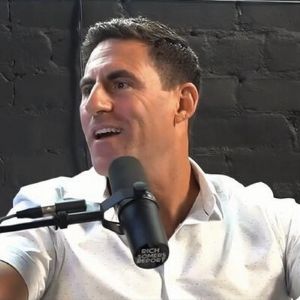
Michael Russell is Co-founder of Howzit Hostels and Malama Capital, where he focuses on hospitality investing, hostel operations, boutique lodging, and experiential real estate. He has experience across short-term rentals, commercial real estate, and hospitality assets, with a focus on acquisitions, repositioning, operations, and portfolio growth. During COVID, Michael acquired a distressed one-star motel and transformed it into Howzit Hostels, growing annual revenue from $500,000 to $2.4 million and earning Hostelworld’s 2024 award for #1 Small Hostel in North America. He also hosts The Hotel Investor Playbook, where he shares practical insights on scaling hotel investments.


Turning an overlooked property into a resilient hospitality business is rarely about the asset. It comes down to seeing value where others see risk, then operating with discipline through thin margins and shocks. During COVID, Michael Russell bought a distressed one-star Maui motel for $800,000 with seller financing and grew it into Howzit Hostels, a $2.4 million brand that earned Hostelworld's 2024 award for the #1 Small Hostel in North America. Kin Sio sits down with Michael on The Lights On Podcast to unpack how he did it.
Michael, co-founder of Howzit Hostels and Malama Capital in Maui, walks through the full arc: a W-2 sales job in Hawaii to stack capital, buying single-family homes below construction cost coming out of the Great Recession, then jumping into short-term rentals in 2015 when Airbnb was still new. Each phase funded the next, and the through-line is a single question he keeps asking: where can I find value where others are not looking? That contrarian habit is what led him to a one-star motel nobody wanted and the design-forward hostel model he borrowed from brands in Europe and the mainland.
He also gets honest about the hard parts: running 40 to 50 percent over the renovation budget, losing his own home in the 2023 Lahaina wildfire, and the slim-margin reality of hospitality that makes cash reserves and knowing your numbers non-negotiable. The back half turns practical on distribution. Michael treats OTAs as advertising partners rather than enemies, leaning on the billboard effect for discovery, while arguing the real prize in direct bookings is owning the guest relationship, not just shaving commission. He closes on building systems for time freedom, from calendar mastery to the email problem he still hasn't solved, and why his own podcast skips the sales pitch.
This episode is sponsored by Lights On.
Lights On helps hotels grow revenue more consistently by managing pricing, distribution, and digital marketing together.
We help hotels identify new revenue opportunities, so they don’t leave money on the table. We also manage the full revenue and marketing operation, enabling the on-the-ground team to focus on the guest experience.
If your hotel needs stronger revenue growth, visit lightson.co to learn more.
Powered byRise25 Podcast Production Company
Kin Sio: Welcome back to the Lights On podcast. I'm Kin Sio, CEO of Lights On and your host today. On this podcast, we share stories from across hospitality about building and growing hotel businesses.
This episode is sponsored by Lights On. Lights On helps hotels grow revenue more consistently by managing pricing, distribution, and digital marketing together. We help hotels identify new revenue opportunities so they don't leave money on the table. We also run the full revenue and marketing operation so the team on the ground can stay focused on the guest experience. If your hotel needs more revenue growth, visit lightson.co to learn more.
Our guest today, Michael Russell, co-founder of Howzit Hostels and Malama Capital, both based in Maui, Hawaii. He acquired a distressed one-star motel in Maui during COVID, renovated and repositioned it as Howzit Hostels, and grew annual revenue from roughly half a million to nearly two million, earning the property the #1 Small Hostel in North America award from Hostelworld in 2024. He also hosts the Hotel Investor Playbook podcast, where he interviews hospitality investors and operators on deal execution, acquisition strategy, and portfolio building. Michael, welcome to the show.
Michael Russell: Thanks for having me. Happy to be here.
Kin Sio: It's great to have somebody already so far ahead on the podcasting journey. I'm a loyal listener to your show, so it's my honor to bring you into our show too, just to talk about hospitality, hotel investing, and all that. Super excited today.
Michael Russell: Thank you. I appreciate that. Thanks for the long intro.
[05:00]
Kin Sio: So Michael, obviously I know a lot about your background because I'm a loyal listener to your show, but for the audience on this show who don't know about you — how did you start your hospitality journey from the W-2 world, getting to short-term rentals, then buying a killer deal and now running Howzit Hostels in Hawaii?
Michael Russell: It's interesting. It's not always linear, right? You stack these skills and one thing leads to another, but I never imagined myself as being a hospitality entrepreneur. I have had a passion for real estate ever since I started reading books about it, back when I was a teenager. And I knew that I had a calling to be an entrepreneur. I always liked the idea of being able to set my own schedule.
I learned about real estate like most people, very early on from reading books like Rich Dad Poor Dad, just to kind of get me started years ago. Gary Keller wrote a book called The Millionaire Real Estate Investor. I had a thirst for knowledge and I gravitated towards real estate.
I always thought at some point that I would start investing in apartment buildings because that's where the most information is available. There's more education on investing in apartment buildings, at least in commercial real estate, than any other asset class. That's the route I thought I was going. But things don't always work out like how you predicted.
I had an opportunity to come and live in Hawaii where a friend of mine had secured a job working for one of the hotels. He offered me a sales position. I thought, I'm not a salesperson, there's no way I could do that. But the compensation for the sales position was high enough to attract me to say, Hawaii doesn't sound so bad.
I was living in San Diego, flew out to Maui. The reason I say this is because that was my first period of sacrifice. And I get it, moving to Maui, not much of a sacrifice. But wherever you are in this world, if you want to achieve a goal, oftentimes it takes work. For me, I had a very clear vision that I wanted to buy real estate, but the means to be able to do so required that I have money.
When given an opportunity to enter the W-2 workforce and make a lot of money, I had to balance that with my ideals of being an entrepreneur and say, I'm going to sacrifice being an entrepreneur to go put my head down, work my tail off, and make as much money as I can and live a relatively frugal lifestyle.
Sometimes when people make a lot of money in whatever profession — it doesn't have to be sales, you could be an attorney, a medical profession — their spending habits go up. There's nothing wrong with that. But for me, I had a goal that what I wanted to do was build freedom. And wealth in my mind was not necessarily more material things. It was time. So I had a map.
What do I need to be able to buy my own time so that I'm not beholden to anyone, to where I can do the things in life that make me most happy — whether it's personal pursuits, learning, education, traveling, what have you.
You could pick a lot of ways to do this. I chose real estate. Back to the apartments — because there's education on it, I thought, okay, if I can start buying homes, single-family homes, and then eventually roll those into apartments, over a period of 10, 15, 20 years, I had a vision that I was going to build enough passive income to be able to do whatever the heck I wanted.
The sales opportunity, even though I wasn't a natural salesperson, was like a shortcut where I had a very clear vision that I was going to come to Hawaii, work my tail off, make enough money in a W-2, and start buying single-family homes.
This also coincided with a very good opportunity from a market perspective, because about the time that I was making this life choice, we were coming out of the Great Recession.
[10:00]
This was around 2009 that this all occurred. For those that remember or were around during that time, there was economic turmoil. There was blood in the water, right? When everyone is fearful, that's the time to be greedy. And so that's exactly what I did. I said, how do I get as much real estate as I can?
I've got no money. Working the W-2 job, as much as that did not appeal to me from a long-term perspective, it gave me the financial means to start buying single-family homes at below construction cost pricing. That was just one metric where I knew if I can buy this thing for less than what it costs to build, that's a pretty clear indicator that at some point it's going to be worth a lot more.
I think this is relevant for anyone because oftentimes people will follow the masses. If everyone is fearful about investing, that's when they pull back. When everyone is investing because it feels like, oh, this is the time to buy, that's when they're overpaying.
I had a bit of a contrarian perspective. I was willing to take on a bit of risk and move out to Hawaii, work this job, start saving all that I could to buy undervalued residential homes in Southern California, which ultimately appreciated very rapidly from around 2009 to 2012. They basically doubled in value.
That was the catapult to my first step to be able to develop enough real capital to start leveraging that and to invest in other higher-value assets. That was short-term rentals. And from short-term rentals, that led into ultimately hospitality. I'm leaving out some areas of this linear progression, but that's exactly how I got into hospitality investing — single-family home investing, short-term rentals, and then commercial real estate hospitality. I skipped out the apartments.
Kin Sio: I think that's one point — especially since you mentioned the contrarian mindset. It's an interesting topic because it's that mindset that helped you get into the really early wave of short-term rentals.
When you guys jumped in in Maui, it was before everyone else knew it was such a thing. And obviously, years later, everybody jumped onto short-term rentals to a point where now it's heavily regulated in Maui. But when you first jumped on it, I remember hearing your episode, how shocked you were after you crunched the numbers. You just couldn't believe it. It was so contrarian from the mainstream thinking with the long-term real estate strategy. Can you walk us through that thought process? How did you get through — okay, the data is showing me one thing, but it's so against the mainstream. How did you believe in yourself and actually try it out?
Michael Russell: Yeah, I think what you're referencing feels like a pattern that I've developed over time, which is find areas where there's less competition in the moment, but then an asymmetric return down the line.
At the time that I started investing in short-term rentals, this was back in 2015. And to be specific, I'm talking about short-term rental homes. Airbnb was relatively new. Prior to Airbnb, the idea of staying in someone's home was sort of taboo. There were people doing it, but the marketing and the notoriety of it was very primitive at the time. It's not like today where, oh yeah, of course everyone does it.
[15:00]
Entering that space at that time was really like a ramp. That was another catapult that accelerated my investing career because at that point, 2015, not a lot of competition, a lot of opportunity, a lot of upside. Anytime I transition into another type of investment, I'm looking for that common denominator. Where can I find value where others are not looking?
Kin Sio: That feeds into now the next launch path for investing — a career in hospitality. Short-term rentals, getting into now actually buying commercial-level hospitality. You bought a one-star motel in Maui during a global pandemic. That sounds very contrarian. Walk me through what you saw that made that feel like the right moment — another opportunity for that asymmetric return, which you did realize afterwards.
Michael Russell: Well, there's a variety of factors here, but I want to touch upon something that I feel like people, out of being polite, might avoid just asking directly. So I'm going to come out and say it — what the heck is a hostel, right? Isn't that like a dingy, low-budget backpacker place that's loaded with bedbugs and infested and just filthy? Who wants to invest in that?
When people think of a hotel, they think of the trophy asset. They think of the glamorous Instagram reel where people are showcasing their cold plunge and their sauna and their balcony hot tub and all the cool things. Or maybe their unique structure built as a treehouse or something. That's all the cool stuff. And that's what everyone wants to do. But hostels are gross. Hostels are dingy.
I say that because that's exactly the type of investment that if you look at it from a slightly different perspective, you can recognize there's gold in them hills.
What we bought — a one-star motel — was exactly what I just described. But I didn't just come up with this idea. I'm not an inventor. An entrepreneur and an inventor are very different things. I am a process follower.
I looked at this moment and said, I'm doing really well with short-term rentals, but there's a limit to how much I can scale this in Hawaii. Most of it due to regulation, some due to infrastructure issues. But I wasn't going to build a huge portfolio of short-term rentals. I liked the hospitality game. Looking at a hotel seemed very attractive. I could take the skills that I've learned from my short-term rentals and apply that.
But the problem was in Hawaii, the lowest-value hotel property for sale was like $20 million. That just wasn't a level that I could enter as a bootstrapping entrepreneur. But a one-star motel was.
I looked at the motel and said, what else could be done with this? We didn't have AI back then. Good old Google to the rescue. I found that there were brands in Europe that were really more design-forward in terms of representing what a hostel could be. Brands like Generator that had all these cool, edgy artwork on the walls. From a marketing perspective, their website was really edgy. It was demonstrating that there is a different type of hostel available.
After kind of entering the idea that this might be feasible, there was a company called Freehand that got purchased for $400 million by Generator. I'm like, what the heck? For how many locations? They must have like 50 locations. I looked it up. They had four. Four locations, $400 million.
I was blown away. I still can't believe it. It seems crazy. But for a hostel company. So I did a little searching on Freehand. It was a U.S.-based, four-location hostel company with locations in L.A., Miami, and New York. They were similar in that kind of design-forward, edgy style — really curating experiences where people can come together.
[20:00]
I know I'm going into a bit of context here, but this was something that I never associated with a hostel. With a little bit of research, I go, well, we could probably apply that same mentality to this one-star motel that no one wants because it's got the stigma of something that is dingy and not valuable.
So we bought this rundown hostel during COVID at an absolute steal. The owner had been operating for 25 years. It's your typical story — I'm tired, I'm burnt out, I want to get off the island, I don't want to do this anymore. Here, you can take it for next to nothing because it's COVID and the world is shut down.
Who in their right mind would want to buy a hostel during COVID when shared accommodations are the last thing any bank is going to finance? Well, fortunately, the seller who wanted to retire was also interested in earning some recurring cash flow. So it was a match made in heaven. We wanted the asset, he wanted out. He seller-financed. We bought this thing for $800,000 — a 20-room motel.
Three years later, it was pumping out $2.4 million in revenue.
There's a lot to that. But we basically took this rundown motel, took the principles of these other companies operating in Europe and the United States that showed there's real promise here — there's an exit, there's a market for a company to potentially acquire ours down the road — and went to work on this property. This isn't going to work everywhere. But it also had the benefit of being located in one of the most popular and most expensive tourism destinations on the planet.
In Maui, where airport motels cost $500 a night, we thought, there's got to be upside here eventually. Very similar to the Great Recession — when there's blood in the water, I had the confidence to say, I feel like I've been here before. We're going to recover. We closed in 2021. We put about a year, year and a half into renovating the property. We gave this thing some love and restored its beauty and turned it into something that's not just a cheap place to stay, but a place where people want to go and visit to meet others.
It was the antidote to a lot of the symptoms of social media. Now, when people are so isolated, they crave connection, but they're so insecure about connecting — they just get on their phones. The hostel is a place that we curated design-wise so that we force people to really interact with each other.
If you're a 45-year-old man like I am now with a family, I'm not going to stay at a hostel. But my 20-year-old self would love to go somewhere like Maui and hang out with other people that are going to want to play beer pong and hang out on the sofa and do karaoke night and then hop on our free shuttle bus where we take them to the beaches, we take them to Hana, they go snorkeling, and they meet best friends they never met before within a span of days.
That's what we're curating. We're not selling a room or a bed. We're selling an experience. It's a shared experience. And that's really what drives the value of a hostel.
[25:00]
So if you go back to the image of that dingy, dirty hostel, I'm perfectly fine with that — because I'm investing in a niche that has very little competition, relatively speaking, and converting it into a cash machine. And not just making money, but making people's lives, creating experiences people never have.
Kin Sio: That's the core of hospitality — delivering that memory and experience. Honestly, that's what got a lot of operators in the boutique and independent space. They might be thinking about making money, but I think they've got to have that heart and passion about providing that experience. Otherwise, you might as well go buy apartment buildings where everything's boring, long-term stay, everything's stable.
And there are just so many golden nuggets from that experience. Thinking about investors or normal people thinking about buying a hotel — wait, you probably need a lot of capital for it, right? But just calling out the fact that we are in America, I think people don't understand how there are so many opportunities and ways to bootstrap.
Bootstrap is a really key topic. This is how you got from a W-2 job into an investor role. Learning all the toolkit that we have in this country is crazy. Especially having a hotel asset, which is an intersection of real estate and business — it gives you a lot more opportunities. You mentioned seller financing being one thing. And I'm not sure, you might have even used the SBA loan, which is honestly probably the most friendly business loan you could get in the world.
These are things people tend not to think about. But if anyone wants to take action to build their life, thinking about time freedom, the financial freedom side of things, there's so much more people can use and leverage right now. So there's no excuse. Michael's podcast covers those concepts in depth — people should go check those out.
So thinking about converting a one-star dingy motel to that experience — especially for the young folks in their 20s — it's quite a big conversion and repositioning. Was there one thing in doing that dramatic change that you got wrong in the early process that you had to unwind?
Michael Russell: We made so many mistakes. Budgeting mistakes — that's a huge one. We didn't have any experience. I say this now because look, we didn't really know what we were doing. We took a bit of a chance. But here's the thing I will say — we're smart, we're scrappy, we're outside-the-box thinkers, and we were not risking other people's money.
This is something that I see a lot and it makes me nervous for others. When people bring me deals and ask if I'm going to invest in them, I don't want to invest in beginner operators. If someone hasn't done a deal before, I'm not going to invest. I don't care how good the deal looks on paper. I know from my own experience — we made a ton of mistakes and they're going to make mistakes. That's okay.
But from a financial perspective, if we lost money, it was our money and not investors'. In hindsight, I look back at what we originally expected to spend and how much more we spent — we basically spent 40%, maybe even 50% over budget. That would have destroyed our returns if we had investors.
We bootstrapped this and had a unique situation. The universe came together where we bought it for next to nothing. Then shortly after we bought it and made some improvements, the world reopened and we got a massive surge of folks wanting to socialize again. We ran darn near 100% occupancy for like two years.
That made us seem like we were geniuses, but it was a bit of luck. We made some predictions and some gambles. We put our chips on the table and we got lucky.
[30:00]
But if I think about all the countless mistakes — financially, budgeting was an area where we really had to mature in terms of forecasting. Not just a construction budget, but an operational budget. Really knowing your numbers is so important. That's something that often gets overlooked. Back to the glitz and glamour of investing in hotels — a lot of people do so for the trophy asset. The problem is the trophy asset doesn't often pay the bills. It's something that people feel pride in owning. But more often than not, they're not making a lot of money in hospitality.
That season — I feel like that's where a lot of us are right now. Right now, margins are slim. There's been some softening. This is really the time where sharpening our financial acumen has become important. For those folks that had promised returns north of 15, 20 percent, especially in hospitality, which is risky — I don't know of anyone that's actually doing that right now. And if they are, give me their number because I want to know what they're doing right.
That's the tough part about hospitality. I painted a picture of how great it is. I also think it's important to take it all with a grain of salt — it's a volatile business. You can really get smoked if you don't plan for contingencies. That's where we recognized our Achilles heel. Do we have enough operating cash? What can we do to refine our budget so we're able to predict our annual cash flows, so we don't just pay ourselves a bunch of money and then get hit with a surprise month where we have less demand than ordinary or higher expenses? That part, I know it's not exciting. It's not visual. It's not something I can spray all over Instagram. But it's so critically important to an astute investor — really know your numbers.
Kin Sio: Speaking about contingency, because especially you guys are operating in Maui — the universe is not giving you an easy time. Getting through the repositioning, then getting to 2023, the natural disaster in Maui hit as well. Your market effectively shut down overnight. What did that look like? Did you feel you were prepared getting into that natural disaster situation? How did that preparation play out so you could survive through that Black Swan event?
Michael Russell: Well, to a degree, there's mindset. There's what your business is doing and then how you handle that. I always tell my team — it's not the problem, it's how you react to the problem.
We had COVID a few years prior to the fire. Having gone through COVID, especially as a short-term rental operator and watching my income completely dry up, there was still some fear and pain that I held from that previous episode. But having gotten through that, it also gave me optimism.
The fire in Lahaina was not just a huge blow to my business — we lost our home in the fire. We had to navigate this whole world of chaos between my kids' school, our home, our business. It really tested us. The emotional resolve that it took to compartmentalize what I could control and what I could not — that was probably the most challenging period of my life.
It was a lot. Fortunately, in hindsight, the economic impact was relatively short-lived and we had enough cash reserves to get through the interim to where things started to return. In the moment, it feels like eternity. But in the grand scheme of things, it was a period of time that was difficult, but we persevered.
[35:00]
The short-term rentals that I operate — those were wiped out because I have them in Lahaina. Those homes burned down. Not just our personal home. But the hostel business was a little bit faster to rebound. The folks staying at the hostel, especially because it was located on the other side of the island, were a little more open to coming back. We tried our best to communicate through our email list — hey, we really could use the support. But the reality is, yeah, we took a big financial haircut.
What I learned from that outside of navigating an actual disaster — you've got to hold on to some cash reserves for that Black Swan event. Anything can happen. It's really painful sometimes to have a big balance sheet and be like, this money is earning me nothing. In fact, it's probably costing me something with inflation, just to keep money in the bank for pure security. But that discipline is important. And the fire was a valuable lesson as to why.
It's not uncommon with natural disasters. It's becoming more prominent — not just for Hawaii. Across the country, the hurricanes, windstorms, wildfires.
Kin Sio: Lots of operators have their properties in these kinds of destinations that are fairly prone to natural disasters. If another operator called you the week after a disaster hit their market, what's the first thing you would tell them to do? And what are the things that most people usually get wrong at that moment?
Michael Russell: If an operator called me — maybe they're operating in another state in this hypothetical scenario — well, first and foremost, take care of yourself. Your mental well-being, your physical well-being. Everything else is secondary to taking care of you and your family.
In the moment, it's hard for someone going through something like that to embrace that thought because everything in your body and your mind is screaming — panic, fight or flight. You're not in control.
But the reality is, if you lose everything related to your business, it's devastating, but life will go on. If you lose sight of your relationship with your loved ones, if you let it get to your head to where you grow distant from your spouse or your children — what's the point of the business anyway? The main priority of the business is to provide a means to enjoy your life. If you're not enjoying life, then losing the business is just secondary. That's the first piece of advice.
Outside of that, I would say take care of your people. Take care of the people that work for you. If you have any means whatsoever to provide support, invest it in your team — whatever means, whether it's financial, housing, anything you can do for them. Because people don't buy into a business. People buy into the people that run the business. In our business, especially hospitality, you could have the prettiest room in the world, but if the personnel are not friendly and the staff isn't there to offer that hospitality, it's not worth much. So make sure you retain your core people and invest in them. Everything else you'll figure out.
Every situation is unique and different, but for any entrepreneur who's gotten to that point where they own their own business, they clearly have a set of skills that they've learned. They'll be able to do it again. If you've done it once, you can do it again. No matter how bad it feels in the moment — if you're completely wiped out, you've got the experience and know-how to go and do it again.
[40:00]
Kin Sio: People don't realize, before anyone became an entrepreneur — I think we all walk a similar path. We started our career in W-2 and slowly transitioned into running our own businesses. For people who are still working a job, they can't appreciate how much what you just mentioned means.
First of all, everything that we do is for a purpose. For the most part, it's for our family, for our loved ones. Myself included, sometimes we tend to forget that and just get brought down to the task at hand. There's a lot going on in the business and we tend to forget our loved ones and everything else aside from the business.
Reminding people why you're doing certain things, for what reasons — it's almost something that you have to put on your mirror every day. You have to remind yourself constantly before you lose track of that.
And the second piece of advice about taking care of your people, especially in the hospitality industry — it means so much. Especially bigger hotels, they're all being run professionally as an asset. People manage the asset through the spreadsheet. Many times people forget that beyond the spreadsheet, beyond any sort of number changing, there are real-life consequences — the impact on the staff, the impact on how a guest experiences your property. Without really running the operations on the ground or having somebody partnered up running that, purely running things on the spreadsheet is probably the first big mistake to fail in this industry.
Michael Russell: Yeah, I think to your point, to be profitable, you need to be financially astute, but you also got to look at the bigger picture — what drives you, what drives your people, what's your why — and make sure you execute not just a product that delivers financially, but delivers personal fulfillment as well.
Kin Sio: So moving into more of the nitty-gritty of running a hospitality business. You run your own brand, Howzit Hostels. It's an independent brand. You're not using any big brand, which gives you a lot more flexibility to craft the experience you mentioned — inspired from what you've seen happening in the industry in the mainland and in Europe.
You've been able to drive quite a bit of success in terms of direct bookings, which I think lots of hoteliers would consider the holy grail. They all want to be reaching more direct bookings. You've got a really high mix compared to the whole business. What did you do specifically that allowed you to drive that success?
Michael Russell: All right, so just to make sure I understand — you're asking what's driving the success for our brand?
Kin Sio: Yeah, in terms of direct bookings. We had a pre-show conversation about OTAs and direct bookings. Most hoteliers right now still think that's the #1 most important thing to think about. And you've had huge success driving that for the Howzit Hostels brand. How did you make that happen?
[45:00]
Michael Russell: Well, look, this is a work in progress. I'm going to be the first to admit that we're not where we want to be with direct bookings. We want 100% direct bookings and we're nowhere close to that. That's okay. We're still improving year over year.
Transparently, this is the first year — 2026 — where we have specifically focused on implementing tools and making decisions based on feedback tied to our strategy for direct bookings.
We've long known how important it is. So it's not like we haven't been doing anything. We've been trying to encourage people to book directly by improving our website, promoting our brand on social media, sending periodic newsletters, focusing on five-star reviews so that people visiting Google may be inclined to just book direct. All the things you're supposed to do.
But what we weren't doing was monitoring the data. We didn't have the resources in place because, as you mentioned, we're entrepreneurs. We don't have this huge corporate entity, which provides a lot of flexibility to do things on our own. But the flip side of that coin is we have to figure out how to do everything ourselves. We don't have a roadmap.
The franchise hotels have a lot of value in years and years of experience and tons of case examples where they make decisions based on what's already worked. When you're carving your own path, you're drinking water out of a fire hose. So much is coming at you.
What we really had to do was focus on one aspect at a time. We focused on the things we could control immediately with the intention that we're going to continue to refine and get better. Over the last few years, direct booking has always been an objective. But it wasn't until this year that we hired a social media consultant, a dedicated person responsible for the social media account, an agency to help with methodically delivering a brand message through social media and email campaigns, and then using their tools and resources to monitor the results. We've invested in technology to improve our revenue management.
These things are all interrelated, but the foundation is making informed decisions based on data. That's how you're going to get more direct bookings — not just throwing stuff out there and being like, did it work? No, throw it out there and then monitor the results. That's easier said than done, especially when you're a small business with relatively few resources. But as we all know, AI is leveling the playing field. It's making it easier for everyone to perform analysis on data that they otherwise would just put off because it was too difficult, cumbersome, or they didn't have the experience to manage it.
Kin Sio: You mentioned that aspiration of having 100% direct bookings. Let's say you have a magic wand right now and you can just magically get rid of OTAs. Do you think it's a good idea? How do you think about OTAs from a boutique independent perspective — frenemy, enemy, something you can use? How does that supplement your overall strategy for bringing in bookings?
[50:00]
Michael Russell: Yeah, I think the OTAs get a bad rap. A lot of people are like, oh, they're taking my revenue, I'm losing 15% or somewhere in that range by them taking their commission. But I don't think that's the right approach.
I think they're more like strategic partners. Sometimes what people tend to overlook is the operational cost of running a direct booking campaign. If you're investing in a team that's going to run your influencer campaigns, run your social media, handle your email marketing — all of that has a cost.
Ideally you get more direct bookings and the cost to generate those is less than your 15% commission. But the reality is it might actually be equivalent. Especially for a small business, there's a cost. People forget that and automatically assume that the OTAs are bad and direct booking is great.
Look, ideally we would have more direct bookings because I do believe our cost margin is less on direct bookings, even with all of the cost to employ influencers, social media marketing, all the things I've talked about. But the convenience of OTAs is it takes next to zero bandwidth. I don't have to think about the marketing strategy or monitor data metrics for the campaigns. I just have to pay commission.
From that value perspective, I think the OTAs are great value. They're an advertising partner. The area where I feel the real separation with direct bookings is less on the cost or making a higher margin on each guest. It's more on curating the brand and building a direct relationship with your guest. Because not only can you remarket to that existing guest if you have their contact information and they've booked with you before, but you can also promote and communicate with them so they might be more inclined to spread word of mouth.
The best advertisers for your brand, especially in hospitality, are going to be people that have stayed with you before and recommend it. So the nurturing of your guest — that to me is the real separation factor versus OTAs.
But for someone starting out under the impression that they're going to open up a hotel and from day one knock it out of the park with social media marketing and never need an OTA, I think they're not looking at this from reality. The OTAs turn on marketing immediately with zero bandwidth and you can start getting bookings right away. It's the same thing with why people may prefer a brand or flag hotel — it's an advertising partnership.
I don't want to write off OTAs. I think there's value in controlling the data, in controlling your guest information, but it's more about nurturing that relationship and less about the cost savings.
Kin Sio: Owning that personal relationship with the guests who stayed is important. It's a big unspoken benefit of direct beyond just the black-and-white numbers. That gets you to a lot more organic marketing opportunity.
And to your point, OTAs — if you think about them as a set of tools you can use — I think a good analogy is Apple. Apple has a great product. iPhone, MacBook, what have you. They have a lot of direct stores. They can sell to their stores all day long, which they definitely spend a lot of time building out. But if you go to AT&T, you go to T-Mobile, you still see iPhones being sold there.
[55:00]
From our perspective, we think of it as distribution. There's always going to be a bigger reach because OTAs have deep pockets, they spend billions on marketing. How can you strategically put your property there, use that billboard effect, get more reach, get more people to know about your brand and your property? If they come to your property through an OTA booking for the first time, sure — now the guest is coming through your doorstep. And now you have the accountability to make sure that you wow the guest and turn them into a direct booking next time.
There are lots of things where if people just write off OTAs, it starts working against you. But if you start thinking about it as another tool to maximize your earning potential, there's a lot more you can play with.
In fact, there's going to be a past episode released at some point with Al Castillo, one of the legendary hotel brokers on the island. We talked about how a hotel buyer, when they come in and analyze a potential hotel purchase, they do look at the distribution and how diversified it is. That's part of how they think about the value of your property. One way or the other, we don't want over-reliance on one channel. Having that diversification and knowing you can pull that lever when it's needed — it's contingency. A good contingency for everybody's back pocket. If you need it, you just turn it on. If you don't and your direct booking is going great, turn it off.
Michael Russell: Well, you gave the example of the iPhone and walking into another merchant who's selling that same product. While you were talking, the idea came to me — look, if I can secure 100% direct bookings for people that already know my business exists, then that is optimal. But the OTAs can secure folks that had never even heard of my business, that I would have never gotten anything from. So it's just added value.
Obviously it doesn't always work that way because sometimes people that know your business will still go book on the OTA anyway. But if you're advertising on social media and people book with you because they like what they see, that's perfect. Then the person scrolling Expedia or Booking.com looking for a cheap place who goes, oh, what is this? — they would have never found you had you not been on there. So the billboard effect is awesome. It's just added value. I see no problem with that. I think they work simultaneously together.
Kin Sio: Quick tip for everyone — if you are just overlooking OTAs right now, make sure those listings stay as sharp as what you'd be putting on your direct website. It's a very simple thing to do — making sure you're keeping your listing up to date. Sometimes, somebody scrolling there, if they're curious and not lazy, they start checking out this hotel, checking out your social media, and that could turn into a direct booking. So don't be lazy. Use all the billboards you can possibly get.
Michael Russell: Do you think any of your listeners own short-term rentals?
Kin Sio: Mostly hoteliers, but there are some that might be short-term rental operators turned hoteliers. We have some of that. But do you have any tips for short-term rental operators?
[60:00]
Michael Russell: Well, this is the world I live in. My short-term rentals are a big part of my income. I live in both the hotel and short-term rental world.
The billboard advantage you're talking about works really well for us when we advertise on Airbnb. Instead of it being "Michael and Lauren's Airbnb" like a lot of people do, we created a brand that people recognize. It's called Swell Vacation Rentals — little play on words, me being a surfer. There's a little logo on Swell Vacation Rentals, and sure enough, people go on Airbnb and go, huh, I wonder if they have a direct booking website. They can Google Swell Vacation Rentals and find us. But if they go to "Michael and Lauren's Airbnb," they'll never find us.
That's one little tip. I think it does apply to hotels as well. People will — I do this, I prefer to book with the hotel, but I may not have realized that they even exist until I found them on one of the OTAs. That is a very powerful value-add benefit of always making sure you're easily findable, because people will search you once they find you on the OTA.
Kin Sio: I'm curious about that branding strategy for short-term rentals. Have you ever thought about combining the brand between Howzit Hostels and your short-term rental brand? Do you see a world where one branding across all your operations would help or hurt?
Michael Russell: I don't think they would really serve each other because they're on opposite ends of the spectrum. The hostels are for typically younger and more budget-oriented folks. And my vacation rentals are luxury — four-bedroom luxury homes. My rentals go for around $1,500 a night and the hostels go for around $50 a night. Big separation. I don't think they're totally connected. I haven't really thought about it at this point.
Kin Sio: No, I'm just curious. I actually didn't know about the short-term rental brand you have. Cool. So that's more from a financial and revenue side of things.
Now, thinking about a big thesis you have as an entrepreneur — getting the time freedom. Thinking about how you run your operations right now across the hostel side, the short-term rental side — it sounds like you have built very solid systems to remove yourself from the day-to-day. What did you feel like you did right to get where you are now? And are there still gaps that you want to fill in terms of the systems so you can be more time-free?
[65:00]
Michael Russell: Yeah, I think low-hanging fruit number one — really become a master of your calendar. I know this seems pretty obvious, but it's crazy how much time just kind of leaks out when you're not scheduled. I do my best to live by my calendar — and not just schedule work stuff, but schedule fun stuff.
This year, a big priority for me outside of work is spending more time with my wife. We have two young kids and they eat up a lot of time. My work eats up a lot of time. Next thing you know, there's no time for mom and dad to be husband and wife.
Today, for example, it's a Tuesday and I had a scheduled time to go surfing with my wife this morning. That was fantastic. That to me is the most enriching thing about what I do for work — to be able to earn those moments on a Tuesday morning, to just go spend some time with one of the people that I love most in life. Because otherwise, what's the whole point of this?
Mastering my calendar, scheduling work, scheduling fun, making sure it's as balanced as possible — and also extending some grace because things don't go to plan all the time.
If you want to ask me what I need to improve on, it's email. Email to me is the thing I like least. I've experimented with outsourcing email to my VA and I just didn't see good results.
I have attempted to compartmentalize times to do email. But I'm going to be honest with you — when I look at what's going to move the needle, what's going to move my organization, oftentimes email feels like I'm just treading water. I'm not really moving forward.
So that often gets put off and it's an area where I need to develop a better system to be more productive, or I need to hire someone — even if it costs a little more — that has the ability to be my gatekeeper and handle most of my email correspondence. Because my email alone is a full-time job.
There are areas where I'm doing really well. But email is still a big question mark for me. I know AI is improving to the point where you can start eliminating a lot of that. That is a goal of mine — to continue to refine my AI skills to get better at not just email, but all the tasks I do on a regular basis. If I can use AI to develop systems or so-called agents that can automate this for me, that's going to free up more of my time to focus on the big things.
You've also got to leave time for strategy and thinking. If your brain is constantly occupied with task-oriented stuff, you don't leave much room to just let the universe bring you ideas that are going to really move the progression of your work or your career or whatever you're trying to accomplish. So it's a balancing act, and believe me, it is a constant struggle to continue to improve the balance of work and lifestyle. But if you put focus into it, things have a way of improving.
Kin Sio: It's a blessing and a curse being an entrepreneur because there's always things you want to improve on. Blessing and a curse — I don't know what else to call it. But offline, I can definitely share some tips and tricks. There are some tools working on AI-related things for personal productivity and hospitality — we can chat offline on that.
So I want to bring us to the last question of the show. Obviously, I got connected with you through your podcast, the Hotel Investor Playbook. We had a short chat before the show. I think you have a very different mindset and intention and purpose for how you treat your podcast versus most of us — myself included, this is a way to showcase thought leadership. But I really like how you think about your podcast. Want to share that thought process for our audience here? I definitely want people to actually come listen to your podcast because the angle is very different, but in a good way.
[70:00]
Michael Russell: Yeah. So look, I'm a lifelong learner, and living in Hawaii is isolating. I think the podcast serves as a means for me to continue to learn from others. But in doing so, I'm also sharing that journey of information gathering along the way.
One of the things I noticed — often, not always — whether it's YouTube or podcasts, there can sometimes be folks that have a bit of an ulterior motive. There's a workshop or a course or a mastermind or something they're providing content with the goal of getting you to subscribe to. I think education is great, I'm all for it. But the consequence of sometimes having a podcast for education purposes is people will leave out some of the details that would discourage someone, because they're afraid — oh, if I really show them the real deal, then they're not going to subscribe to my newsletter or my mastermind.
I don't have any of that. So sometimes I'll ask people real stuff and I'll blow up their whole concept. I'm just being real because I want to learn. I'll ask tough questions because I'm not afraid. I'm doing this podcast not because I'm trying to monetize it, but because I'm trying to learn.
I'm not taking the expert route. I'm not going on the podcast saying, look, this is what you need to do — X, Y, Z. I'm going on the podcast saying, this is what I'm doing, this is how I'm learning, I'm bringing on others that have done incredible things. I'm asking questions to learn from them. And anyone that wants to join me on this journey of exploration and knowledge and learn about how to invest and be profitable and make money in hotels and hospitality assets — listen to the podcast.
You can count on me that I'm going to ask tough questions and get to the bottom of it. I'm not going to B.S. you with light stuff. We're going to get to the real deal.
That is my motive. The more that I learn, the more that I'm happy. I'm grateful that I get to share that experience and document what I'm doing live. Anyone that wants to learn about investing in hotels — particularly if you're more entrepreneurial, if you're not institutional level, if you're working with the confines of raising capital from private investors, maybe you have the ability to sell some assets in a 1031, maybe you have experience in short-term rentals and want to scale up — that's kind of what I embody.
Others who are attracted to the podcast and want to pursue the same thing — that to me is really what I find fulfilling. People who write me and say, hey, thanks so much for the podcast, I'm learning so much, I really appreciate this — that's what I get out of it. I'm at a point in my life where financially I don't necessarily need any more money. I might want some more — who doesn't? But I don't do this for a financial purpose. I do it for a personal purpose. I love learning and growing. That's what the podcast is all about.
Kin Sio: People are going to check out your show for sure. I personally gained lots of insights from your podcast and your interview style too. So actually, with all the episodes you have so far, lots of people that you've talked to through that journey — this is going to be a lot, so I'm going to ask you to pick a favorite. Who impressed you the most? What's the best advice or piece of thought that really wowed you?
Michael Russell: Gosh. We've had some really big names. With respect to the Bolts — Tori and Seth Bolt from Bolt Farm Treehouse — I'm just picking an arbitrary person with a brand name, where you're like, oh, cool, I've had them on. But really, it's the scrappy entrepreneurs that are dishing out what they've gone through to buy what they've done.
Jonathan Mueller — I don't know what episode offhand, you put me on the spot — but I think his episode was really remarkable. Not because he said anything so profound or inspiring or unique. It was just real and gritty and honest. He was talking about his journey from investing in real estate, making mistakes along the way, having the dreams of being a real estate investor and then buying his first hotel property with an SBA loan.
[75:00]
Then on the opposite end, Richard Kessler — he started investing in hospitality in the '70s and his projects are like $500 million, up to a billion-dollar type properties under the brands of Marriott and Westin. Which is so much different than the Jonathan Muellers of the world that are just starting out with their small SBA loans.
That's what's crazy — I get to interview people from all these different levels in life and different perspectives. That one was really interesting too. I really enjoyed that one. But those are two very different types of folks. It's really hard to pinpoint what I like most, but I'd say every episode there's just something great about it.
Kin Sio: Yeah. We'll definitely make sure we find those episodes to put in our show notes so people can check them out. To your point, very different spectrum. I really like podcasting as a medium because it's very soon going to be one of the last mediums to get authentic content from people's conversations. Especially with all the AI slop flowing around — this is what you get from people's mouths. If somebody wants to learn about people's experience and thoughts, this is probably one of the best mediums. It's how I've learned so much from this medium. I just love it.
Michael Russell: Yeah. Well, hey, welcome to the journey. I think you're just starting out now. It's a lot of fun and I think you're definitely going to continue to enjoy it.
Kin Sio: Well, normally I ask people where can they learn more about you, but I think it's pretty obvious. Michael runs the Hotel Investor Playbook podcast. We're definitely putting that in the show notes. We'll pick some of the episodes we talked about and put them in the show notes so people can get a sense of all the good content from Michael. Michael, thank you so much for today. It just fulfilled my secret idol moment of somebody I listened to for a while and finally getting them onto my show. Super excited and it was a great conversation today.
Michael Russell: Yeah, no, thank you. Thanks so much for having me on. It's been fun and hopefully your listeners will get some value out of this. I appreciate it.
Kin Sio: Thanks, Michael. Signing out.
Transform your group booking strategies with Lights On and watch your occupancy soar.


.svg)

