The hospitality industry is experiencing a profound transformation, largely influenced by the pervasive impact of social media on consumer behavior.
Platforms like Instagram and TikTok are now pivotal in shaping travel decisions, compelling businesses to adapt their marketing strategies to effectively engage potential guests.
This article explores the crucial role of social media marketing in hospitality, highlighting how it not only boosts brand visibility but also cultivates enduring connections with customers.
As travelers increasingly turn to online platforms for inspiration, one pressing question emerges: how can hospitality businesses leverage these tools to distinguish themselves in a competitive landscape?
Social media marketing in the hospitality industry is a game changer, leveraging platforms like Instagram, Facebook, and TikTok to effectively advertise hotels, restaurants, and related services. This strategy hinges on:
The visual appeal of these platforms enables businesses to showcase their offerings compellingly, forging personal connections with potential guests. Notably, 75% of travelers report that online platforms influence their destination choices, underscoring the critical role social media plays in shaping consumer decisions.
Successful campaigns, such as those executed by Marriott Hotels, demonstrate the power of targeted online strategies. Marriott experienced a significant uptick in app downloads and user engagement, illustrating how focused efforts can yield impressive results. The primary goal here is twofold:
This makes social media marketing in the hospitality industry indispensable in the marketing landscape of online platforms.
In conclusion, embracing social media marketing in the hospitality industry is essential for businesses aiming to thrive in a competitive market, not just an option. By strategically utilizing these platforms, businesses can not only reach a wider audience but also create lasting relationships with their customers.
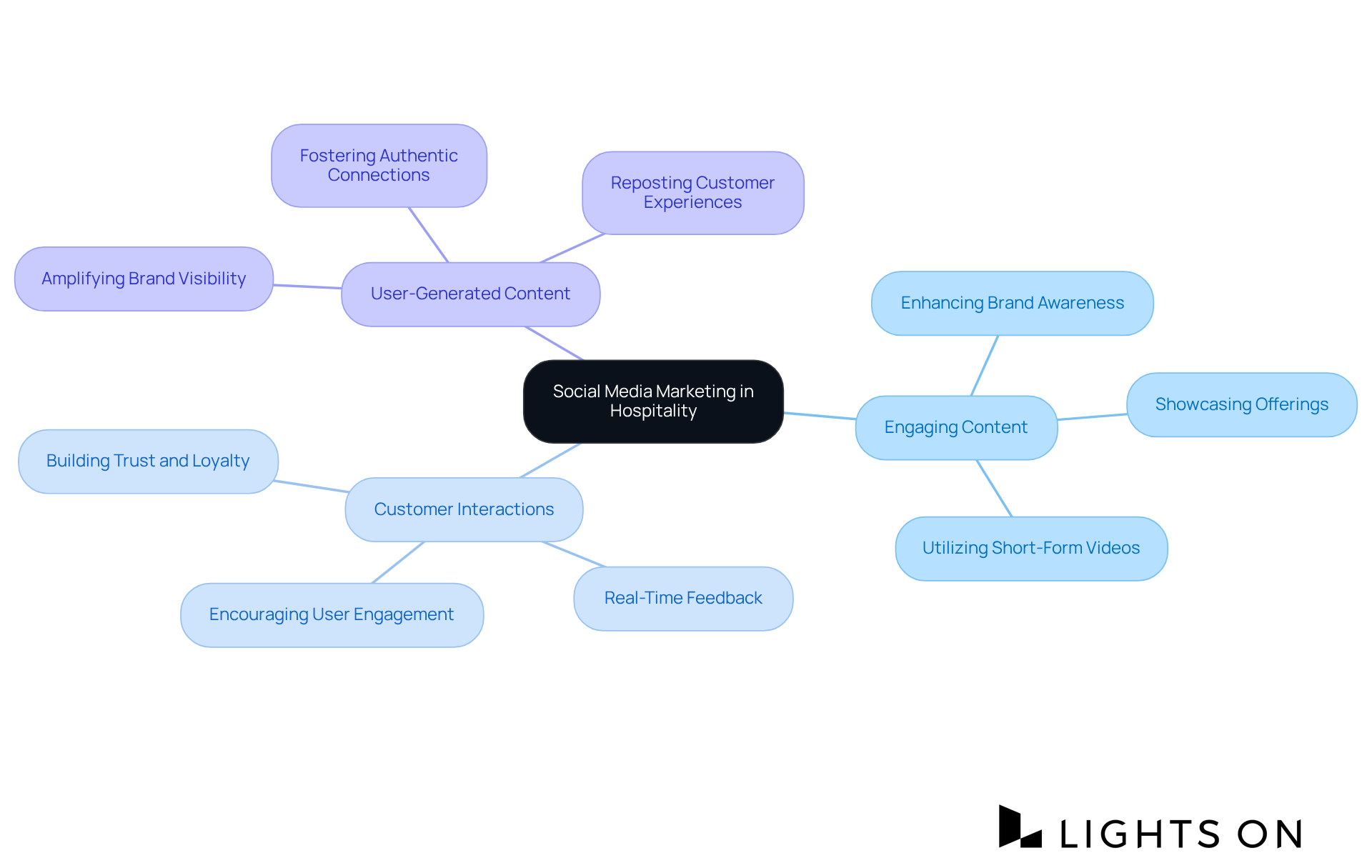
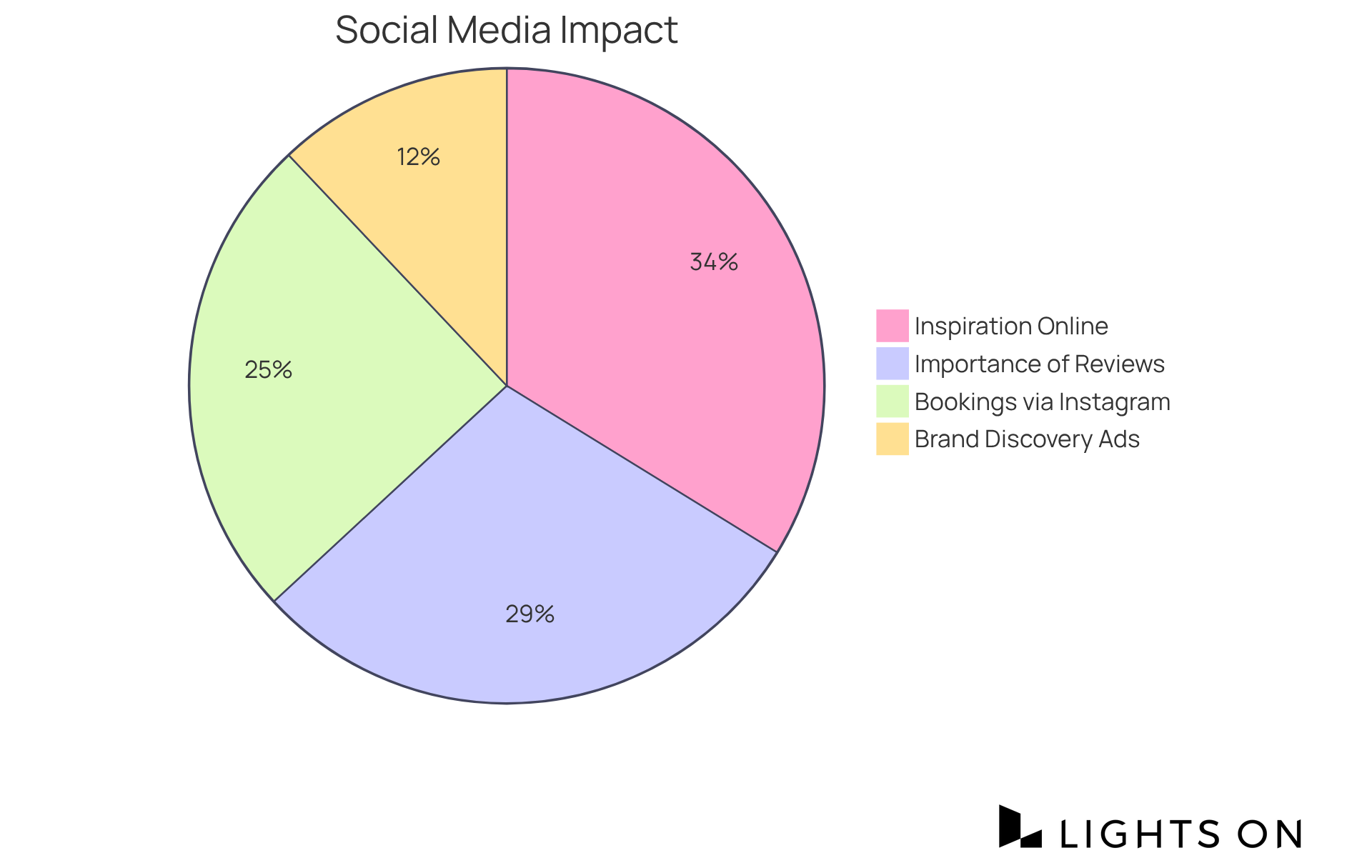
Social media marketing in the hospitality industry is essential for accommodations and eateries, serving as a primary channel for customer engagement and brand promotion. With the increasing reliance on digital communication, a striking 83% of travelers now turn to online networks for inspiration, which highlights the role of social media marketing in the hospitality industry in influencing travel decisions. Notably, 61% of individuals have booked a hotel after discovering it on Instagram, which underscores the critical role of social media marketing in the hospitality industry in driving reservations. Furthermore, 72% of travelers consider online reviews vital in their booking choices, emphasizing the importance of these platforms in shaping perceptions and decisions.
Restaurants leverage online platforms to enhance customer interaction by showcasing unique offerings, sharing client testimonials, and promptly addressing inquiries. This interactive strategy not only elevates customer satisfaction but also cultivates loyalty. For instance, case studies demonstrate that businesses employing targeted advertising campaigns can effectively reach specific demographics, optimizing their marketing efforts. In fact, 29.6% of internet users discover brands through advertising on social networks, illustrating the platform's potential for brand visibility and customer acquisition.
Moreover, the trend of media-induced travel is on the rise, with 40% of Millennials selecting vacation destinations based on their Instagram appeal. This shift indicates that social media marketing in the hospitality industry serves not merely as promotional tools but as integral components of the customer journey, influencing where and how individuals choose to travel and dine. Therefore, investing in social media marketing in the hospitality industry is no longer optional; it is crucial for hospitality enterprises aiming to thrive in a competitive landscape.
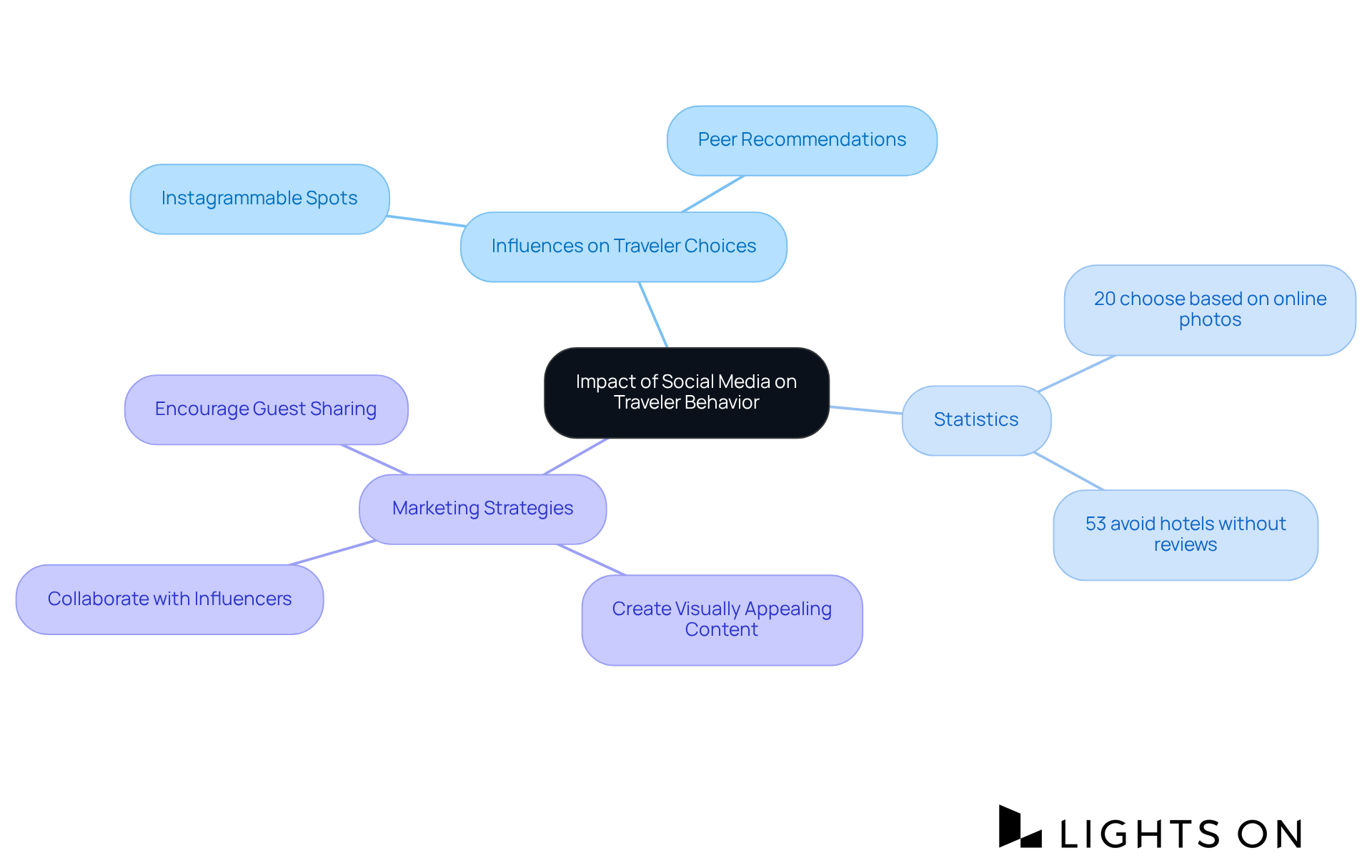
Social platforms have fundamentally transformed how contemporary travelers behave, emerging as vital sources of inspiration and information. Platforms like Instagram and TikTok have become primary destinations for travel ideas, with users actively seeking visually captivating content that showcases destinations and experiences. This trend has given rise to 'Instagrammable' spots, where the visual appeal of accommodations and eateries significantly influences booking decisions.
A study titled 'The Influence of Online Platforms on Accommodation Selections' reveals that:
Furthermore, online platforms enhance peer recommendations through user-generated content, which travelers often trust more than traditional advertising. Consequently, hospitality companies must adapt their marketing strategies to align with these evolving consumer behaviors, particularly through social media marketing in the hospitality industry, ensuring they remain relevant and appealing to potential guests.
The Vacation Confidence Index indicates that 47% of Americans aged 18-34 report that their travel plans are heavily influenced by online platforms, underscoring the necessity for brands to leverage these channels effectively. To capitalize on this trend, Lights On recommends that property owners utilize social media marketing in the hospitality industry by:
By implementing these strategies, accommodations can boost their visibility and attract more reservations.
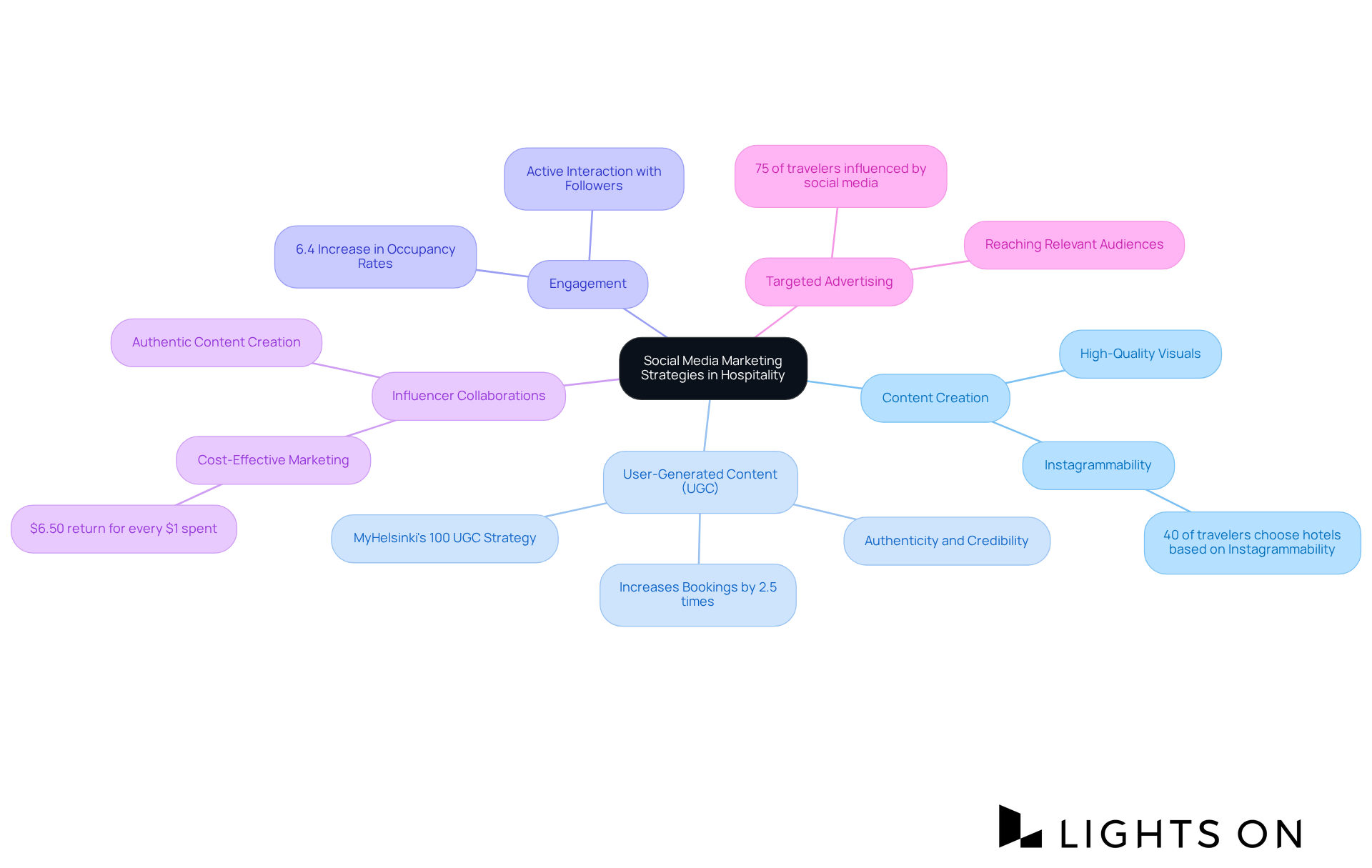
To effectively leverage social media marketing, hospitality businesses must focus on several key strategies that can significantly enhance their online presence and drive bookings.
Content Creation: Start by developing high-quality, visually appealing content that showcases the unique aspects of your property or dining experience. This includes professional photography, engaging videos, and behind-the-scenes glimpses that resonate with potential guests. Did you know that 40% of travelers choose accommodations based on their Instagrammability? This statistic underscores the necessity of visual appeal in your marketing efforts.
User-Generated Content (UGC): Encourage visitors to share their experiences on social platforms, creating authentic content that can be repurposed for promotion. UGC not only builds community but also enhances credibility. Research shows that it can increase bookings by 2.5 times compared to branded content. For example, MyHelsinki's strategy of utilizing 100% UGC has effectively engaged visitors by highlighting genuine local experiences.
Engagement: Actively engage with your followers by responding to comments, messages, and reviews. This interaction fosters a sense of community and encourages repeat visits. In fact, social media evaluations can lead to a 6.4% increase in accommodation occupancy rates, emphasizing the importance of maintaining an active online presence.
Influencer Collaborations: Partner with influencers who align with your brand's values to reach a broader audience and enhance visibility. Influencer marketing is a powerful tool, generating an impressive $6.50 in revenue for every dollar spent, making it a cost-effective strategy for hotels.
Targeted Advertising: Utilize online advertising tools to target specific demographics, ensuring your marketing efforts reach the most relevant audience. With 75% of travelers influenced by social media when selecting travel destinations, social media marketing in the hospitality industry can significantly boost visibility and drive bookings.
By implementing these strategies, hospitality businesses can not only enhance their online presence but also improve their financial performance.
Embracing social media marketing is no longer a luxury for the hospitality industry; it has become a fundamental necessity. By effectively utilizing platforms such as Instagram, Facebook, and TikTok, hotels and restaurants can enhance their visibility, engage with potential customers, and foster lasting relationships that drive loyalty and repeat business. The ability to craft compelling content and leverage user-generated experiences is vital in capturing the attention of modern travelers.
The impact of social media on traveler behavior and marketing strategies is profound. A significant percentage of travelers rely on social media for inspiration and decision-making, with many booking accommodations directly influenced by their online experiences. Furthermore, strategies such as:
are essential for hospitality businesses aiming to thrive in a competitive landscape.
Ultimately, the importance of social media marketing in the hospitality sector cannot be overstated. As consumer behavior continues to evolve, businesses must adapt their marketing efforts to leverage these platforms effectively. By prioritizing social media marketing, hospitality enterprises can not only enhance their brand presence but also significantly influence travel decisions and drive bookings, ensuring their success in an increasingly digital world.
What is social media marketing in the hospitality industry?
Social media marketing in the hospitality industry involves using platforms like Instagram, Facebook, and TikTok to advertise hotels, restaurants, and related services. It focuses on crafting engaging content, fostering customer interactions, and utilizing user-generated content to enhance brand visibility and drive bookings.
Why is social media important for the hospitality industry?
Social media is crucial because 75% of travelers report that online platforms influence their destination choices. This highlights the significant role social media plays in shaping consumer decisions and promoting hospitality businesses.
What are the primary goals of social media marketing in hospitality?
The primary goals are to enhance brand awareness and cultivate connections that foster customer loyalty and repeat business.
Can you provide an example of a successful social media marketing campaign in hospitality?
An example is Marriott Hotels, which executed targeted online strategies that led to a significant increase in app downloads and user engagement, showcasing the effectiveness of focused social media efforts.
How does social media marketing benefit hospitality businesses?
It allows businesses to reach a wider audience, create compelling visual content, and build lasting relationships with customers, making it an essential strategy in a competitive market.
Transform your group booking strategies with Lights On and watch your occupancy soar.


.svg)

