The article delves into the hospitality industry's companies, emphasizing their substantial influence on both the economy and local communities. It underscores that these companies are projected to contribute approximately $5.8 trillion to the global economy by 2027. Furthermore, they are pivotal in job creation and stimulating local economies through services that not only enhance guest experiences but also foster community engagement.
The hospitality industry serves as a cornerstone of the global economy, intertwining a vast network of services that encompass hotels, restaurants, and event planning. Projected to contribute approximately $5.8 trillion by 2027, the significance of these companies transcends mere profit; they are pivotal in job creation and community development. However, with rapid technological advancements and shifting consumer expectations, the pressing question arises: how can hospitality companies adapt to ensure they not only survive but thrive in this dynamic landscape?
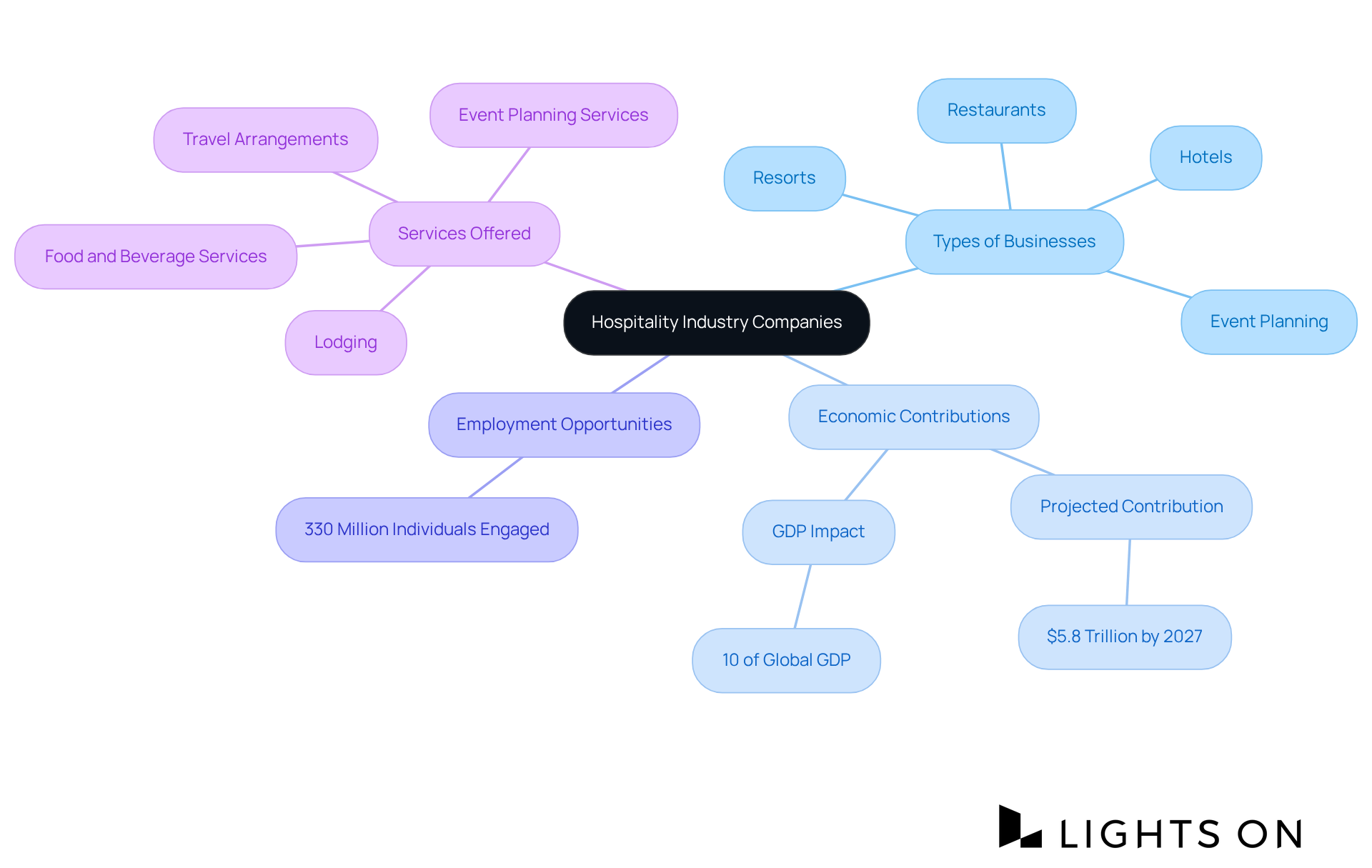
The service sector encompasses a diverse array of businesses, including hotels, restaurants, resorts, and event planning services, all dedicated to delivering exceptional customer experiences. This sector is crucial to the global economy, with projections indicating a by 2027, underscoring its significance in revenue generation and job creation. By 2025, the service industry is expected to engage over 330 million individuals worldwide, highlighting its capacity to provide substantial employment opportunities.
Successful hospitality industry companies not only enhance guest experiences but also have a considerable influence on regional economies. For example, the hotel and tourism industry typically represents around 10% of global GDP, with numerous businesses committing to community initiatives and sustainable practices that promote economic growth. Experts emphasize the importance of adapting to emerging trends, such as technology integration and sustainability, to sustain competitiveness and bolster local economic contributions.
The services offered by accommodation providers are varied and tailored to meet customer needs. These encompass:
All crafted to create memorable experiences for guests. As the hospitality industry company sector evolves, the focus on customization and innovative service delivery continues to expand, ensuring that hospitality industry companies remain vital to both the economy and society.
A hospitality industry company plays an essential role in the tourism and travel sector, providing vital services that cater to both tourists and local residents. These establishments generate significant employment opportunities, with the U.S. hospitality sector employing approximately 16.99 million individuals—a figure expected to rise as the industry continues to recover and expand. By 2025, accommodations are projected to contribute over $660 billion to the GDP, underscoring their substantial economic influence.
Beyond lodging, these establishments are instrumental in bolstering regional economies by directing customer traffic to nearby eateries, shops, and attractions. For instance, when travelers stay at accommodations, they often explore the surrounding area, supporting local businesses and enhancing overall economic engagement. Justin Belmont, Founder & CEO of Prose, highlights this connection, stating, "When visitors arrive in the area, they don’t just occupy your accommodations; they’re also investing in neighborhoods that might not experience a lot of foot traffic."
Moreover, service industry firms actively engage in community initiatives, backing local events and charities that strengthen their ties to the community. This involvement not only enhances their brand reputation but also fosters a sense of belonging and goodwill among residents. The service sector’s commitment to community engagement is evident in various collaborations, such as hotels partnering with local farms to provide fresh, regionally sourced food, which promotes sustainability and supports local economies.
As the service industry evolves, its role in fostering cultural exchange and community development remains crucial. By prioritizing local engagement and economic stimulation, a hospitality industry company significantly contributes to the vibrancy and resilience of the communities it serves. To further enhance bookings, accommodations can implement targeted marketing strategies, including:
These strategies not only boost customer engagement but also drive revenue growth, ensuring that accommodations remain competitive in a dynamic market.

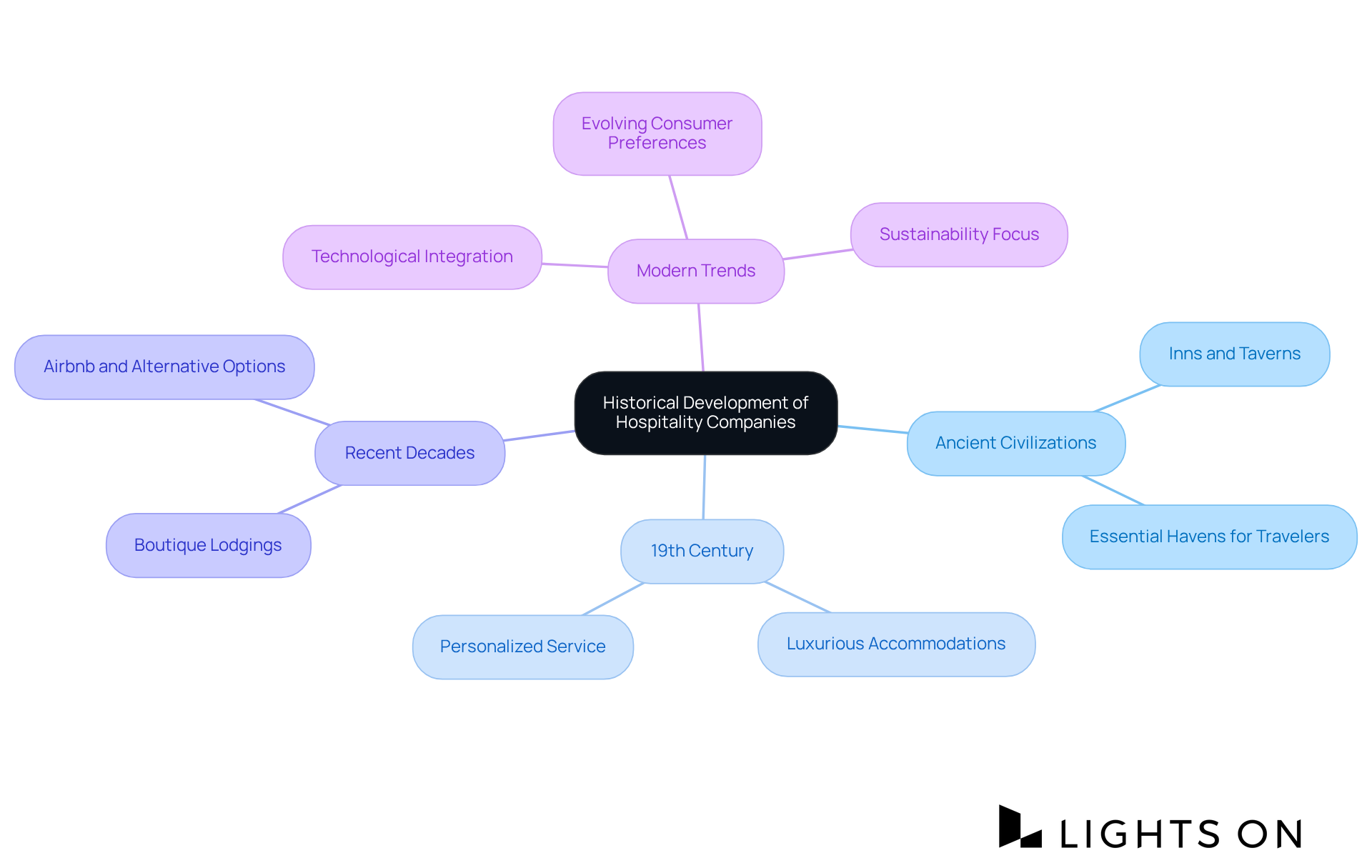
The hospitality industry boasts a rich history that traces back to ancient civilizations, where inns and taverns served as essential havens for travelers seeking shelter and sustenance. Over the centuries, this sector has undergone profound transformations, driven by technological advancements, globalization, and evolving consumer preferences. The 19th century marked the emergence of luxurious accommodations, which brought about a paradigm shift towards personalized and high-quality service, establishing new benchmarks for guest experiences.
In recent decades, the rise of boutique lodgings and alternative options, such as Airbnb, has further diversified the landscape, catering to a growing demand for unique and authentic experiences. This historical context is vital for comprehending the current dynamics and challenges faced by a hospitality industry company today, particularly as it navigates the complexities of modern consumer expectations and technological integration. For example, the incorporation of advanced technology in accommodations has become essential for improving guest experiences and operational efficiency, reflecting a wider trend towards innovation in the sector.
Furthermore, the growth of upscale accommodations has not only raised service standards but also affected market trends, as demonstrated in case studies showcasing their influence on local economies and tourism. Understanding these historical developments equips stakeholders with the insights necessary to thrive in an increasingly for a hospitality industry company. These historical insights can inform effective marketing strategies, as hotel owners can leverage the evolution of guest expectations and technological advancements to enhance their marketing efforts and drive bookings.
Hospitality industry companies are defined by several essential traits: a strong emphasis on customer service, flexibility, and adaptability to evolving consumer demands. As the industry is inherently service-oriented, it is imperative that staff are well-trained in interpersonal skills and problem-solving to meet the diverse needs of guests.
In 2025, a striking 71% of consumers expect personalized interactions, and 76% express frustration when these expectations are unmet. This underscores the necessity for exceptional customer service. Furthermore, the competitive landscape compels a hospitality industry company to adopt innovative marketing strategies that effectively differentiate its brand.
For instance, with 80% of lodging guests now selecting accommodations online, the importance of a robust digital presence cannot be overstated. To , accommodation providers can leverage both paid and free exposure strategies, ensuring they attract the right audience—whether locals or travelers seeking unique experiences.
Unifying brand voice across all digital assets enhances the customer experience, while high-quality advertising can position hotels ahead of competitors. The transient nature of the industry means that customer satisfaction directly influences repeat business; indeed, 72% of customers are likely to share positive experiences with others.
This reality emphasizes the need for consistent delivery of exceptional experiences, which not only shapes operational frameworks but also drives strategic decisions and marketing approaches for a hospitality industry company. Additionally, implementing strategies to increase customer loyalty, such as remarketing and targeted communications, can significantly enhance repeat visits and overall revenue.

The hospitality industry serves as a cornerstone of the global economy, providing a diverse array of services that not only cater to travelers but also promote local community engagement and stimulate economic growth. By recognizing the multifaceted roles that hospitality companies fulfill—from enhancing guest experiences to driving regional economic development—it becomes evident that their impact transcends mere accommodation and dining.
Key insights from our discussion illuminate the industry's substantial contributions, including:
As hospitality companies adapt to emerging trends such as technological integration and personalized customer service, they continue to redefine guest expectations and enhance their competitive edge.
Ultimately, the significance of hospitality industry companies cannot be overstated. Their capacity to connect travelers with local culture and experiences enriches communities while simultaneously driving economic prosperity. As the sector evolves, it is imperative for stakeholders to embrace innovation and community engagement, ensuring that the hospitality industry remains a vital and vibrant component of the global economy.
What is included in the hospitality industry?
The hospitality industry includes a diverse array of businesses such as hotels, restaurants, resorts, and event planning services, all dedicated to delivering exceptional customer experiences.
What is the projected economic contribution of the hospitality industry by 2027?
The hospitality industry is projected to contribute approximately $5.8 trillion to the global economy by 2027.
How many people is the service industry expected to engage by 2025?
By 2025, the service industry is expected to engage over 330 million individuals worldwide.
What percentage of global GDP does the hotel and tourism industry typically represent?
The hotel and tourism industry typically represents around 10% of global GDP.
What are some services offered by accommodation providers in the hospitality industry?
Accommodation providers offer a variety of services, including lodging, food and beverage services, travel arrangements, and event planning.
Why is adaptability important for hospitality industry companies?
Adaptability is important for hospitality industry companies to sustain competitiveness and bolster local economic contributions by adapting to emerging trends such as technology integration and sustainability.
How do successful hospitality companies influence regional economies?
Successful hospitality companies enhance guest experiences and have a considerable influence on regional economies through their economic contributions and commitments to community initiatives and sustainable practices.
Transform your group booking strategies with Lights On and watch your occupancy soar.


.svg)

