Hotel marketing segmentation is a crucial strategy in an industry where understanding guest preferences can significantly impact business success. By dividing a broad market into specific segments - such as business travelers, leisure tourists, and event participants - hotels can tailor their offerings and communications to meet the unique needs of each group. However, the challenge persists: how can hotels effectively implement these segmentation strategies to enhance guest satisfaction and drive substantial revenue growth?
This article delves into the intricacies of hotel marketing segmentation, exploring its importance, key market types, and actionable strategies that can transform guest experiences and boost profitability. Furthermore, by leveraging data-driven insights, hotels can not only identify their target segments but also craft personalized marketing campaigns that resonate with each group. In addition, understanding the distinct motivations and preferences of these segments allows for more effective resource allocation and improved service delivery.
Ultimately, the goal is to create a seamless experience that not only meets but exceeds guest expectations. By doing so, hotels can foster loyalty and encourage repeat business, which is essential for long-term success in the competitive hospitality landscape.
Hotel marketing segmentation is essential for dividing a broad target market into distinct subsets of consumers who share specific needs and priorities. This strategic approach is crucial for hotel marketing segmentation, as it allows for customized promotional efforts that enhance the relevance of communication and services. By understanding the unique characteristics of each segment through hotel marketing segmentation, hotels can craft tailored experiences that resonate with visitors, leading to increased satisfaction and loyalty.
For example, through hotel marketing segmentation, hotels can categorize their market into business travelers, leisure tourists, and event participants, each requiring specific services and promotional strategies. This targeted approach in hotel marketing segmentation not only boosts visitor engagement but also maximizes revenue potential by aligning offerings with visitor expectations.
The advantages of effective market segmentation are evident in various case studies. Andronis Hotels, for instance, achieved an impressive 600% year-over-year increase in direct revenue through personalized email marketing campaigns designed using hotel marketing segmentation tailored to identified segments. Similarly, the InterContinental Hua Hin Resort showcased the power of hotel marketing segmentation by increasing last-minute bookings through targeted microsegmentation, resulting in over 230 room nights booked from a single campaign.
Furthermore, accommodations that implement hotel marketing segmentation strategies often experience enhanced visitor experiences and increased loyalty rates. By offering customized services and communications, hotels can foster genuine relationships with visitors, enhancing their overall sense of value. This dedication to understanding customer needs through hotel marketing segmentation not only drives repeat business but also encourages positive reviews and word-of-mouth referrals, which further amplify revenue growth.
In addition, during transitions such as unexpected staffing changes, Lights On provides interim revenue management solutions that ensure continuous optimization of pricing and inventory strategies. This support enables accommodations to maintain their revenue management efficiency, even when essential staff are unavailable, thereby enhancing the overall impact of their segmentation strategies.
In conclusion, hotel marketing segmentation is not just a promotional tactic; it is a fundamental strategy that empowers establishments to enhance their services, elevate guest satisfaction, and ultimately boost profitability.

Understanding the primary categories of hotel markets is essential for crafting effective marketing strategies.
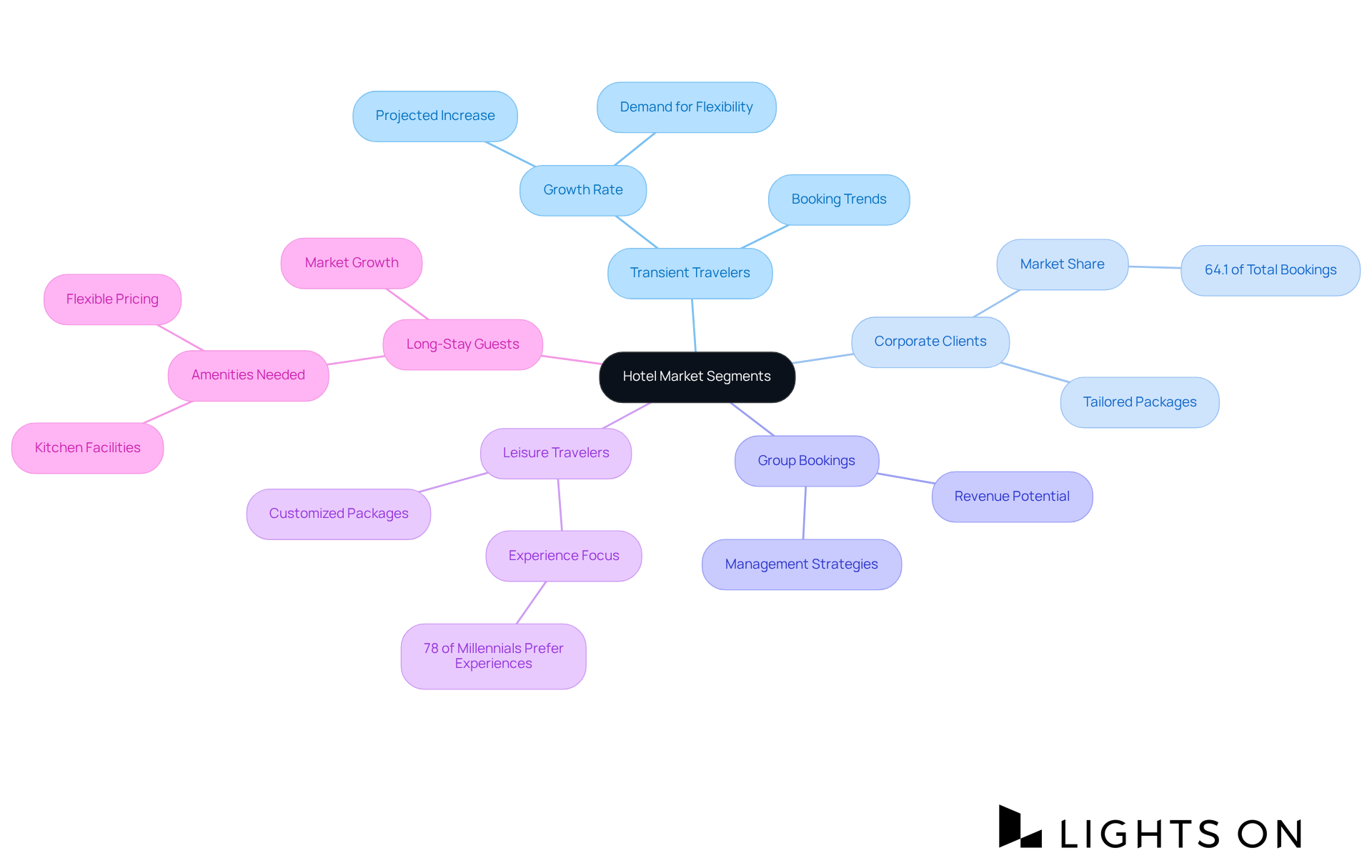
Transient Travelers represent a significant segment, as these guests typically book rooms for short stays, often for leisure or business purposes. With transient bookings projected to rise by 2.2% year-over-year, there’s a clear demand for flexible travel options that hotels can capitalize on.
Corporate Clients form another substantial market, accounting for 64.1% of total lodging bookings in 2021. Companies seeking arrangements for employees traveling for work present an opportunity for hotels to enhance loyalty through tailored packages and amenities that cater specifically to their needs.
Group Bookings encompass families, wedding parties, or corporate retreats reserving multiple rooms. Effectively managing these bookings can lead to increased revenue and a stronger brand reputation, making it a vital area for hotels to focus on.
Leisure Travelers, those on vacation or personal trips, often seek unique experiences. With 78% of millennials prioritizing spending on experiences over material possessions, hotels can attract this demographic by offering customized packages that resonate with their desires.
Lastly, Long-Stay Guests - individuals or families needing accommodations for extended periods - represent a growing market. By providing amenities such as kitchen facilities and flexible pricing, hotels can significantly enhance their appeal to this segment.
By identifying and understanding these market segments, accommodations can leverage hotel marketing segmentation to tailor their services and promotional messages to meet the specific needs of each group. This approach not only improves visitor satisfaction but also boosts revenue. Furthermore, incorporating technology solutions can enhance guest experiences, as 93% of hoteliers report significant efficiency gains due to technology.
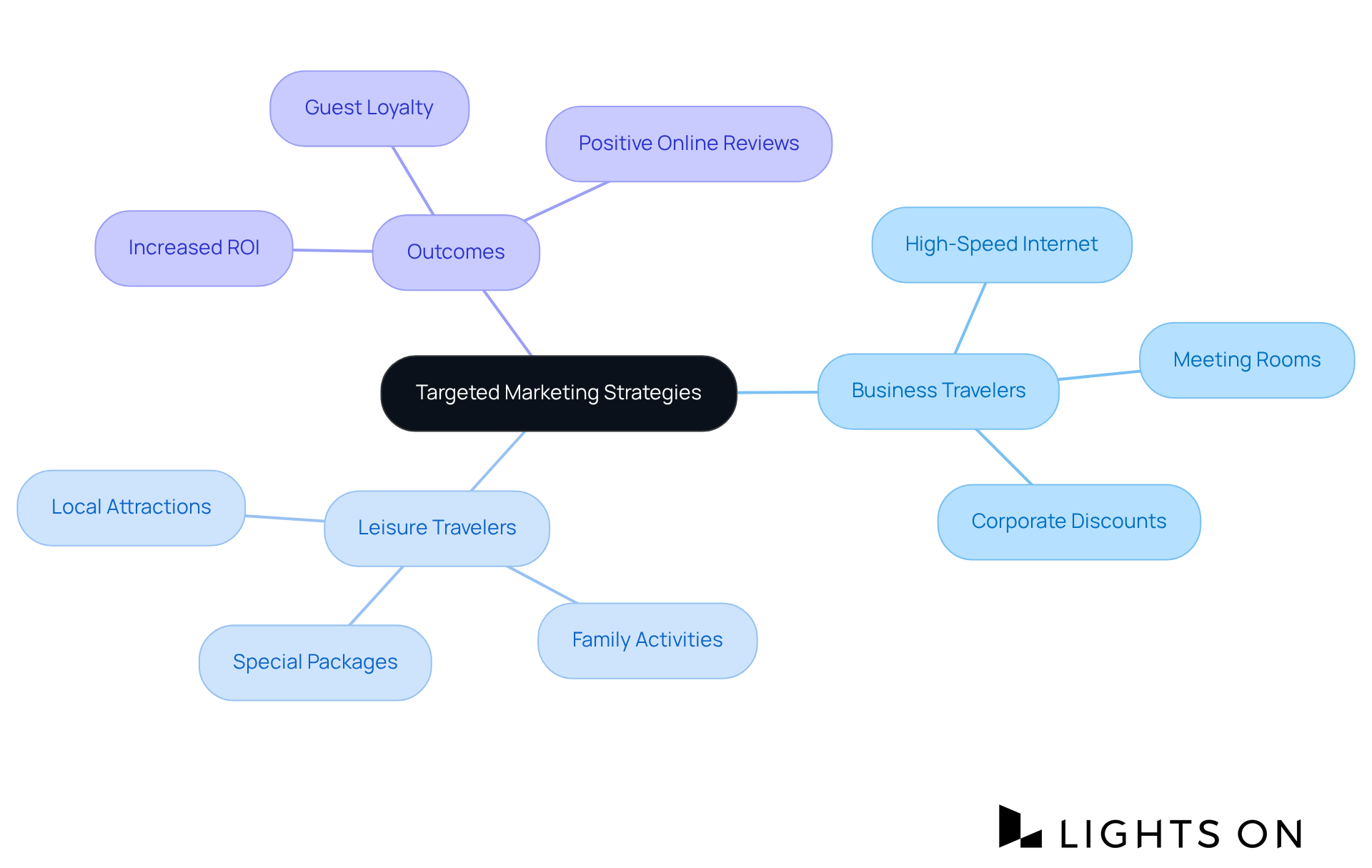
Hotel marketing segmentation is essential for targeted marketing strategies that help accommodations engage effectively with their specific audiences. By leveraging data from hotel marketing segmentation, these establishments can craft tailored messages that resonate with the unique interests and needs of each segment. For example, a hotel focused on business travelers might emphasize amenities like high-speed internet and well-equipped meeting rooms. In contrast, a property targeting leisure travelers could highlight local attractions and family-friendly activities.
Furthermore, targeted promotions - such as exclusive discounts for corporate clients or special packages for families - can significantly enhance conversion rates. These strategies not only improve return on investment but also foster stronger connections with visitors, nurturing loyalty and encouraging repeat reservations. In fact, accommodations that implement personalized promotional strategies often see a remarkable increase in guest lifetime value, with customized offers leading to a 202% enhancement in ROI. Additionally, 72% of online shoppers are more likely to convert after being retargeted, underscoring the effectiveness of targeted promotions.
By focusing on high-potential segments, accommodations can leverage hotel marketing segmentation to optimize their marketing budgets and drive substantial revenue growth. This approach also aids in managing their online reputation, as 50-60% of travelers write an online review after their stay. Are you ready to elevate your marketing strategy and connect more deeply with your guests?
To implement effective market segmentation strategies, hotels must take essential steps that can significantly enhance their marketing efforts and boost revenue.
Data Collection: Start by utilizing technology to gather comprehensive information on visitor demographics, booking behaviors, and preferences. This can include methods such as surveys, analysis of booking history, and insights from social media interactions. For instance, Ambiente Sedona effectively employed audience personas grounded in guest intent, resulting in substantial revenue growth.
Analyze Data: Next, identify patterns and trends within the collected information to define distinct market categories. This analysis is crucial for understanding the unique features of each segment, allowing for more targeted marketing strategies.
Create Segment-Specific Offerings: Develop customized promotional campaigns and packages that cater to the unique requirements of each segment. Bunkhouse Hotels, for example, generated $6.1 million in lifetime revenue through targeted campaigns that resonated with their diverse clientele.
Observe and Modify: Continuously monitor the effectiveness of promotional activities and gather visitor feedback to refine segmentation strategies. This iterative process ensures that promotions remain relevant and impactful, adapting to changing market dynamics.
Leverage Technology: Finally, utilize CRM systems and promotional automation tools to streamline communication and personalize guest interactions. With 80% of accommodations planning to use AI for personalized offers, integrating advanced technology is becoming a standard practice in the industry.
By following these steps, hotels can effectively engage their target audiences, optimize marketing efforts, and ultimately drive revenue growth.

Mastering hotel marketing segmentation is not just a tactic; it’s a strategic necessity that can redefine guest experiences and drive profitability. By effectively dividing the broader market into distinct segments, hotels can tailor their offerings to meet the specific needs and desires of each group. This approach ultimately enhances guest satisfaction and loyalty.
Identifying key market segments - such as transient travelers, corporate clients, and leisure tourists - is crucial. Targeted marketing strategies, supported by data-driven insights, lead to increased engagement and revenue. Successful case studies illustrate that personalized approaches not only boost direct bookings but also cultivate lasting relationships with guests, resulting in repeat business and positive referrals.
As the hospitality industry evolves, embracing sophisticated market segmentation strategies becomes essential. Hotels must invest in data collection and analysis, create customized offerings, and leverage technology to stay ahead of market trends. By prioritizing these practices, accommodations can not only meet but exceed guest expectations, fostering a thriving business in an increasingly competitive landscape.
What is hotel market segmentation?
Hotel market segmentation is the process of dividing a broad target market into distinct subsets of consumers who share specific needs and priorities. This allows hotels to tailor their marketing efforts to meet the unique characteristics of each segment.
Why is hotel market segmentation important?
Hotel market segmentation is important because it enables customized promotional efforts that enhance the relevance of communication and services, leading to increased visitor satisfaction and loyalty.
What are some common categories used in hotel market segmentation?
Common categories in hotel market segmentation include business travelers, leisure tourists, and event participants, each requiring specific services and promotional strategies.
How does effective market segmentation benefit hotels?
Effective market segmentation benefits hotels by boosting visitor engagement, maximizing revenue potential, and aligning offerings with visitor expectations.
Can you provide an example of successful hotel marketing segmentation?
Yes, Andronis Hotels achieved a 600% year-over-year increase in direct revenue through personalized email marketing campaigns designed using hotel marketing segmentation. The InterContinental Hua Hin Resort increased last-minute bookings through targeted microsegmentation, resulting in over 230 room nights booked from a single campaign.
What effects does hotel marketing segmentation have on visitor experiences?
Hotel marketing segmentation enhances visitor experiences by offering customized services and communications, fostering genuine relationships with visitors, and increasing loyalty rates.
How does hotel marketing segmentation contribute to revenue growth?
By understanding customer needs and implementing tailored strategies, hotel marketing segmentation drives repeat business, encourages positive reviews, and generates word-of-mouth referrals, all of which amplify revenue growth.
What support does Lights On provide during staffing changes?
Lights On provides interim revenue management solutions that ensure continuous optimization of pricing and inventory strategies, helping accommodations maintain revenue management efficiency during unexpected staffing changes.
What is the overall conclusion about hotel marketing segmentation?
Hotel marketing segmentation is a fundamental strategy that empowers hotels to enhance their services, elevate guest satisfaction, and ultimately boost profitability.
Transform your group booking strategies with Lights On and watch your occupancy soar.


.svg)

