To successfully launch a hotel marketing campaign, it is essential to focus on key fundamentals such as:
These elements are vital in addressing the challenge of visibility in a competitive market. Furthermore, clear campaign objectives and effective marketing channels significantly enhance a hotel's visibility and drive bookings.
By establishing a strong brand identity, hotels can differentiate themselves from competitors and create a lasting impression on potential guests. Engaging with customers through personalized experiences fosters loyalty and encourages repeat business. In addition, a robust digital presence allows hotels to reach a broader audience, ensuring that they remain top-of-mind for travelers.
Ultimately, these strategies contribute to a hotel's overall success, as they not only attract new guests but also cultivate lasting relationships with existing ones. Therefore, hotel and restaurant owners must prioritize these fundamentals to navigate the complexities of the hospitality market effectively.
Crafting a successful hotel marketing campaign is no small feat. In an industry where competition is fierce and consumer preferences are constantly evolving, understanding the core principles of hotel marketing—such as brand identity, customer engagement, and digital presence—can make all the difference in attracting and retaining guests.
However, with a myriad of strategies and channels available, how can hotel marketers ensure their efforts yield meaningful results? This article delves into eight essential steps that will guide hotels in launching effective marketing campaigns, ultimately unlocking the potential for increased bookings and enhanced guest loyalty.
Launching a successful hotel marketing campaign necessitates a solid understanding of key marketing fundamentals. Central to this is the significance of brand identity, which serves as the foundation for how your establishment is perceived in a competitive market. A clearly articulated brand identity not only distinguishes your establishment but also fosters emotional connections with visitors, leading to increased loyalty and repeat patronage. In fact, hotels with a strong brand identity can experience up to a 20% increase in revenue per available room (RevPAR) compared to those lacking such identity.
Customer engagement emerges as another crucial element. Developing strategies to interact with prospective clients at various touchpoints—such as through personalized email marketing, social media interactions, and targeted promotions—can significantly enhance their experience and encourage bookings. Engaging content that reflects your brand's values and resonates with your audience is essential for building trust and credibility. Consistency in branding across all touchpoints is vital, as it cultivates reliability and professionalism among visitors.
Furthermore, a robust digital presence is indispensable in today’s hospitality landscape. This encompasses maintaining a user-friendly website that showcases your offerings and an active social media presence that engages with your audience. Successful examples, such as the Four Seasons, illustrate how a cohesive brand identity can enhance visitor experiences and reinforce loyalty. By ensuring consistency across all digital platforms, you can strengthen your brand identity and guarantee that visitors have a seamless experience from their first interaction to their stay.
In addition, leveraging Lights On's expertise in interim revenue management solutions can ensure continuous optimization during staffing transitions. Should you suddenly lose your revenue manager, Lights On can assume daily responsibilities, allowing you to sustain your promotional momentum and visitor interaction without disruption. This proactive approach not only safeguards your revenue management strategies but also enhances your overall promotional efforts by ensuring that your brand remains strong and consistent during transitions.
By mastering these fundamentals—branding, customer engagement, and digital presence—along with utilizing expert services like those provided by Lights On, you will be well-equipped to create a marketing campaign that effectively attracts and retains visitors, ultimately driving your hotel's success.

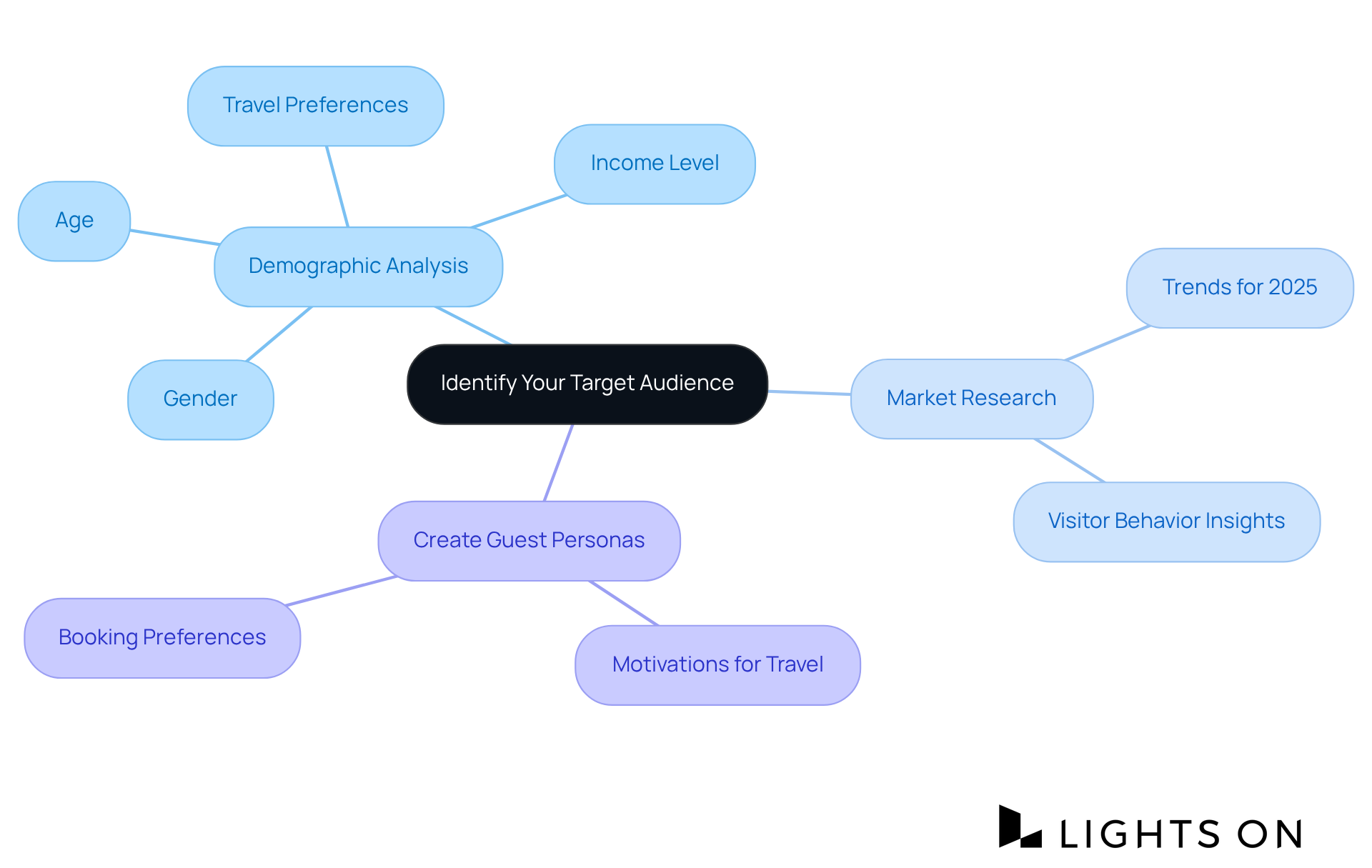
To effectively reach potential guests, identifying your target audience through a structured approach is essential:
Demographic Analysis: Examine the demographics of your current visitors, focusing on age, gender, income level, and travel preferences. This analysis provides insights into who is currently engaging with your hotel and helps identify potential gaps.
Market Research: Conduct thorough market research to uncover trends and preferences within the hospitality industry for 2025. Grasping these trends will enable you to adjust your offerings and marketing strategies to match changing customer expectations. Performance cookies can be instrumental in measuring and enhancing your understanding of visitor behavior, providing insights into popular pages and user navigation.
Create Guest Personas: Develop detailed guest personas that encapsulate your ideal customers. These personas should reflect their motivations for travel, booking preferences, and any specific needs they may have. This targeted hotel marketing campaign allows you to create promotional messages that resonate deeply with your audience.
By clearly defining your target audience and prioritizing exceptional customer service, your hotel marketing campaign can customize promotional strategies to effectively meet their unique needs and preferences, ultimately enhancing engagement and driving bookings. Furthermore, Lights On has shown an impressive average year-over-year revenue growth of 47%, highlighting the effectiveness of focused promotional strategies in enhancing financial performance. Additionally, consider the principle articulated by Isadore Sharpe: treating guests well, as you would like to be treated, is fundamental to building strong relationships and ensuring repeat business.
Establishing clear project goals is essential for effectively guiding your promotional efforts. To create impactful goals, consider the following steps:
Furthermore, consider executing focused email initiatives, utilizing social media promotions, and enhancing your website for direct reservations. These strategies can complement your SMART objectives and enhance your overall marketing effectiveness.
Implementing SMART objectives not only offers a structured framework for your initiative but also improves your ability to monitor progress and assess success. For instance, a hotel that set a goal to boost direct bookings by 15% within six months through a hotel marketing campaign saw a significant increase in revenue, demonstrating the power of well-defined objectives. As Chris Minar, a communications and advertising professional, emphasizes, 'Nailing down campaign KPIs is crucial for a laser-focused strategy.' By concentrating on specific, measurable, achievable, relevant, and time-bound objectives, you can propel your promotional efforts toward tangible outcomes.

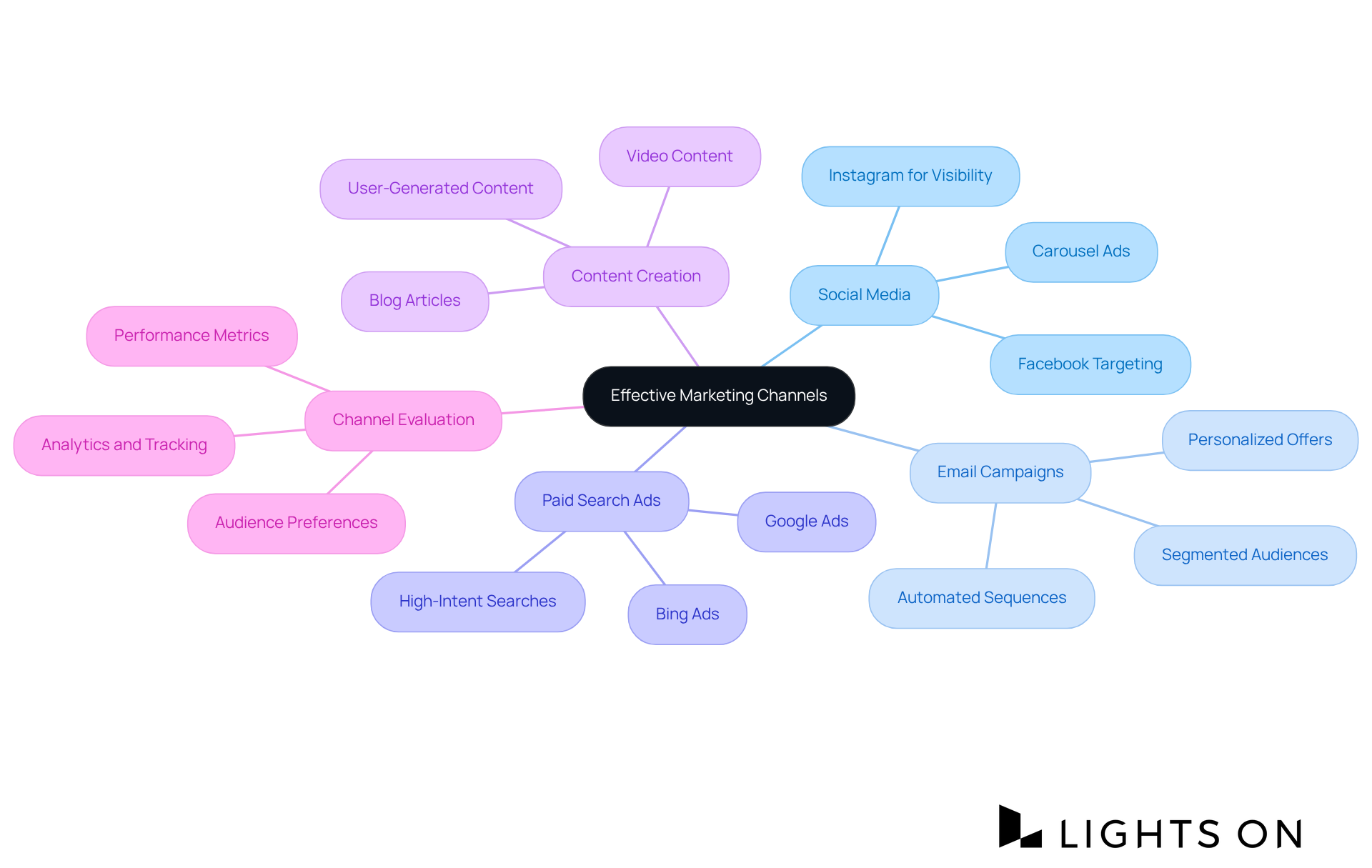
Selecting the right marketing channels is essential for effectively reaching your target audience in a hotel marketing campaign. To capture attention and build interest, consider the following key options:
Social Media: Leverage platforms like Instagram and Facebook to highlight your hotel’s unique offerings. With 61% of travelers booking properties they discovered on Instagram, an effective hotel marketing campaign that utilizes eye-catching visuals and engaging content can significantly enhance your visibility. Carousel advertisements can display various rooms or features, while a hotel marketing campaign with targeted paid promotions enables you to connect with prospective visitors based on demographics and interests.
In a hotel marketing campaign, it is essential to craft targeted email campaigns to nurture leads and encourage repeat bookings. By segmenting your audience based on previous stays and preferences, you can develop a hotel marketing campaign that sends personalized offers, increasing engagement and loyalty. Automated email sequences can sustain visitor relationships before and after their stay, playing a crucial role in a hotel marketing campaign that drives repeat visits.
Investing in paid search ads is a crucial aspect of a hotel marketing campaign to boost your visibility in search engine results. A hotel marketing campaign utilizing Google Ads and Bing Ads can assist in capturing high-intent searches, such as 'luxury accommodations in [City]', ensuring your property stands out in a competitive environment.
In a hotel marketing campaign, it is essential to create valuable content that attracts and informs potential visitors. Blog articles concerning local attractions or distinctive experiences can significantly boost your hotel marketing campaign by improving your establishment's online visibility and positioning your brand as a reliable resource.
Evaluate the effectiveness of each channel in your hotel marketing campaign based on your target audience's preferences and behaviors to ensure optimal reach and engagement.
Producing captivating promotional content is vital for a hotel marketing campaign that draws in and engages prospective guests. To enhance your hotel marketing efforts, consider the following key guidelines:
Visual Appeal: Utilize high-quality images and videos that effectively showcase your hotel’s amenities and surroundings. Engaging visual content can significantly increase interest; indeed, video content generates 1200% more shares than text and images combined.
Engaging Text: Create compelling and informative content that emphasizes your distinctive selling features while meeting client needs. Personalized content throughout the customer journey can improve conversion rates and user experience, making it crucial to tailor your messaging.
Call to Action (CTA): Incorporate clear CTAs that guide potential guests on the next steps, such as 'Book Now' or 'Learn More.' Effective CTAs can significantly influence booking decisions, especially when paired with compelling narratives.
Consistency: Maintain consistent messaging across all channels to reinforce your brand identity. This consistency builds trust and recognition, which are vital in a competitive market where 75% of internet users don’t scroll past the first page of search results.
By prioritizing quality content and visual strategies in your hotel marketing campaign, you can effectively capture the interest of your audience and drive bookings, positioning your hotel as a preferred choice in the hospitality landscape.

Implementing your marketing campaign is crucial for success, and it involves several key steps that must not be overlooked.
Launch Date: First, establish a specific launch date. This is essential to ensure that all elements are in place and ready beforehand, setting the stage for a successful rollout.
Team Coordination: Next, focus on team coordination. It is vital that every team member is aligned and fully understands their roles within the initiative. This alignment fosters collaboration and enhances the effectiveness of the campaign.
Budget Management: Additionally, budget management cannot be neglected. Monitoring your budget closely is imperative to avoid overspending and to ensure that resources are allocated effectively across all areas of the campaign.
Execution: Finally, execute your initiative across the chosen channels. Make sure that all content is live and functioning as intended, maximizing your outreach and impact.
By diligently following these steps, you can facilitate a smooth implementation process that primes your initiative for success.

Monitoring and analyzing the performance of your hotel marketing campaign is essential for understanding its effectiveness. To enhance your marketing efforts, consider the following steps:
By actively monitoring performance and utilizing data-driven insights, you can make informed adjustments that significantly enhance the effectiveness of your hotel marketing campaign.

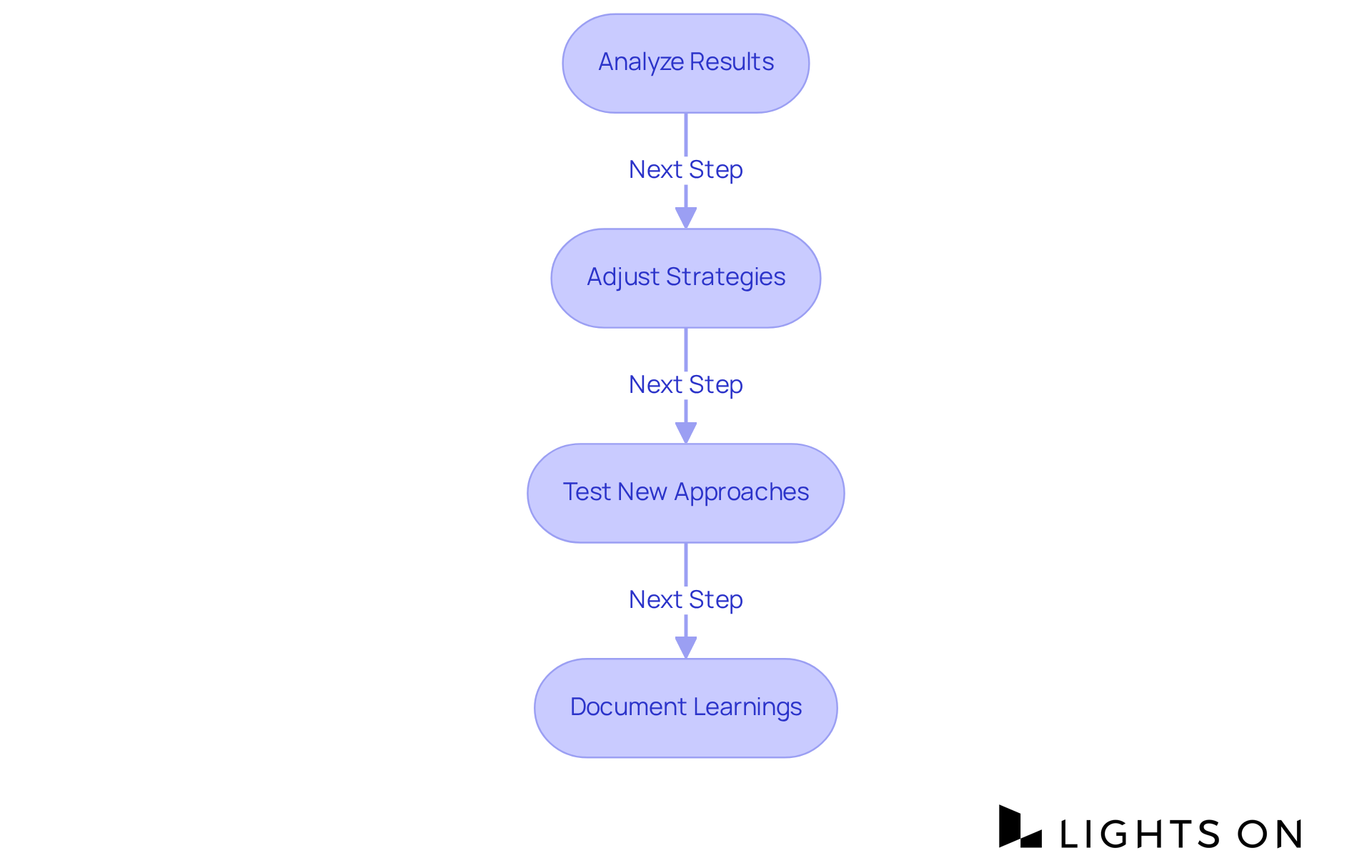
Enhancing future strategies is essential for ongoing success in the hospitality industry. To achieve this, consider the following key steps:
Analyze Results: Thoroughly review the data gathered from your promotional campaigns. Identify which strategies yielded positive outcomes and which fell short. For instance, hotels that effectively utilized video content experienced a notable rise in engagement, with 52% of online advertisers stating that video promotion had the best ROI.
Adjust Strategies: Based on your analysis, make informed modifications to your promotional strategies. If specific channels, such as social media or email promotion, underperformed, consider redistributing resources or enhancing your messaging to better connect with your audience.
Test New Approaches: Embrace experimentation by testing new advertising tactics and channels. For example, integrating WhatsApp as a direct sales channel can enhance lead qualification and upselling opportunities, potentially increasing direct bookings by 20%.
Document Learnings: Maintain a comprehensive record of insights and lessons learned from each campaign. This documentation will serve as a valuable resource for guiding future promotional efforts and ensuring continuous improvement.
By consistently optimizing your hotel marketing campaign, you can significantly enhance your hotel's visibility and revenue potential, ultimately driving growth in a competitive landscape.
Launching a successful hotel marketing campaign hinges on a deep understanding of essential marketing principles, including brand identity, customer engagement, and a strong digital presence. By effectively harnessing these elements, hotels can create campaigns that not only attract guests but also foster lasting relationships that drive repeat business and increase revenue.
The article outlines a comprehensive approach, beginning with the identification of target audiences through demographic analysis and the creation of guest personas. It emphasizes the importance of setting clear, SMART objectives to guide marketing efforts and selecting effective channels, such as social media and email marketing, to reach potential guests. Furthermore, it highlights the significance of producing compelling content that resonates with audiences and implementing a structured campaign rollout while continuously monitoring performance to make data-driven adjustments.
Ultimately, the ability to adapt and optimize future campaigns based on insights gained from previous efforts is vital for sustained success in the competitive hospitality landscape. By embracing these strategies and best practices, hotels can enhance their visibility and profitability, ensuring that they remain a preferred choice for travelers in 2025 and beyond. The call to action for hotel marketers is clear: prioritize a strategic approach that blends creativity with analytics to cultivate a thriving hotel business.
What are the key fundamentals of hotel marketing?
The key fundamentals of hotel marketing include brand identity, customer engagement, and a robust digital presence. A strong brand identity differentiates the hotel and fosters loyalty, while customer engagement enhances visitor experiences. Additionally, a user-friendly website and active social media presence are essential for effective marketing.
How does brand identity impact hotel revenue?
Hotels with a strong brand identity can experience up to a 20% increase in revenue per available room (RevPAR) compared to those without a clear brand identity. A well-articulated brand helps establish emotional connections with visitors, leading to increased loyalty and repeat patronage.
What strategies can enhance customer engagement in hotel marketing?
Strategies to enhance customer engagement include personalized email marketing, social media interactions, and targeted promotions. Engaging content that reflects the brand's values and resonates with the audience is crucial for building trust and credibility.
Why is consistency in branding important for hotels?
Consistency in branding across all touchpoints cultivates reliability and professionalism among visitors. It ensures that potential guests have a seamless experience from their first interaction with the hotel to their stay, reinforcing the brand identity.
How can hotels leverage digital presence for marketing?
Hotels can leverage digital presence by maintaining a user-friendly website that showcases their offerings and engaging with the audience through active social media channels. A cohesive brand identity across all digital platforms strengthens visitor experiences and loyalty.
What role does Lights On play in hotel marketing?
Lights On provides interim revenue management solutions, allowing hotels to maintain promotional momentum and visitor interaction during staffing transitions. This proactive approach safeguards revenue management strategies and enhances overall promotional efforts.
How can hotels identify their target audience effectively?
Hotels can identify their target audience through demographic analysis, market research, and creating detailed guest personas. This structured approach helps understand visitor demographics, trends, and preferences, allowing for tailored marketing strategies.
What is the significance of creating guest personas in hotel marketing?
Creating guest personas helps encapsulate the ideal customers' motivations for travel, booking preferences, and specific needs. This targeted approach allows hotels to craft promotional messages that resonate deeply with their audience, enhancing engagement and driving bookings.
How can exceptional customer service impact hotel marketing?
Prioritizing exceptional customer service is fundamental to building strong relationships with guests, leading to repeat business. Treating guests well fosters loyalty and enhances the overall effectiveness of marketing campaigns.
Transform your group booking strategies with Lights On and watch your occupancy soar.


.svg)

