The article delineates four best practices designed to enhance hotel ad campaigns, emphasizing:
It is crucial to recognize that these practices are underpinned by compelling evidence, which demonstrates that emotional appeal, tailored messaging, and data-driven strategies significantly elevate engagement and conversion rates. Ultimately, these strategies not only drive bookings but also optimize marketing budgets. By implementing these best practices, hotel and restaurant owners can effectively address their challenges and achieve greater success in their advertising efforts.
In an industry where every booking counts, the art of hotel advertising can determine a property's success. As travelers are inundated with options, crafting compelling ad campaigns that resonate both emotionally and visually is essential for capturing attention and driving reservations. This article delves into four best practices that can elevate hotel advertising strategies. However, the pivotal question remains: how can hotels not only stand out in a crowded marketplace but also convert interest into actual bookings?
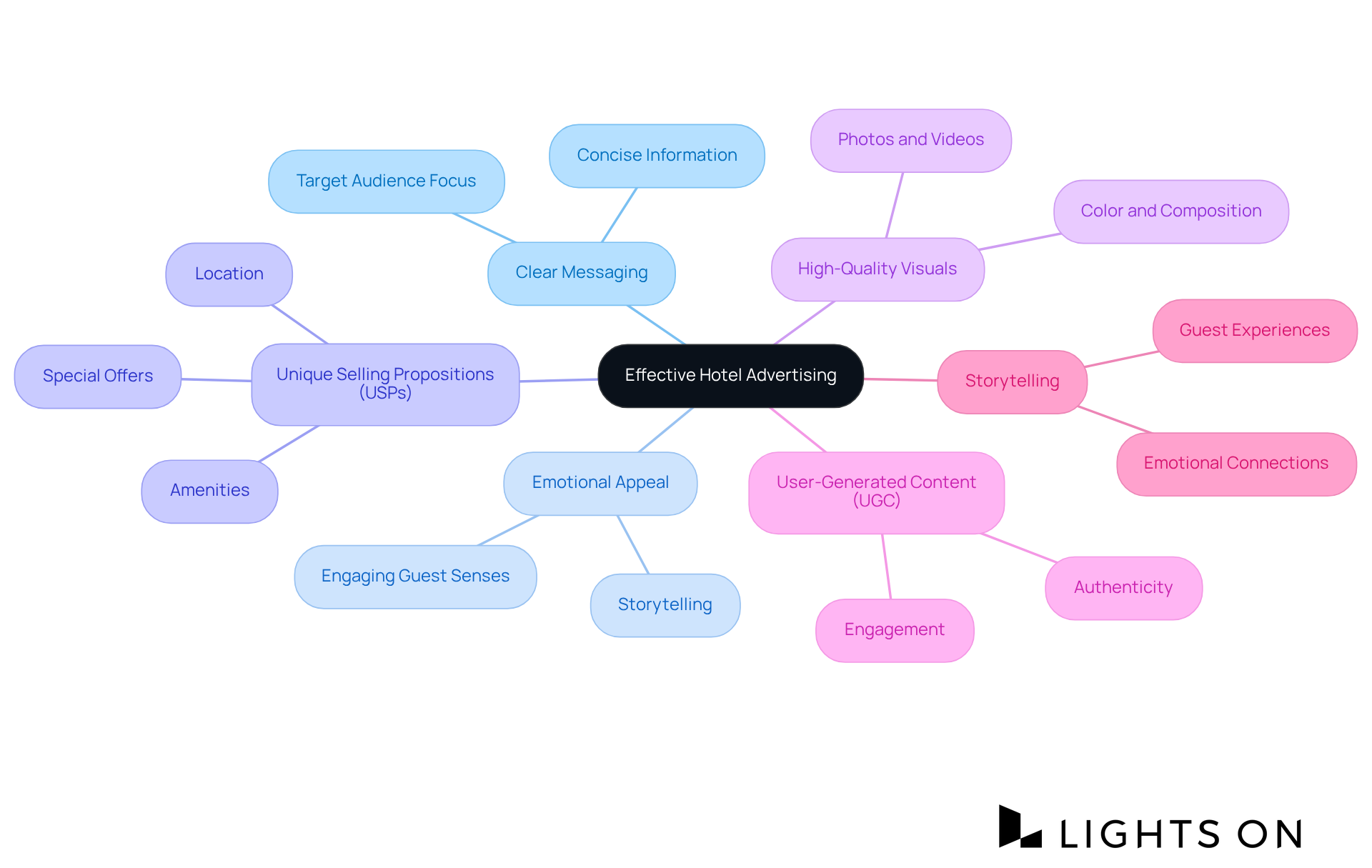
An effective hotel ad campaign is crucial for success in the competitive hospitality market. It encompasses several key components: clear messaging, emotional appeal, and a strong call to action. Highlighting unique selling propositions (USPs), such as location, amenities, and special offers, is essential. For instance, an accommodation may emphasize its proximity to local attractions or its luxurious spa services. Furthermore, using high-quality visuals and engaging content can significantly enhance the appeal of advertisements.
Research indicates that ads eliciting emotional responses tend to perform better, leading to higher engagement and conversion rates. Significantly, 61% of individuals reserve accommodations after viewing them on Instagram, underscoring the importance of engaging visuals in influencing reservations. Additionally, incorporating user-generated content (UGC) can enhance authenticity, as consumers are 2.4 times more likely to view UGC as credible compared to brand-created content. Consequently, accommodations should focus on crafting communications that not only inform but also motivate prospective visitors to take action, nurturing a stronger bond and promoting reservations.
Moreover, storytelling in marketing can forge emotional connections, making it essential for accommodations to incorporate these elements into their hotel ad campaign strategies. By weaving narratives that resonate with potential guests, brands can create a compelling reason for them to choose their services. This approach not only captures attention but also fosters a deeper connection, ultimately driving bookings and enhancing customer loyalty.
To create targeted messaging, accommodations must first identify their primary audience segments based on demographics, travel behaviors, and preferences. For example, a luxury establishment may focus on affluent travelers seeking exclusive experiences, while an economical accommodation might cater to families looking for value.
Employing tools such as customer personas can facilitate the development of tailored messages that resonate with these segments. Furthermore, leveraging data analytics to monitor guest behavior and preferences can refine messaging strategies. If data reveals that a significant portion of reservations comes from business travelers, the establishment can emphasize features like meeting rooms and high-speed internet in its promotions.
Notably, Bunkhouse Hotels generated $6.1 million in lifetime revenue through targeted initiatives, illustrating the financial impact of focused messaging. Additionally, Ambiente Sedona realized $780,000 in lifetime direct revenue via email, demonstrating the power of personalized communication.
As Karen Stephens emphasizes, utilizing first-party data is crucial for cultivating meaningful relationships with guests, highlighting the significance of data-driven strategies in marketing.

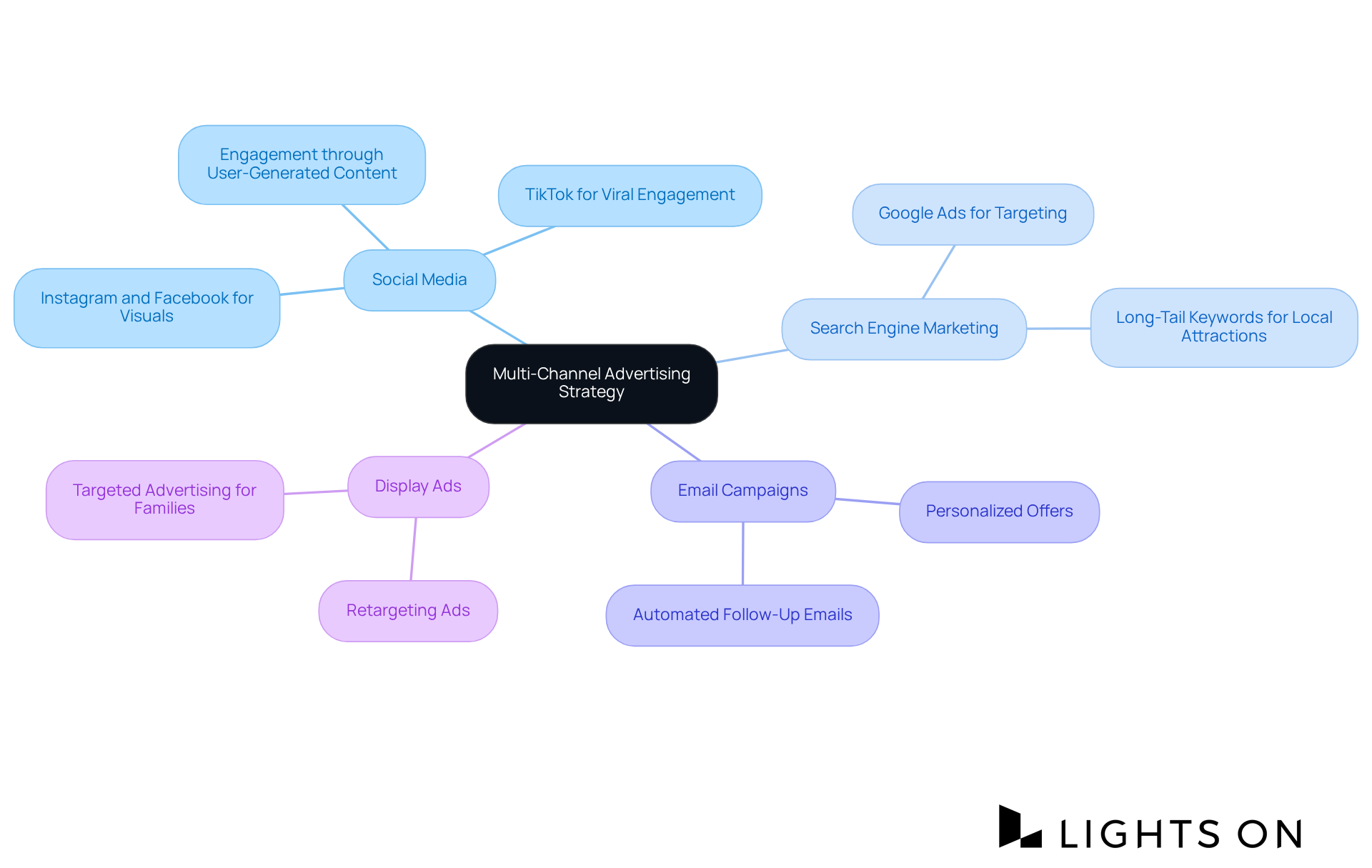
To maximize visibility and engagement, accommodations must implement a multi-channel advertising strategy that encompasses:
Each channel plays a distinct role in reaching various audience segments. For instance, platforms such as Instagram and Facebook excel at showcasing visually captivating content, making them ideal for attracting potential guests. Conversely, Google Ads effectively target users actively seeking accommodations, thereby increasing the chances of direct reservations.
Consistency in messaging across these channels is crucial; it not only reinforces brand identity but also fosters trust among potential guests. Retargeting advertisements serve as an effective method to reconnect with individuals who have previously browsed the establishment’s website, reminding them of their interest and motivating them to finalize their reservations. This approach has proven beneficial, with accommodations reporting a 40% rise in reservations following the launch of focused social media initiatives. By leveraging the strengths of each platform while maintaining a cohesive strategy, accommodations can significantly enhance their advertising effectiveness and drive higher occupancy rates.
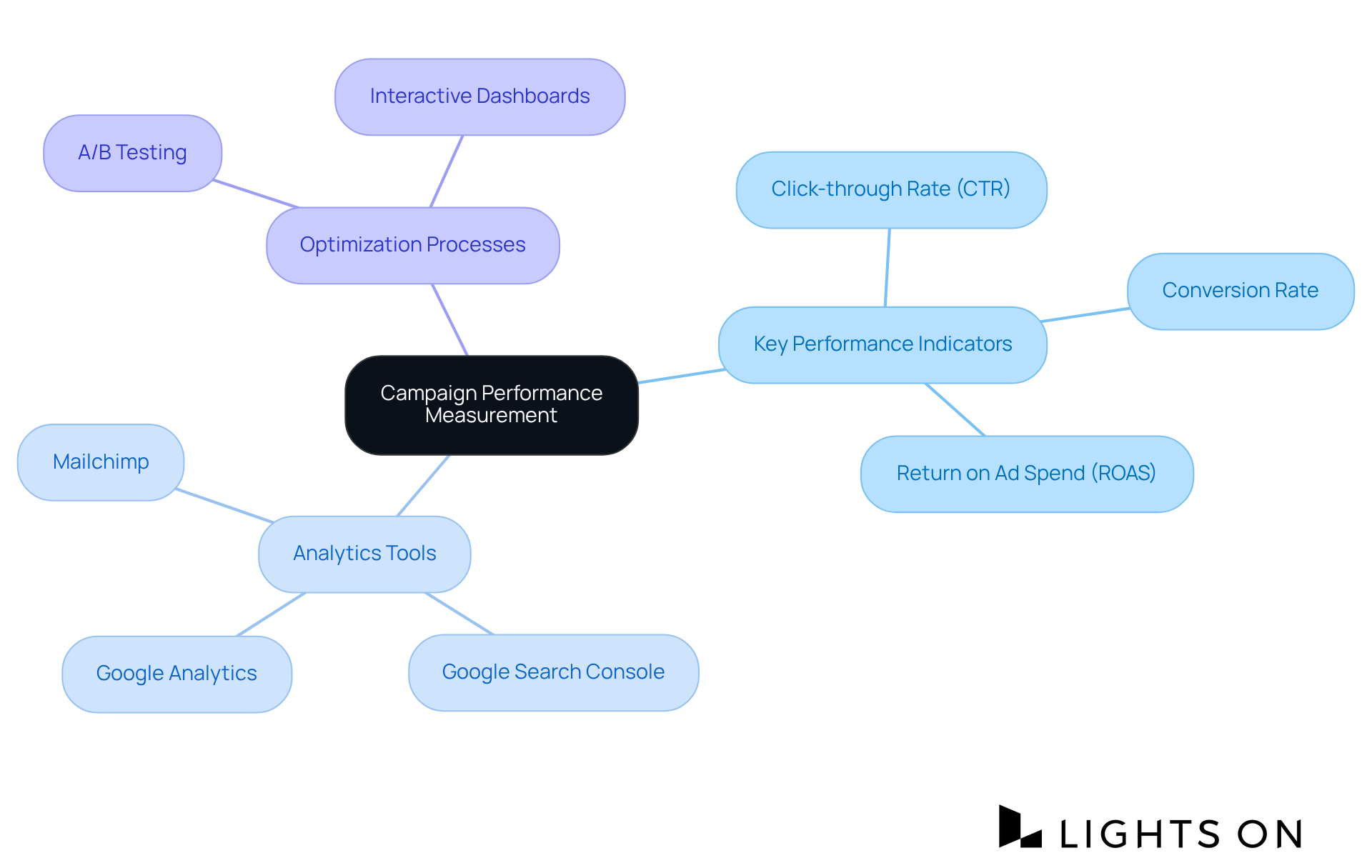
To effectively assess promotional performance, accommodations must establish key performance indicators (KPIs) such as:
Analytics tools, including:
provide essential insights into ad performance, aiding in the recognition of successful initiatives and those requiring modifications. For instance, if an ad generates significant traffic but results in low conversions, it may indicate a need to reassess the landing page or promotional offer.
Regular A/B testing is crucial for identifying the most effective ad formats and messaging, enabling accommodations to continuously refine their strategies. Furthermore, developing an interactive dashboard with Google Data Studio can consolidate tracking efforts across various initiatives, enhancing the ability to evaluate performance.
By utilizing these insights and refining strategies accordingly, hotels can significantly improve their advertising effectiveness and ensure efficient utilization of their marketing budgets. Notably, a well-executed campaign can achieve a CTR of 2% to 5% for search ads, indicating strong engagement and potential for increased bookings.
An effective hotel advertising campaign is essential for standing out in a crowded market. By focusing on clear messaging, emotional engagement, and a compelling call to action, hotels can significantly enhance their promotional efforts. Highlighting unique selling propositions, utilizing high-quality visuals, and incorporating storytelling into marketing strategies create deeper connections with potential guests, ultimately driving bookings and fostering loyalty.
Key insights discussed include:
Successful examples illustrate how data-driven strategies and personalized communication can lead to substantial revenue increases. Furthermore, a cohesive approach across various advertising platforms not only reinforces brand identity but also enhances overall effectiveness.
In a landscape where consumer preferences are continually evolving, it is crucial for hotel marketers to adopt these best practices. By prioritizing emotional connections, utilizing data analytics for targeted messaging, and optimizing campaigns through performance measurement, hotels can navigate the complexities of the hospitality market. Embracing these strategies will not only improve advertising effectiveness but also ensure sustained growth and success in attracting guests.
What is an effective hotel advertising campaign?
An effective hotel advertising campaign includes clear messaging, emotional appeal, and a strong call to action, highlighting unique selling propositions (USPs) such as location, amenities, and special offers.
Why are unique selling propositions (USPs) important in hotel advertising?
USPs are important because they differentiate the hotel from competitors by emphasizing features like proximity to local attractions or luxurious services, which can attract potential guests.
How do visuals impact hotel advertising?
High-quality visuals and engaging content significantly enhance the appeal of advertisements, as they can evoke emotional responses and influence reservations. Research shows that 61% of individuals book accommodations after viewing them on Instagram.
What role does user-generated content (UGC) play in hotel advertising?
UGC enhances authenticity, as consumers find it 2.4 times more credible than brand-created content. Incorporating UGC can improve engagement and trust among potential guests.
How can storytelling be utilized in hotel advertising?
Storytelling can forge emotional connections by weaving narratives that resonate with potential guests, capturing their attention and fostering a deeper connection, which can drive bookings and enhance customer loyalty.
What should hotel advertisements aim to do?
Hotel advertisements should aim to inform and motivate prospective visitors to take action, nurturing a stronger bond and promoting reservations.
Transform your group booking strategies with Lights On and watch your occupancy soar.


.svg)

