The article presents four essential strategies for effective hotel yield management, focusing on dynamic pricing, market segmentation, demand forecasting, and promotional tactics to maximize revenue. In today’s competitive hospitality landscape, these strategies are crucial for adapting to market conditions and consumer behavior. Furthermore, the integration of technology plays a vital role in enhancing decision-making and operational efficiency.
Dynamic pricing allows hotels to adjust rates in real-time, responding to fluctuations in demand. This approach not only optimizes revenue but also ensures that pricing remains competitive. Market segmentation enables hotels to tailor their offerings to specific customer groups, enhancing guest satisfaction and loyalty. By understanding the unique needs of different segments, hotels can create targeted marketing campaigns that resonate with their audience.
Demand forecasting is another critical component, as it helps hotels anticipate fluctuations in occupancy and adjust their strategies accordingly. Accurate forecasting allows for better resource allocation and pricing strategies, ultimately leading to increased profitability. Promotional tactics, when executed effectively, can drive bookings during low-demand periods, ensuring a steady flow of revenue.
In addition to these strategies, real-time adjustments based on market conditions are essential. The hospitality industry is dynamic, and staying ahead requires constant monitoring and adaptation. By leveraging technology, hotels can make informed decisions that enhance their competitive edge.
In conclusion, implementing these yield management strategies not only optimizes revenue but also positions hotels for long-term success. Hotel and restaurant owners should consider these actionable recommendations to navigate the complexities of the hospitality market effectively.
In the competitive realm of hospitality, hotel operators grapple with a significant challenge: maximizing revenue from a limited inventory of rooms. This task is not just about filling beds; it’s about implementing effective yield management strategies that enhance profitability and boost operational efficiency. These strategies empower hotels to adapt to the ever-fluctuating market demands. Yet, as technology advances and consumer behaviors shift, the question arises: how can hotels navigate the complexities of yield management to ensure they are selling the right room at the right price?
This article delves into best practices that can empower hotel owners to optimize their yield management strategies. By understanding these practices, you can thrive in an ever-changing market, ensuring your hotel not only survives but flourishes.
Yield optimization in hospitality through hotel yield management is crucial for maximizing revenue from a fixed, perishable stock, like accommodation rooms. This approach to hotel yield management requires a deep understanding of consumer behavior, which enables accommodations to adjust prices dynamically based on demand fluctuations, seasonality, and current market conditions. To effectively implement yield management, hotel owners can adopt several actionable strategies:
By effectively applying hotel yield management strategies, establishments can optimize occupancy rates and revenue, ensuring they sell the right room to the right guest at the right time and price. This not only enhances profitability but also significantly improves operational efficiency, positioning hotels to thrive in a competitive landscape. The market for yield optimization technologies is projected to grow at a CAGR of 7.6% from 2025 to 2034, highlighting the increasing reliance on advanced analytics and AI-driven tools for refining pricing models and enhancing decision-making processes. However, challenges such as accurately predicting demand can complicate yield control efforts, as emphasized in the case study 'Challenges in Implementing Yield Management.' Effective hotel yield management approaches will increasingly leverage data-informed insights to navigate these complexities.

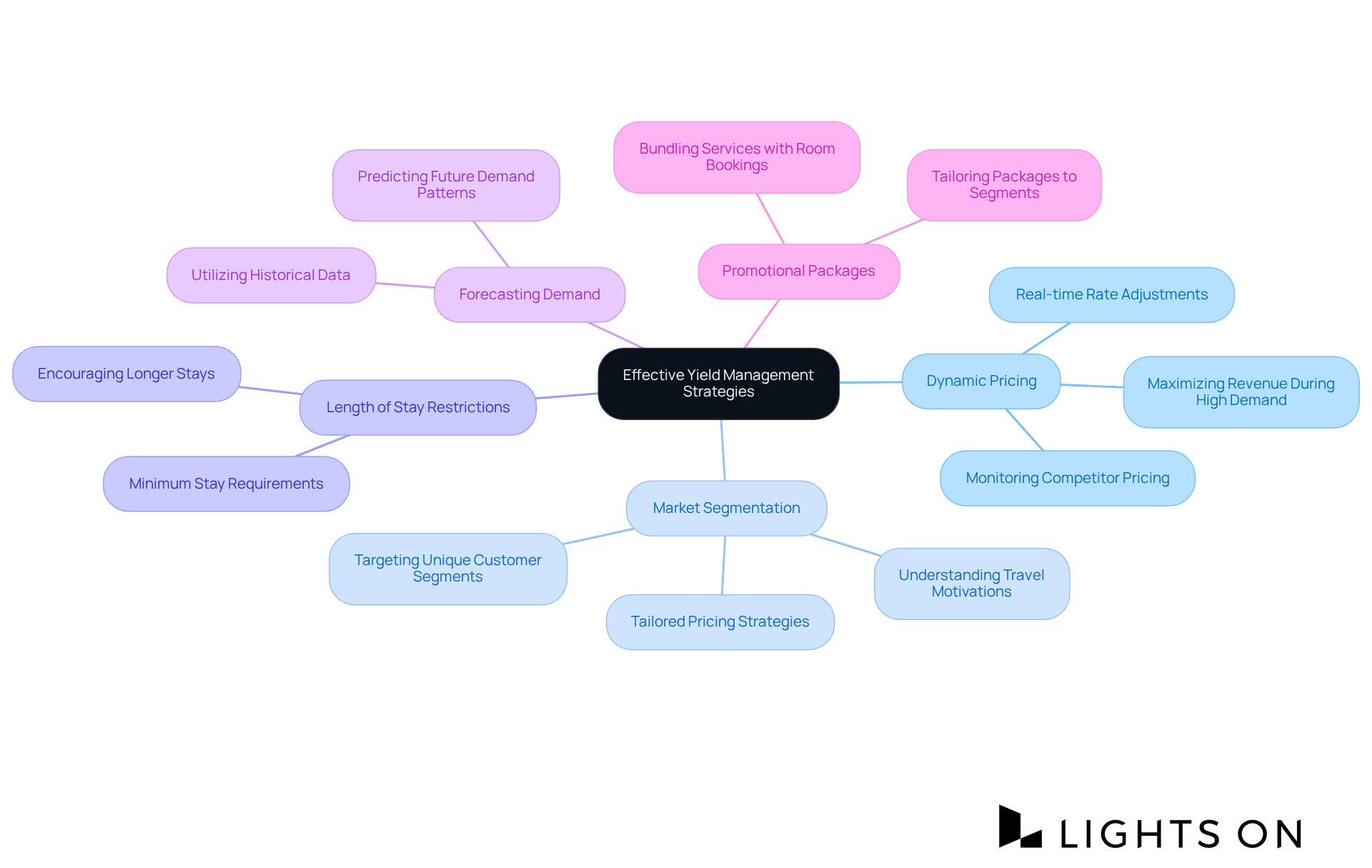
To implement effective yield management strategies, hotels must adopt several key approaches:
Dynamic Pricing: Adjusting room rates in real-time based on demand signals, competitor pricing, and market trends is crucial. This flexibility allows accommodations to capitalize on peak demand periods, such as local events or holidays, while remaining competitive during slower times. For example, during high-demand events, hotels can raise prices as competitor rooms sell out, maximizing revenue potential.
Market Segmentation: Identifying and targeting unique customer segments with tailored pricing strategies is essential. By understanding the motivations behind different travel reasons—like leisure versus business—hotels can offer specific discounts for corporate bookings or special rates for extended stays. This targeted approach not only enhances customer satisfaction but also drives occupancy and revenue.
Length of Stay Restrictions: Implementing policies that encourage longer stays during peak periods can significantly boost occupancy rates and revenue. For instance, requiring a minimum stay for weekends or holidays helps maximize bookings during high-demand seasons when guests are more likely to extend their visits.
Forecasting Demand: Utilizing historical data and market analysis to predict future demand patterns is vital. Accurate forecasting enables establishments to enhance their hotel yield management, allowing them to make informed pricing decisions and improve inventory management to effectively respond to changes in guest demand. For instance, analyzing booking trends can help accommodations adjust rates dynamically according to occupancy levels and local events.
Promotional Packages: Creating attractive packages that bundle services—such as meals, spa treatments, or local experiences—with room bookings enhances the guest experience and increases overall revenue per booking. Tailoring these packages to specific segments can further improve their effectiveness, leading to higher customer retention and satisfaction.
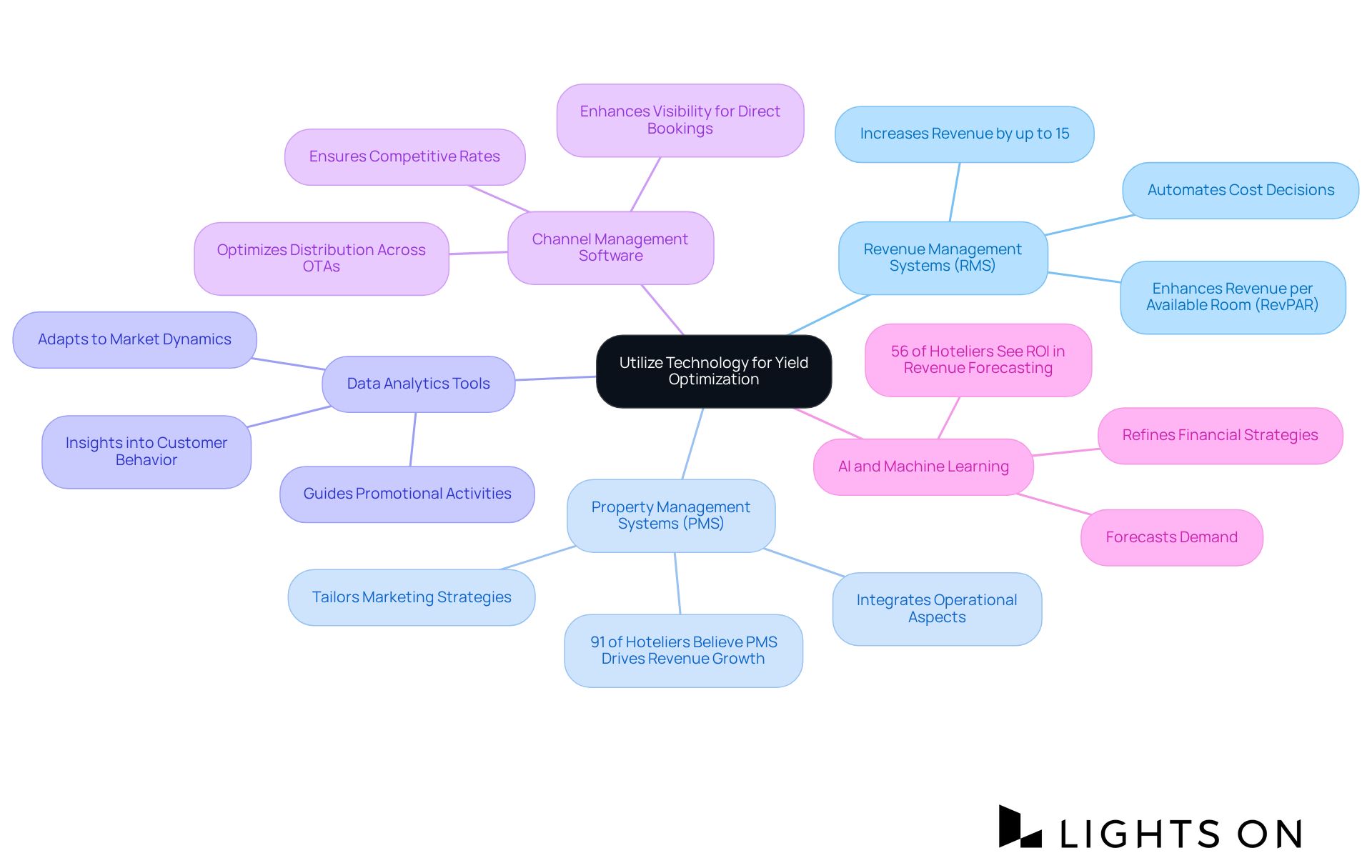
Embracing technology is crucial for optimizing hotel yield management and integrating effective marketing strategies. Here are key technologies and practices to consider:
Revenue Management Systems (RMS): Implementing an RMS automates cost decisions by analyzing real-time data, historical trends, and market conditions. This not only reduces manual errors but also improves cost accuracy, leading to enhanced revenue per available room (RevPAR). Hotels that adopt RMS can see a revenue increase of up to 15% within the first six months of implementation. Furthermore, combining RMS with hotel yield management and targeted marketing campaigns can attract the right guests at optimal pricing, maximizing revenue potential.
Property Management Systems (PMS): A robust PMS integrates various operational aspects, including reservations, billing, and guest management, facilitating seamless data flow and better decision-making. Statistics reveal that 91% of hoteliers believe that hotel yield management through their PMS directly drives revenue growth via upsells, direct bookings, and rate optimization. By leveraging PMS data, accommodations can tailor marketing strategies for specific customer groups, enhancing engagement and boosting reservations.
Data Analytics Tools: Leveraging data analytics provides insights into customer behavior, booking patterns, and market trends. This information is essential for guiding hotel yield management and promotional activities, enabling hotels to adapt swiftly to evolving market dynamics. Implementing targeted marketing strategies based on these insights can significantly enhance hotel yield management and improve occupancy rates.
Channel Management Software: Utilizing channel management tools optimizes distribution across various online travel agencies (OTAs) and direct booking channels. This ensures uniform and competitive rates across platforms, which is vital in a crowded market where visibility is key. Effective marketing approaches can enhance visibility on these channels, ultimately driving more direct bookings through hotel yield management.
AI and Machine Learning: Advanced technologies like AI analyze extensive data sets to forecast demand and dynamically refine financial strategies. This capability enables hotels to utilize hotel yield management to stay ahead of market trends, enhancing operational efficiency and guest satisfaction. Notably, 56% of hoteliers see the greatest potential ROI in AI applications focused on revenue forecasting and dynamic pricing. Incorporating AI-driven insights into marketing strategies can further improve targeting and personalization, resulting in higher bookings.
Hotel yield management offers significant benefits, but it also presents challenges that require strategic solutions. Here are key obstacles and effective strategies, including relevant hotel marketing tactics to boost bookings and optimize revenue management:
Data Accuracy: Inaccurate data can severely impact decision-making, leading to flawed financial strategies. To address this, implement robust data collection processes and ensure staff receive thorough training in accurate data entry. Investing in integrated systems can significantly enhance data quality, as poor data can cost firms around $9.7 million annually. Moreover, utilizing marketing analytics tools can provide valuable insights into customer behavior, helping to refine financial strategies based on precise data.
Market Volatility: Fluctuating market conditions complicate cost determination. Regularly analyze market trends and adjust pricing accordingly to maintain competitiveness. For instance, during the Paris Olympics, lodging prices surged by 77%, highlighting the need for flexible strategies that respond to immediate demand. Additionally, launching promotional campaigns during peak seasons can help stabilize revenue during unpredictable periods.
Guest Perception: Dynamic pricing adjustments can sometimes be perceived as unfair by guests. To mitigate this, maintain transparent communication about pricing strategies and enhance perceived value through personalized services or packages. Implementing tailored pricing strategies and targeted promotions can further boost customer satisfaction and minimize dissatisfaction. For example, offering loyalty discounts or exclusive packages can significantly improve guests' perception of value.
Integration of Systems: Fragmented systems can obstruct effective yield management. Invest in user-friendly, integrated technology solutions that streamline operations and provide a holistic view of performance metrics. This integration is vital for accurate demand forecasting and effective pricing adjustments in hotel yield management. Furthermore, leveraging customer relationship management systems can aid in crafting targeted marketing campaigns that align with yield objectives.
Staff Training: Continuous education in yield optimization principles and technologies is crucial. Well-trained staff can make informed decisions that align with the establishment's revenue goals, ensuring that pricing strategies are both effective and sustainable. By fostering a culture of learning, hotels can better navigate the complexities of hotel yield management. Training staff to utilize technology effectively is also essential for managing the intricacies of yield management, including understanding how marketing strategies can influence pricing decisions.

Effective hotel yield management is crucial for maximizing revenue in today’s competitive hospitality landscape. Understanding and implementing best practices—like dynamic pricing, market segmentation, and advanced technology—enables hotels to optimize occupancy rates and enhance profitability. This strategic approach allows accommodations to respond adeptly to market fluctuations and consumer behavior, ultimately delivering greater value to both the business and its guests.
Several key strategies for effective yield management emerge, highlighting the importance of:
These practices empower hotels to make informed pricing decisions, tailor promotional packages, and efficiently manage inventory. Furthermore, addressing challenges like data accuracy, market volatility, and guest perception is essential for maintaining a competitive edge and ensuring long-term success in yield management.
In conclusion, the significance of yield management in the hospitality industry cannot be overstated. As the market evolves, embracing innovative technologies and implementing robust strategies will be vital for hotels seeking to thrive. By prioritizing effective yield management practices, hotel operators can enhance their revenue potential and improve guest satisfaction, paving the way for a sustainable and prosperous future in the hospitality sector.
What is yield management in hospitality?
Yield management in hospitality refers to the process of maximizing revenue from a fixed, perishable stock, such as hotel rooms, by adjusting prices dynamically based on consumer behavior, demand fluctuations, seasonality, and market conditions.
Why is understanding consumer behavior important for yield management?
Understanding consumer behavior is crucial for yield management as it allows accommodations to adjust prices in real-time to match demand, thereby optimizing occupancy rates and revenue.
What are some strategies for implementing yield management in hotels?
Strategies for implementing yield management include dynamic rate strategies, promotional tactics, data analytics, and forecasting demand.
How do dynamic rate strategies work?
Dynamic rate strategies involve adjusting room rates in real-time based on demand, competitor pricing, and market trends to increase occupancy and revenue.
What role do promotional tactics play in yield management?
Promotional tactics are used to attract guests during low-demand periods, helping to fill rooms and optimize revenue.
How does data analytics contribute to yield management?
Data analytics and AI-driven tools help refine pricing models and enhance decision-making processes, allowing hotels to respond effectively to market changes.
What is the significance of forecasting demand in yield management?
Forecasting demand is important as it enables hotels to anticipate market shifts and adapt their strategies accordingly to maximize revenue.
What are the projected growth trends for yield optimization technologies?
The market for yield optimization technologies is projected to grow at a CAGR of 7.6% from 2025 to 2034, indicating an increasing reliance on advanced analytics and AI tools.
What challenges do hotels face in implementing yield management?
Challenges in implementing yield management include accurately predicting demand, which can complicate yield control efforts.
How can effective yield management improve hotel operations?
Effective yield management enhances profitability and operational efficiency, positioning hotels to thrive in a competitive landscape by ensuring they sell the right room to the right guest at the right time and price.
Transform your group booking strategies with Lights On and watch your occupancy soar.


.svg)

