The hospitality industry is experiencing a significant transformation, propelled by rapid technological advancements that are reshaping guest experiences. Innovations such as artificial intelligence and the Internet of Things are being harnessed by hotels to craft personalized, efficient, and engaging environments for travelers. As competition escalates, it is imperative for establishments to not only embrace these technologies but also to grasp their impact on guest satisfaction and operational success.
How can hotels effectively navigate this landscape of emerging technology trends to enhance their offerings and meet the evolving expectations of modern travelers? This question is crucial as it sets the stage for understanding the challenges and opportunities that lie ahead.
In the competitive hospitality sector, marketing strategies must resonate with target audiences to drive success. Lights On employs advanced data analytics to address this challenge, enabling lodging establishments to tailor their marketing efforts effectively. By examining visitor behavior and preferences, hotels and restaurants can craft personalized campaigns that not only increase visibility but also boost reservations.
For instance, utilizing segmentation methods allows accommodations to target specific demographics with customized promotions. This approach enhances conversion rates and fosters visitor loyalty, ultimately leading to a more robust customer base. Furthermore, Lights On ensures that accommodations amplify their reach through both paid and organic visibility, harmonizing their brand voice across all digital assets for a seamless customer journey.
This data-driven methodology not only enhances marketing efficiency but also nurtures a stronger bond with visitors. As a result, businesses can expect increased satisfaction and repeat visits. Are you ready to elevate your marketing strategy and connect more deeply with your guests?

Artificial Intelligence (AI) is fundamentally transforming visitor interactions in the hospitality sector, enabling hotels to deliver highly personalized experiences. With AI-driven chatbots operating continuously, inquiries are addressed immediately, allowing staff to focus on more intricate client needs. This capability is crucial, as 70% of visitors find chatbots beneficial for simple inquiries, significantly enhancing overall satisfaction. Furthermore, 77% of visitors prefer using automated messaging or chatbots for swift communication, underscoring their efficiency in boosting visitor satisfaction.
Moreover, AI algorithms meticulously analyze visitor data to suggest tailored services, such as room upgrades or customized dining options. This level of personalization is not merely a luxury; it is increasingly expected. In fact, 71% of hoteliers aspire to offer greater personalization, yet only 15% feel effective in achieving it. Notably, 80% of accommodations currently utilize or plan to utilize AI and data analytics for personalized offers, highlighting the sector's commitment to enhancing visitor experiences through AI.
The integration of AI not only elevates visitor satisfaction but also enhances operational efficiency. By forecasting demand, accommodations can optimize staffing and resource distribution, ensuring they meet visitor needs without overextending their resources. AI also plays a role in optimizing energy consumption and improving pricing and revenue management, further contributing to operational effectiveness.
To maximize the benefits of AI, hotels should consider integrating targeted marketing strategies that leverage AI insights. For instance, tailored email campaigns based on visitor preferences can significantly boost bookings, while AI-driven pricing strategies can ensure competitive rates that attract more visitors. Successful implementations of AI chatbots in hospitality have demonstrated substantial improvements in client satisfaction. Hotels utilizing AI-powered chatbots report shorter wait times and enhanced engagement, allowing staff to dedicate more time to personalized service.
As Lisa Schwarz, Senior Director of Global Product Marketing, states, "AI algorithms can play a potentially vital role in enhancing hospitality firms’ capacity to provide tailored visitor interactions." As the hospitality sector evolves, the strategic application of AI, coupled with effective marketing tactics, will be essential in meeting the growing demands of tech-savvy travelers, ultimately leading to a more efficient and satisfying stay.

The Internet of Things (IoT) is fundamentally changing lodging environments into high technology hotels, allowing guests to easily control their room settings through mobile devices. Imagine adjusting lighting, temperature, and entertainment systems with just a few taps-this significantly enhances comfort and convenience. Research shows that 61% of consumers are willing to pay more for personalized experiences, yet only 23% of accommodations currently offer this level of service.
Furthermore, IoT devices are pivotal in energy management. They monitor usage patterns, allowing accommodations to optimize resource consumption and cut operational costs. For instance, smart thermostats can automatically adjust heating or cooling based on room occupancy, leading to energy savings of up to 30% while ensuring a comfortable environment for guests. Notably, establishments like the Hilton San Diego Bayfront have achieved a 13.6% reduction in gas consumption and a 9.5% decrease in electricity consumption through IoT-enabled energy management systems. This showcases the substantial benefits of integrating smart technology into the operations of a high technology hotel.
As the industry progresses, the synergy between IoT and AI technologies will further elevate guest experiences by anticipating needs and automating routine tasks. This evolution paves the way for a more efficient and personalized stay. However, it’s crucial to address the cybersecurity risks associated with IoT devices. A staggering 95% of hoteliers express concerns about customer data theft and reputational damage stemming from IoT vulnerabilities. Tackling these risks is essential for the successful implementation of IoT in hotels.

In a high technology hotel, contactless technology has become a vital element in modern hospitality, allowing guests to check in, access rooms, and make payments without any physical interaction. Mobile check-in apps and digital room keys not only enhance convenience but also significantly reduce health risks. By mid-2025, a remarkable 94% of visitors are expected to prefer mobile check-in and check-out options, underscoring the strong demand for seamless digital experiences.
Hotels that embrace these technologies, such as high technology hotels, not only boost visitor satisfaction but also streamline their operations, effectively reducing the need for front desk staff during peak times. Properties that implement digital key systems report higher visitor satisfaction and improved operational efficiency, clearly demonstrating the tangible benefits of adopting contactless solutions. Furthermore, contactless technology not only enhances visitor satisfaction but also opens up new revenue opportunities while cutting down on operational expenses.
By prioritizing these innovations, a high technology hotel can foster a more enjoyable and efficient atmosphere, ultimately elevating overall visitor satisfaction. Are you ready to transform your hospitality experience and meet the evolving expectations of your guests?

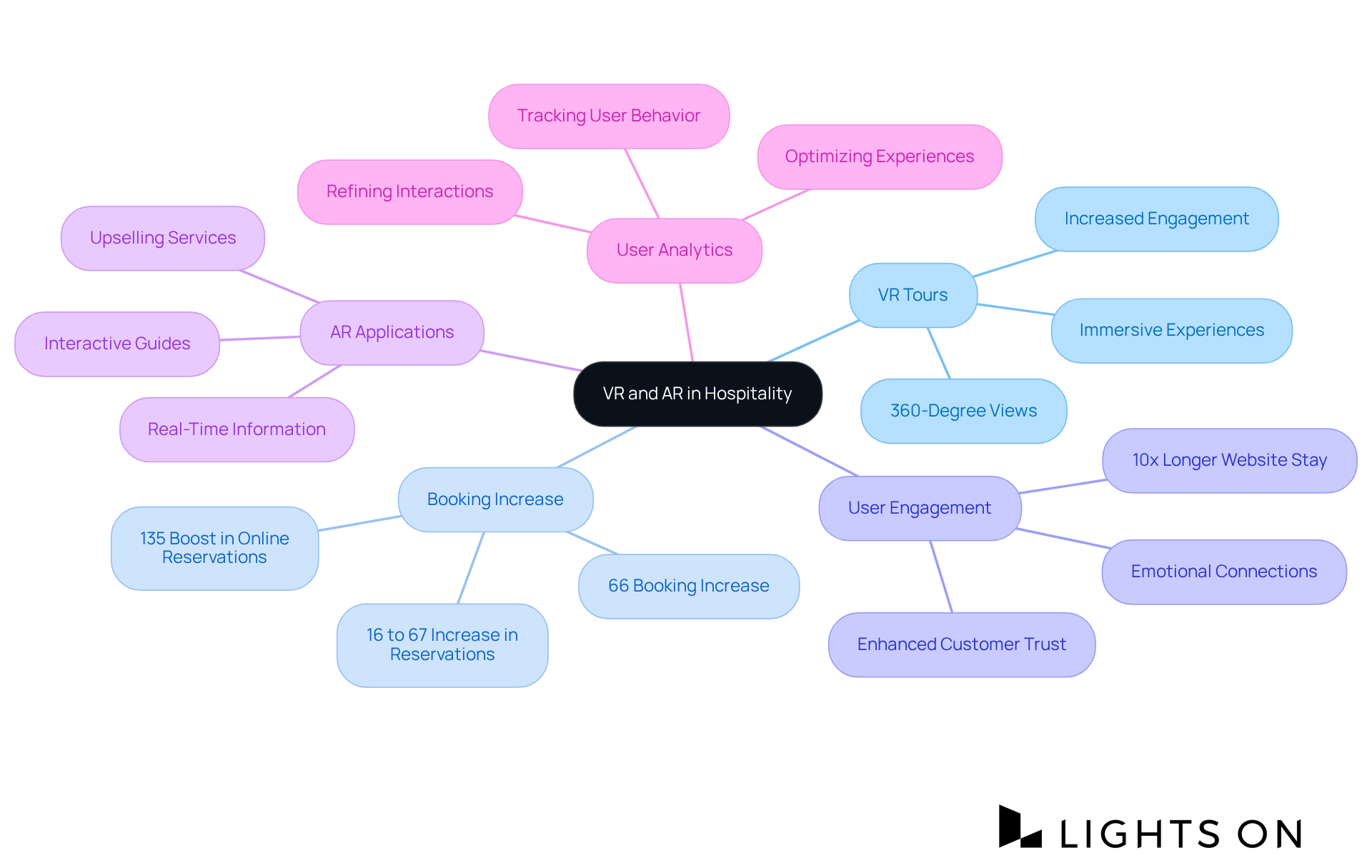
Virtual and augmented reality (VR and AR) are revolutionizing the hospitality sector by offering prospective customers engaging interactions before they make a reservation. Imagine being able to explore lodging spaces and amenities from the comfort of your home - this is precisely what VR tours provide. By enhancing confidence in booking choices, establishments that utilize VR tours can experience a booking increase of up to 66%. This significant rise is attributed to the boost in visitor trust and satisfaction that these immersive experiences deliver. Furthermore, users engaging with VR tours tend to stay on websites ten times longer than those without, underscoring the potential for increased engagement.
On-site, AR applications elevate visitor interaction by providing interactive guides and real-time information about accommodations, including dining options and amenities. But it doesn't stop there; AR can also be strategically used for upselling services like spa treatments or souvenirs, thereby enhancing revenue opportunities. To truly understand how visitors engage with virtual tours, monitoring user analytics is essential. This data allows accommodations to refine these interactions based on visitor behavior, ensuring a tailored experience.
The integration of VR and AR technology in a high technology hotel creates captivating experiences that attract more visitors and helps accommodations differentiate themselves in a competitive market. By incorporating these innovative tools into their marketing strategies, high technology hotels and restaurants can significantly enhance customer engagement and drive higher booking rates. It's crucial to ensure that virtual tours are optimized for mobile devices, catering to the growing number of users accessing information via smartphones and tablets. Are you ready to embrace these technologies and transform your customer engagement strategy?
The integration of robotics and automation in a high technology hotel is revolutionizing service delivery, significantly enhancing operational efficiency and visitor satisfaction. Robotic concierges, like Hilton's Connie, and automated room service systems such as Richtech Robotics' ADAM are streamlining processes. This allows staff to focus more on personalized interactions with visitors. For instance, utilizing robots for repetitive tasks-like check-in assistance and room service delivery-not only cuts labor costs but also boosts service speed and consistency.
In a competitive landscape, where 79% of lodging managers report a positive impact from AI technologies, the shift towards automation is crucial. Furthermore, 60% of accommodations are expected to adopt AI in the coming years. Industry leaders emphasize that automation is not about replacing human employees; rather, it enhances their roles, enabling them to create unforgettable experiences for guests. Notably, 56% of visitors indicate they are likely to return after a customized experience.
As high technology hotels increasingly adopt these technologies, they become better equipped to meet evolving traveler expectations. This ultimately leads to improved visitor loyalty and operational success. Are you ready to embrace the future of hospitality? The time to act is now.

Data analytics is essential for revenue management in accommodations, empowering them to make informed pricing and marketing decisions. By analyzing booking patterns, guest demographics, and market trends, accommodations can refine their pricing strategies to optimize occupancy and revenue. For example, predictive analytics can forecast demand fluctuations, allowing accommodations to adjust prices dynamically. A study by Cornell University revealed that establishments employing Revenue Management Systems (RMS) experienced a 10-15% increase in RevPAR, highlighting the power of data analytics in boosting profitability.
Furthermore, Preeti Wadhwani points out that competition has intensified, compelling accommodations to implement dynamic pricing strategies driven by AI and machine learning. This data-centric approach not only enhances profitability but also helps accommodations understand visitor preferences, leading to more personalized marketing initiatives and improved guest satisfaction. As the hospitality revenue management market is projected to reach USD 13.1 billion by 2034, integrating advanced analytics will be vital for maintaining a competitive edge and addressing the diverse needs of travelers.

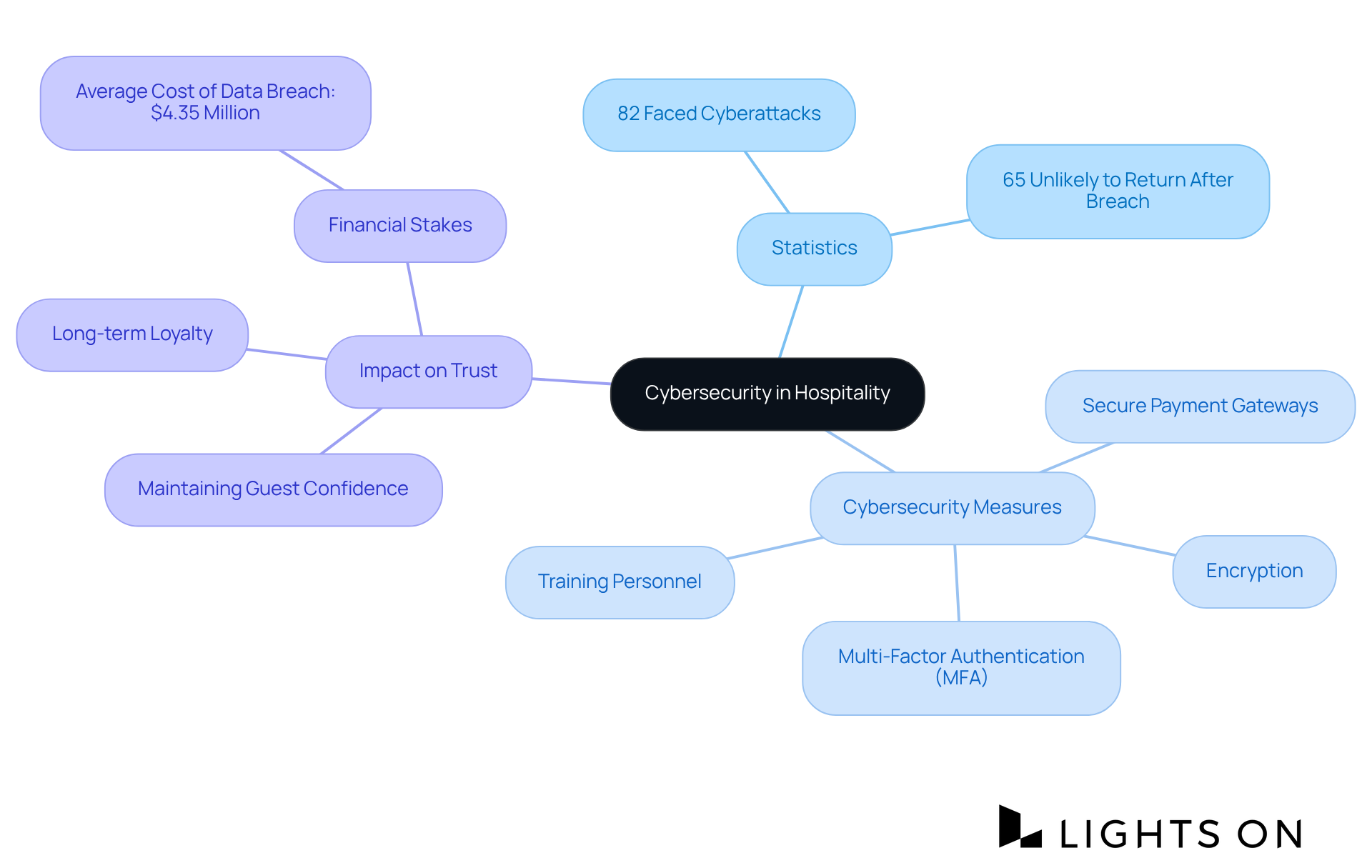
As accommodations increasingly adopt digital technologies, cybersecurity has emerged as a critical concern. Protecting guest data from breaches and cyberattacks is essential for maintaining trust and safeguarding reputation. Did you know that 82% of North American accommodations faced a cyberattack last summer? This statistic underscores the urgency of addressing this issue.
Implementing robust cybersecurity measures - like encryption, secure payment gateways, Multi-Factor Authentication (MFA), and regular security audits - enables establishments to effectively shield sensitive information. Furthermore, training personnel to recognize phishing attempts and other cyber threats is vital for creating a safe atmosphere for visitors. Aleksander Ludynia emphasizes the importance of addressing the human factor in cybersecurity, which often presents security weaknesses.
By prioritizing cybersecurity, accommodations not only enhance guest confidence but also cultivate long-term loyalty. Research indicates that 65% of visitors are unlikely to return to an establishment after experiencing a cyber-attack. Additionally, the average cost of a lodging data breach is approximately $4.35 million, highlighting the financial stakes involved.
By investing in cybersecurity, accommodations can secure a competitive advantage in the hospitality landscape. Are you ready to take action and protect your establishment?
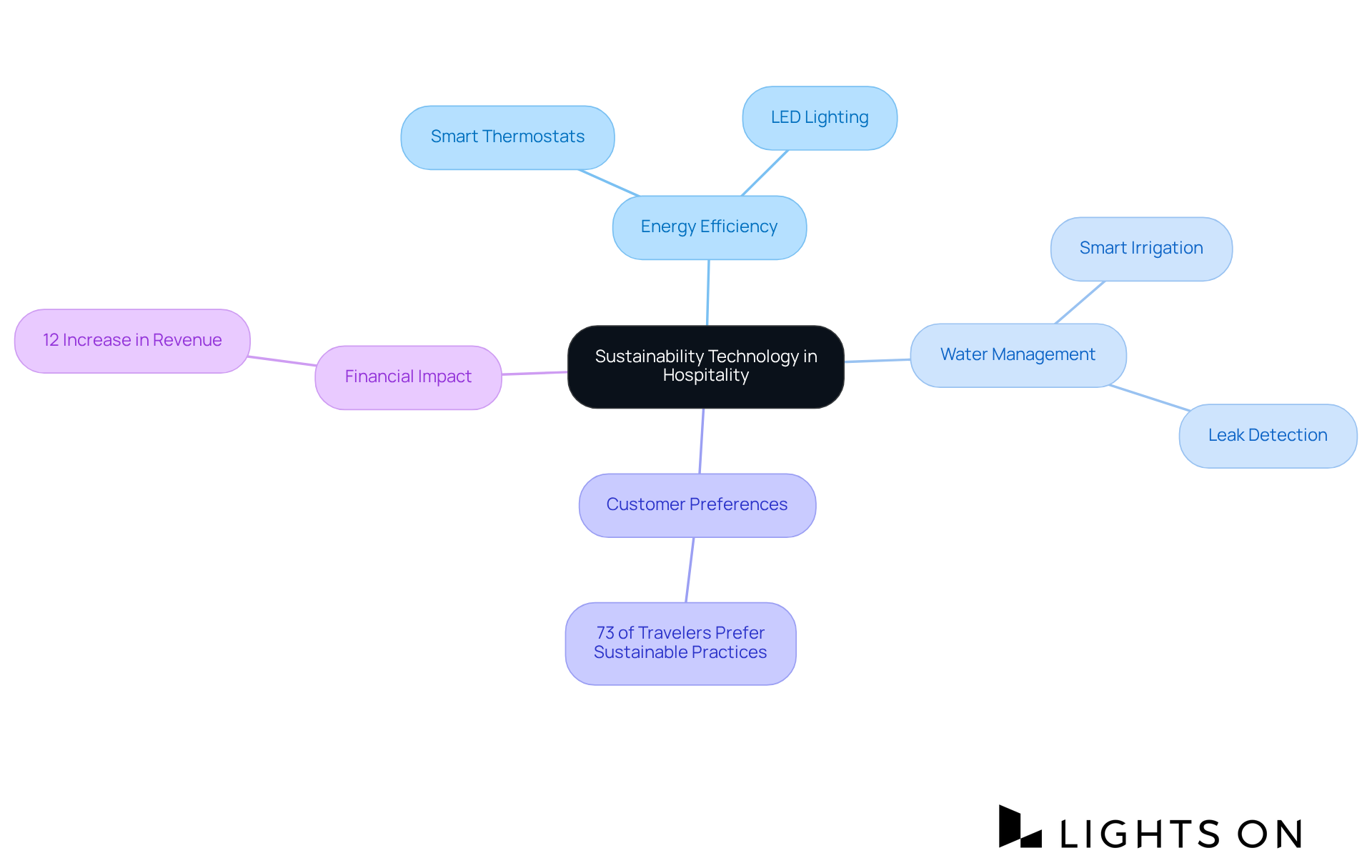
Sustainability technology is essential for establishments aiming to reduce their environmental footprint. By integrating energy-efficient systems like smart thermostats and LED lighting, businesses can achieve significant reductions in energy consumption. For instance, accommodations that implement these technologies often report lower operational costs due to improved energy efficiency.
Furthermore, advanced water management systems, such as smart irrigation and leak detection, enable establishments to monitor and optimize water usage, drastically minimizing waste. By embracing sustainable practices and effectively communicating these initiatives to guests, accommodations not only contribute to environmental preservation but also appeal to the growing demographic of eco-conscious travelers. A recent study reveals that 73% of global travelers prefer accommodations that adopt sustainable practices, highlighting the competitive edge sustainability offers in attracting visitors.
In addition, accommodations that have committed to sustainable practices have seen a 12% increase in total revenue, as noted in the Global Sustainable Tourism Report 2023. This demonstrates that environmental responsibility can align with financial success, making a compelling case for the adoption of sustainability technology in the hospitality industry.
Developing customized visitor experiences through technology is essential for enhancing satisfaction and loyalty. By leveraging data analytics and AI, accommodations can tailor services to meet individual preferences, including room settings, dining options, and activity recommendations. For example, hotels can analyze past visits to anticipate guest needs and provide personalized welcome amenities. This level of customization not only delights guests but also fosters a sense of belonging, encouraging repeat visits and generating positive word-of-mouth referrals.
Furthermore, the integration of technology allows for a deeper understanding of guest behavior, enabling hotels to refine their offerings continually. By examining data trends, accommodations can identify what resonates most with their clientele, leading to more effective marketing strategies and improved guest experiences.
In addition, consider the impact of personalized communication. Tailoring messages based on guest preferences can significantly enhance engagement and loyalty. For instance, sending targeted promotions or personalized follow-ups after a stay can make guests feel valued and appreciated.
Ultimately, investing in high technology hotel solutions to create customized experiences is not just a trend; it’s a necessity in today’s competitive hospitality landscape. By prioritizing guest satisfaction through tailored services, hotels can build lasting relationships with their visitors, driving both loyalty and revenue.

The hospitality industry is experiencing a significant transformation, fueled by advanced technologies that not only enhance guest experiences but also improve operational efficiency. The integration of tools like artificial intelligence, the Internet of Things, and data analytics represents more than just a trend; it signifies a fundamental shift that enables hotels to craft personalized, seamless interactions for travelers. As establishments embrace these technologies, they position themselves to meet the evolving expectations of modern guests, ultimately fostering loyalty and satisfaction.
Throughout this article, we've explored various high-tech trends, including:
The importance of contactless technology has been underscored, ensuring safety while enhancing guest convenience. Moreover, the role of virtual and augmented reality in enriching pre-booking experiences, the advantages of robotics in service delivery, and the critical nature of cybersecurity measures have all been highlighted as essential components in this technological landscape.
In light of these advancements, it is imperative for hospitality businesses to not only adopt these technologies but also to strategically leverage them to elevate guest experiences. By committing to innovation and prioritizing personalized service, hotels can distinguish themselves in a competitive market. Embracing these high-tech trends not only leads to increased operational efficiency but also cultivates a deeper connection with guests, ensuring long-term success in the hospitality sector. The time to act is now-transform the way hospitality is delivered and redefine guest satisfaction for the future.
How can data-driven marketing strategies enhance guest experiences in hospitality?
Data-driven marketing strategies allow hotels and restaurants to tailor their marketing efforts by analyzing visitor behavior and preferences. This enables the creation of personalized campaigns that increase visibility and boost reservations, ultimately leading to enhanced guest satisfaction and loyalty.
What role does segmentation play in marketing for accommodations?
Segmentation enables accommodations to target specific demographics with customized promotions, enhancing conversion rates and fostering visitor loyalty, which contributes to a more robust customer base.
How does Lights On help accommodations amplify their reach?
Lights On ensures that accommodations enhance their reach through both paid and organic visibility, harmonizing their brand voice across all digital assets for a seamless customer journey.
What impact does Artificial Intelligence (AI) have on guest interactions?
AI transforms visitor interactions by enabling hotels to deliver highly personalized experiences through AI-driven chatbots that address inquiries immediately, allowing staff to focus on more complex client needs.
What percentage of visitors find chatbots beneficial for simple inquiries?
70% of visitors find chatbots beneficial for simple inquiries, significantly enhancing overall satisfaction.
How do AI algorithms personalize guest experiences?
AI algorithms analyze visitor data to suggest tailored services, such as room upgrades or customized dining options, which are increasingly expected by guests.
What operational efficiencies can AI provide to accommodations?
AI helps forecast demand, optimize staffing and resource distribution, manage energy consumption, and improve pricing and revenue management, contributing to overall operational effectiveness.
What is the potential of IoT in hotel environments?
IoT allows guests to control room settings through mobile devices, enhancing comfort and convenience. It also plays a crucial role in energy management by monitoring usage patterns to optimize resource consumption.
How much can smart thermostats save in energy costs?
Smart thermostats can lead to energy savings of up to 30% by automatically adjusting heating or cooling based on room occupancy.
What concerns do hoteliers have regarding IoT devices?
95% of hoteliers express concerns about customer data theft and reputational damage stemming from IoT vulnerabilities, highlighting the importance of addressing cybersecurity risks in IoT implementation.
Transform your group booking strategies with Lights On and watch your occupancy soar.


.svg)

