The primary objective of this article is to delineate essential hotel SEO services that can markedly enhance visibility for accommodations. It underscores the necessity of tailored SEO strategies—such as on-page optimization, local SEO, content marketing, and reputation management—as pivotal for attracting guests and boosting direct bookings. These practices are intricately aligned with consumer search behaviors and preferences, thereby optimizing marketing efforts. Furthermore, implementing these strategies not only addresses the visibility challenge but also positions hotels to meet the evolving demands of potential guests.
In a rapidly evolving digital landscape, hotels confront the urgent challenge of distinguishing themselves amid fierce competition. The implementation of effective SEO strategies not only enhances visibility but also drives direct bookings, ultimately influencing revenue.
As the hospitality sector prepares for 2025, a critical question arises: what essential SEO services can hotels adopt to capture the attention of potential guests and excel in an increasingly online marketplace?
This article delves into ten vital hotel SEO services designed to transform an establishment's digital presence and elevate its occupancy rates.
Lights On offers a comprehensive suite of specifically designed for the hospitality sector. These solutions encompass:
By leveraging data-driven insights, Lights On empowers accommodations to refine their marketing strategies through hotel SEO services, ensuring they not only distinguish themselves in a competitive marketplace but also effectively enhance occupancy rates and revenue streams.
In 2025, accommodations prioritizing digital marketing are projected to see a significant increase in bookings, as tailored marketing experiences become essential for attracting visitors. Successful strategies include:
As the industry landscape continues to evolve, Lights On remains committed to helping accommodations navigate these changes and achieve sustained growth.

Customized hotel SEO services are essential for accommodations aiming to enhance their online presence and increase reservations. By concentrating on specific, long-tail keywords and optimizing website structure, these establishments can significantly improve their search engine rankings. This not only attracts a greater number of visitors but also aligns marketing efforts with the unique preferences of potential guests.
According to industry specialists, effective SEO strategies can lead to substantial increases in direct bookings, with nearly 70% of accommodations' reservations initiated through online searches. Furthermore, implementing tactics such as:
can further elevate a property's visibility in search results. For instance, accommodations can encourage visitors to leave feedback on their Google My Business profile, which can enhance local search rankings. Additionally, prioritizing organic traffic is crucial, as over 50% of website traffic originates from organic search result clicks.
By focusing on these tailored hotel SEO services and committing to ongoing monitoring and adjustments, accommodations can create a compelling online experience that resonates with travelers, ultimately driving higher conversion rates and occupancy levels.
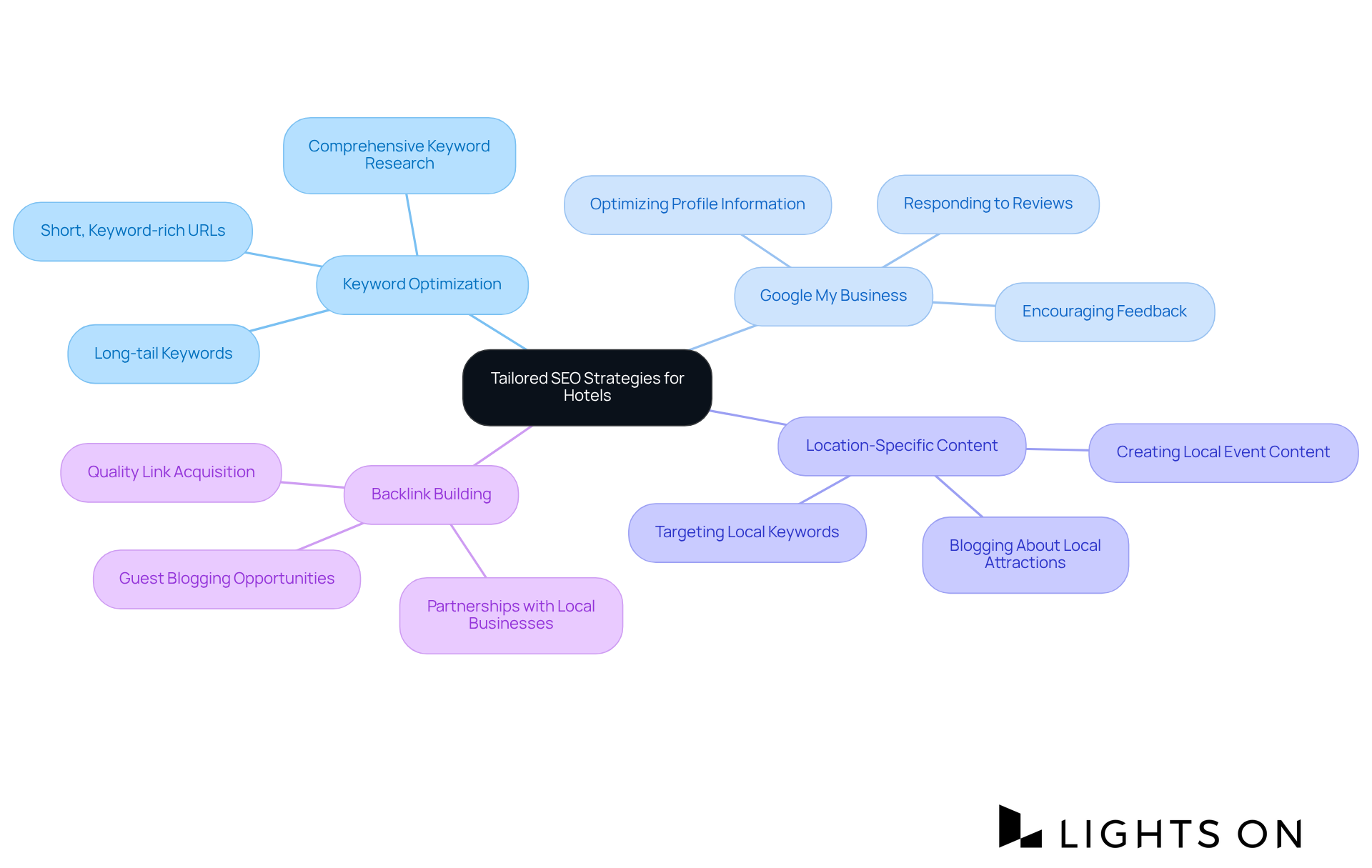
Conducting thorough keyword analysis is crucial for accommodations aiming to understand the preferences of prospective visitors. By pinpointing high-traffic keywords pertinent to their services, accommodations can optimize their content, significantly increasing their chances of appearing in search results. Tools like Google Keyword Planner and Moz Keyword Explorer serve as valuable resources for identifying relevant keywords that align with the establishment’s unique selling propositions.
Furthermore, focusing on long-tail keywords, such as 'accommodations near [venue]' or 'pet-friendly lodgings in [city name],' can empower independent establishments to capture specific search intents, ultimately driving more qualified traffic. Verified Google Business Profiles in hospitality attract an average of 1,803 search views and generate approximately 200 actions monthly, underscoring the .
Frank DePino, a digital marketing specialist with over 30 years of experience, emphasizes that understanding searcher intent is vital for selecting the right keywords, which can profoundly influence a business's success in a competitive market. Additionally, ensuring that your website is mobile-friendly and responsive is imperative, as many travelers now book accommodations via mobile devices.
To enhance your keyword research efforts, consider developing dedicated landing pages targeting specific keywords related to local attractions or events, which can effectively drive more qualified traffic to your establishment. By implementing these strategies, accommodations can significantly improve their online visibility and increase reservations, establishing keyword research as a foundational element of effective marketing for lodgings.

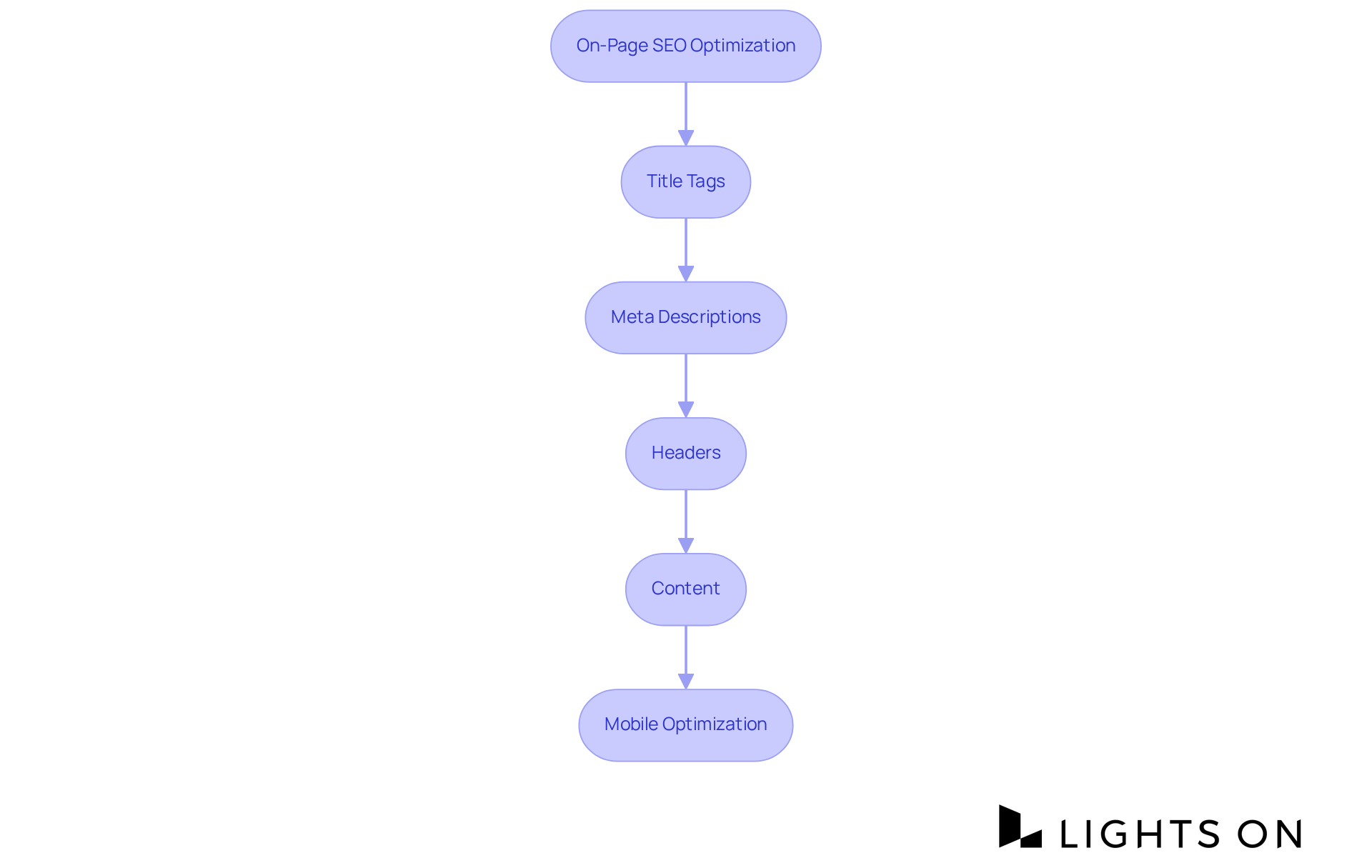
On-page SEO is crucial for accommodations aiming to elevate their online presence with hotel SEO services. This process involves optimizing essential elements of a property’s website, including:
By aligning these components with targeted keywords and providing valuable information, accommodations can significantly enhance their search engine rankings with hotel SEO services. A well-organized website not only bolsters SEO but also enriches the user experience, encouraging visitors to explore further and ultimately make a reservation.
To implement effective on-page SEO, property owners should utilize hotel SEO services to prioritize that reflect their geographic area, attracting guests seeking accommodations in specific locations. Moreover, incorporating high-quality images and engaging content about local attractions can prolong visitors' stay on the site, thereby increasing the likelihood of bookings.
In fact, studies indicate that 75% of users never scroll past the first page of search results, highlighting the necessity of effective on-page strategies. Furthermore, optimizing for mobile devices is imperative, as over 50% of all online searches occur on mobile platforms.
By applying these strategies, accommodations can achieve increased engagement and conversion rates, making hotel SEO services an indispensable component of a successful digital marketing approach for 2025. As noted by industry specialists, focusing on relevant keywords, crafting authentic content that showcases experience and expertise, and enhancing user experiences can help accommodations stand out in a competitive landscape. This underscores the significance of comprehensive keyword research as a foundational aspect of successful SEO strategies.
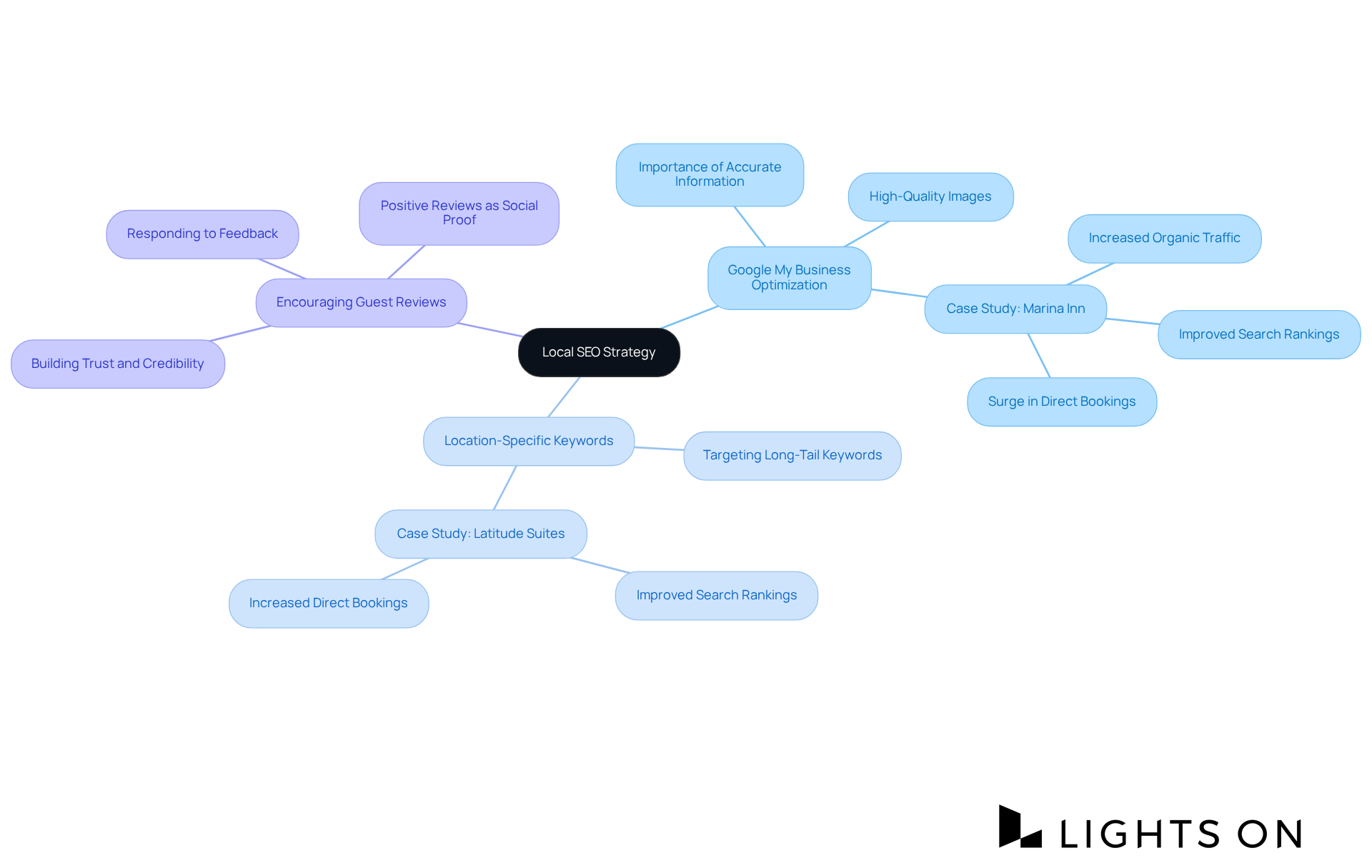
Local SEO is essential for establishments aiming to improve their online visibility and attract visitors seeking lodging, which can be effectively enhanced through hotel SEO services in specific geographic areas. This strategy encompasses:
By enhancing local visibility, accommodations can effectively capture the attention of nearby travelers, leading to an increase in direct reservations and a reduction in reliance on online travel agencies (OTAs).
Effective regional SEO tactics have demonstrated significant impacts on accommodation reservations. For instance, the Marina Inn at Grande Dunes improved its local search visibility by refining its Google Business Profile, resulting in a marked increase in organic traffic and direct bookings. Similarly, Latitude Suites Crowne Plaza Orlando Downtown focused on enhancing local keywords, which led to better search rankings and an uptick in reservations from tourists actively seeking nearby accommodations.
Industry leaders underscore the critical role of local SEO in driving direct bookings. Jessica Freedman asserts that local SEO is not merely an option; it is vital for accommodations to engage with potential clients who are actively looking to reserve nearby. Moreover, positive reviews on platforms like Google Business Profile serve as compelling social proof, bolstering trust and credibility among prospective guests.
As we look to 2025, the influence of local SEO on accommodation reservations continues to grow, with travelers engaging with an average of 38 websites before making a reservation decision. This underscores the necessity for accommodations to adopt robust to distinguish themselves in a competitive landscape and maximize their direct booking potential.
Link building stands as a crucial tactic for enhancing an establishment’s online authority by acquiring backlinks from reputable websites. This process can be effectively executed through diverse methods, including:
Backlinks serve as endorsements from other sites, signaling to search engines that an establishment is a trustworthy source of information. This credibility can significantly and drive organic traffic. In 2025, the influence of backlinks on hotel SEO services rankings is more pronounced than ever, as search engines increasingly prioritize sites with robust backlink profiles.
Experts emphasize that hotel SEO services, particularly a solid network of backlinks, not only boost visibility but also position an establishment as a leader in the hospitality sector. As Jordan Hollander observes, "SEO, when diligently nurtured, can reduce your reliance on expensive advertising campaigns and third-party platforms."
Successful link-building strategies encompass:
Furthermore, optimizing Google My Business listings and focusing on local citations can further enhance an establishment's online presence. By concentrating on these strategies, accommodations can effectively improve their online visibility and attract more prospective guests by utilizing hotel SEO services.

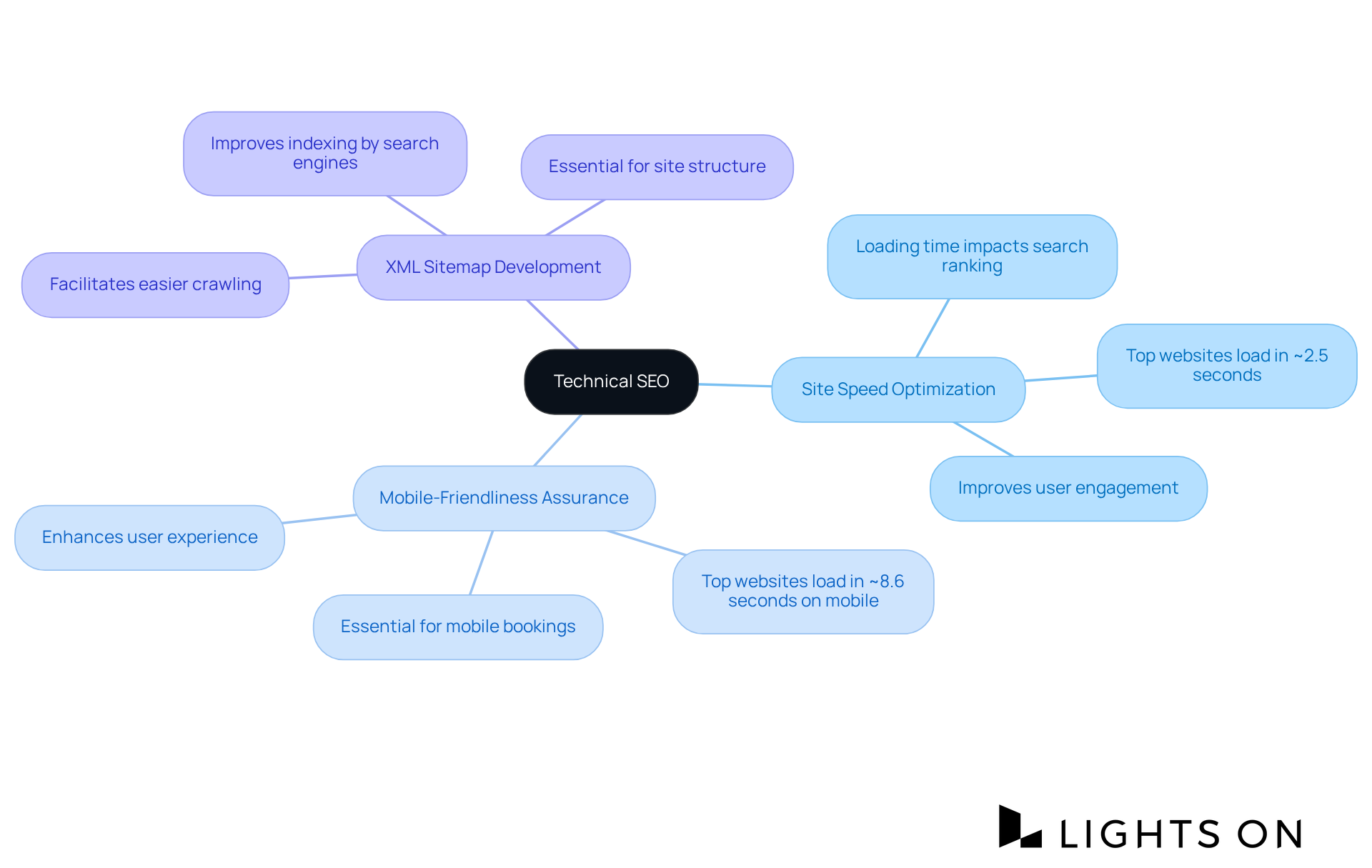
Technical SEO represents a crucial set of backend enhancements necessary for aligning a website with search engine standards. Key components encompass:
Research shows that top-performing websites load in approximately 2.5 seconds on desktop and up to 8.6 seconds on mobile. Google prioritizes sites excelling in these areas, significantly impacting search rankings. By focusing on these technical aspects, accommodations can greatly enhance their website performance with hotel SEO services, facilitating easier crawling and indexing by search engines. This leads to improved visibility in search results, which is essential in a competitive market.
For instance, a case study on website structure and speed enhancement demonstrates that optimizing these factors can lead to better Google Core Web Vitals, which are crucial for attaining higher search rankings. Furthermore, web developers emphasize that a well-organized site not only boosts SEO but also enriches user experience, vital for retaining potential visitors. As the digital landscape evolves, accommodations must prioritize hotel SEO services to sustain a competitive edge and drive more organic traffic to their websites. To initiate this process, consider utilizing tools like Google PageSpeed Insights to conduct a and pinpoint areas for improvement.
Content marketing represents a strategic approach centered on the creation and sharing of valuable content, which can be enhanced through hotel SEO services, specifically tailored for potential guests. This strategy encompasses blog entries that delve into local attractions, travel advice, and accommodation updates, all designed to forge a connection with the audience. Engaging and informative content not only attracts more visitors to accommodation websites but also improves hotel SEO services, ultimately resulting in increased bookings. For instance, establishments that consistently publish blog articles ranging from 800 to 1,500 words can significantly improve their online visibility and audience engagement. Furthermore, user-generated content (UGC), including guest reviews and experiences, cultivates trust and authenticity; indeed, 90% of consumers express greater confidence in UGC compared to conventional advertisements, thereby heightening the likelihood of potential guests selecting an accommodation.
As we approach 2025, the impact of engaging content on accommodation bookings is more pronounced than ever, with 80% of global travelers preferring to organize their trips entirely online. This trend underscores the necessity for accommodations to implement effective hotel SEO services as part of their content marketing strategies. Ewa Gabara succinctly notes, 'Content marketing is a strategic marketing approach focused on creating and distributing valuable, relevant, and consistent content to attract and retain a clearly-defined audience.'
To create compelling content, hotels should emphasize and local attractions. The integration of high-quality visuals and interactive elements can further elevate visitor engagement. A prime example is Moxy Hotels' 'Do Not Disturb' YouTube series, which effectively highlights guest experiences through storytelling, fostering a community around the brand and attracting thousands of subscribers. Additionally, accommodations can execute targeted email marketing initiatives that disseminate customized content and exclusive deals, further enhancing engagement and driving reservations. By prioritizing engaging content and employing hotel SEO services, accommodations can not only bolster their online presence but also cultivate a loyal audience that is more likely to convert into bookings. It is imperative for hotel owners to begin developing their content marketing strategy based on these insights to maximize their impact.

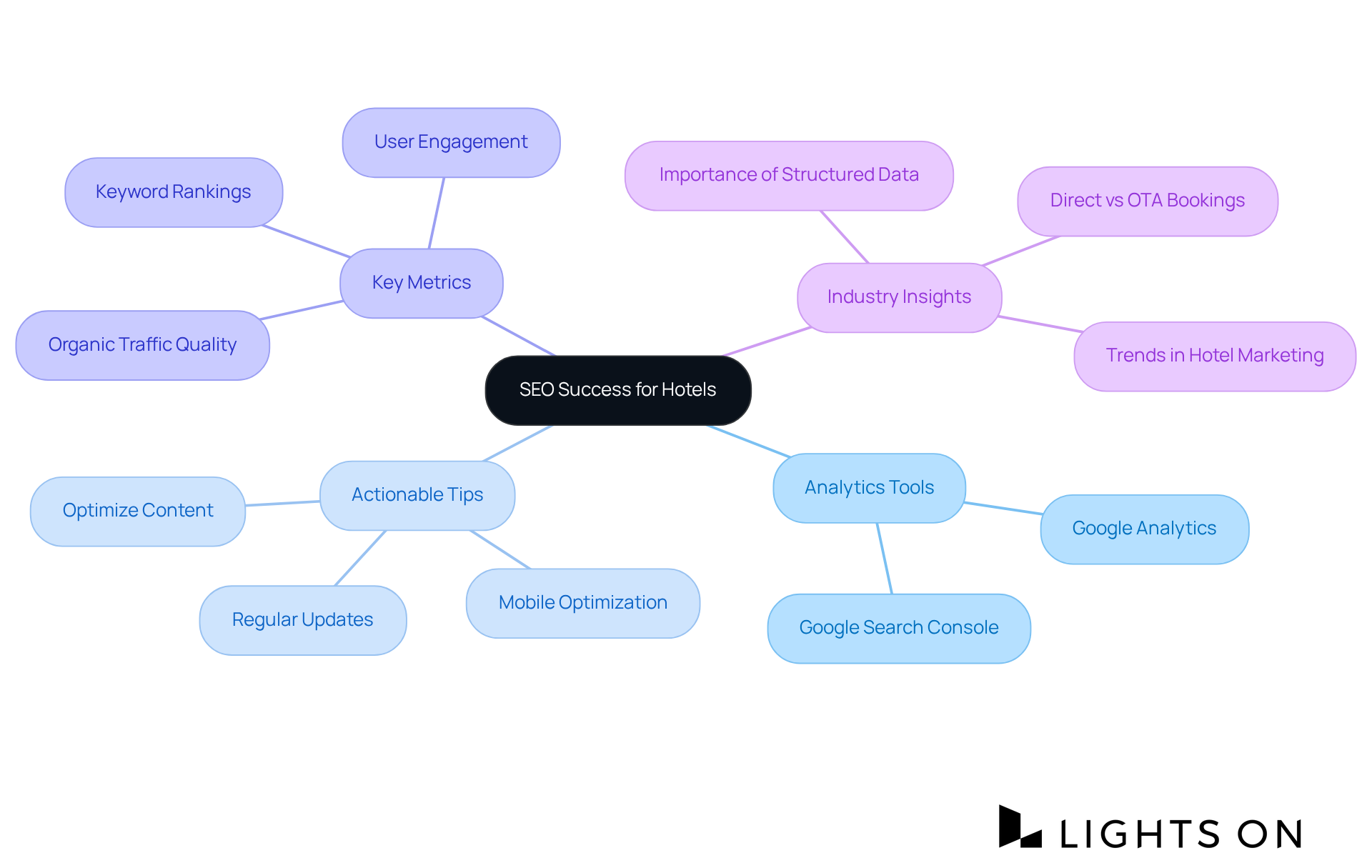
Analytics tools such as Google Analytics and Google Search Console are indispensable for establishments aiming to evaluate the effectiveness of their SEO efforts and refine their marketing strategies. By monitoring critical metrics like website traffic, bounce rates, and conversion rates, accommodations can gauge the success of their marketing initiatives. For instance, recognizing that 33% of reservations for the typical U.S. accommodation occur directly via the establishment's reservation system, while 52% stem from OTAs, underscores the necessity for robust SEO strategies to enhance direct reservation channels and reduce reliance on commission-based platforms.
To implement effective hotel SEO services, hotels should focus on the following actionable tips:
Furthermore, analyzing data empowers accommodations to identify trends and make informed decisions that bolster their online presence. Key metrics for accommodation SEO analysis encompass organic traffic quality, keyword rankings, and user engagement levels. As industry experts highlight, consistent tracking of these metrics is crucial for refining strategies and ensuring sustained visibility in a competitive landscape. By leveraging analytics effectively, accommodations can not only enhance their SEO performance but also improve overall guest interaction and stimulate direct reservations, which are vital for revenue management.
To further amplify their SEO efforts, accommodations should consider implementing structured data and precise location information to enhance online visibility. Investing in hotel SEO services not only boosts direct bookings but also cultivates a stronger digital presence. As Jason Q. Freed, a Hospitality Data Advocate, asserts, "Data is a vital resource for managing a contemporary lodging enterprise." By focusing on these strategies, property owners can ensure they remain competitive and optimize their revenue potential.
Reputation Management: Building Trust and Attracting Guests
Effective reputation management is crucial for hotels aiming to enhance visibility and attract more guests. Actively monitoring and responding to customer reviews fosters a culture of trust and transparency. Motivating content guests to share their positive experiences can greatly enhance an establishment's online reputation. Venues with a greater number of favorable reviews are viewed as more reliable and can charge higher rates. In fact, a one-point rise in a property's TripAdvisor score can result in a 1.42% increase in Average Daily Rate (ADR), illustrating the direct financial advantages of a robust online presence.
To further enhance , accommodations should implement specific marketing strategies that include hotel SEO services. For example, developing targeted email campaigns that motivate previous visitors to leave reviews can significantly boost the amount of positive feedback. Furthermore, using social media platforms to highlight visitor testimonials and favorable experiences can enhance a property's reputation. Addressing negative feedback promptly and professionally is equally important. Hotels that respond constructively to criticism not only demonstrate their commitment to visitor satisfaction but also have the opportunity to turn dissatisfied patrons into loyal advocates. Studies show that 81% of travelers consult online reviews prior to reserving, making it crucial for accommodations to interact with feedback actively. By establishing a feedback loop where visitors observe concrete changes based on their input, accommodations can improve overall service quality and encourage repeat reservations.
Effective hotel SEO services involve consistent monitoring of online review platforms, using customer feedback surveys to pinpoint areas for enhancement, and incorporating positive user-generated content into marketing initiatives. As the hospitality landscape evolves in 2025, maintaining a strong online reputation will be a key differentiator for accommodations seeking to thrive in a competitive market. Leaders in the industry emphasize that a strong online reputation isn't just nice for a hotel to have; it's what fills rooms and builds lasting guest loyalty.

In the ever-evolving landscape of the hospitality industry, the importance of tailored hotel SEO services is paramount. As accommodations seek to enhance their online visibility and attract more guests, implementing a comprehensive digital marketing strategy becomes essential. By concentrating on key areas such as keyword research, on-page optimization, local SEO, and reputation management, hotels can effectively position themselves to capture the attention of potential visitors and drive direct bookings.
Key strategies have been highlighted throughout this article, emphasizing the necessity of optimizing website content, leveraging user-generated content, and utilizing analytics tools to measure success. Establishments are encouraged to prioritize local SEO efforts, engage in link building, and create compelling content that resonates with travelers. These strategies not only improve search engine rankings but also foster authentic connections with prospective guests, ultimately leading to increased occupancy rates and revenue.
As the hotel industry prepares for the future, embracing these essential SEO services will be critical for remaining competitive. By investing in comprehensive digital marketing solutions and continuously refining their strategies, accommodations can ensure they stand out in a crowded marketplace. It is imperative for hotel owners to take action now, adopting these best practices to optimize their online presence and maximize their potential for success in 2025 and beyond.
What digital marketing solutions does Lights On offer for hotels?
Lights On provides a comprehensive suite of hotel SEO services, including website management, performance marketing, social media management, and search engine marketing.
How does Lights On help accommodations improve their marketing strategies?
Lights On utilizes data-driven insights to help accommodations refine their marketing strategies through hotel SEO services, enhancing their ability to stand out in a competitive market while increasing occupancy rates and revenue.
What are some successful digital marketing strategies for accommodations in 2025?
Successful strategies include harnessing user-generated content, optimizing for voice search, and engaging with micro-influencers to build authentic connections with potential guests.
Why are customized hotel SEO services important?
Customized hotel SEO services are essential for enhancing online presence and increasing reservations by focusing on specific, long-tail keywords and optimizing website structure, which improves search engine rankings.
What percentage of accommodations' reservations are initiated through online searches?
Nearly 70% of accommodations' reservations are initiated through online searches, highlighting the importance of effective SEO strategies.
What tactics can further elevate a hotel's visibility in search results?
Tactics include optimizing Google My Business profiles, creating location-specific content, and building quality backlinks.
How can keyword research benefit accommodations?
Thorough keyword research helps accommodations understand prospective visitors' preferences, enabling them to optimize content and increase the chances of appearing in search results.
What are long-tail keywords, and why are they important?
Long-tail keywords are specific phrases that capture particular search intents, such as 'accommodations near [venue]' or 'pet-friendly lodgings in [city name].' They help attract more qualified traffic to independent establishments.
What is the significance of having a verified Google Business Profile for accommodations?
Verified Google Business Profiles attract an average of 1,803 search views and generate approximately 200 actions monthly, emphasizing the importance of visibility in local searches.
What should accommodations ensure about their websites for better performance?
Accommodations should ensure their websites are mobile-friendly and responsive, as many travelers now book accommodations via mobile devices.
How can dedicated landing pages improve keyword research efforts?
Developing dedicated landing pages targeting specific keywords related to local attractions or events can effectively drive more qualified traffic to accommodations.
Transform your group booking strategies with Lights On and watch your occupancy soar.


.svg)

